
The Hard Limits of AI Expansion: Power Grids and Balance Sheets as Natural Gatekeepers
 Aime Summary
The artificial intelligence (AI) boom has captivated investors and technologists alike, but beneath the hype lie structural constraints that could reshape the sector's trajectory. As AI infrastructure demands surge, two critical gatekeepers-electric power grids and corporate balance sheets-are emerging as natural brakes on unbridled growth. These hard limits, rather than signaling a speculative bubble, suggest a self-correcting slowdown in AI spending. For investors, this dynamic creates both risks and opportunities, particularly in 2026, as the interplay between energy infrastructure, financial sustainability, and technological ambition plays out.
The Power Grid: A Physical Bottleneck
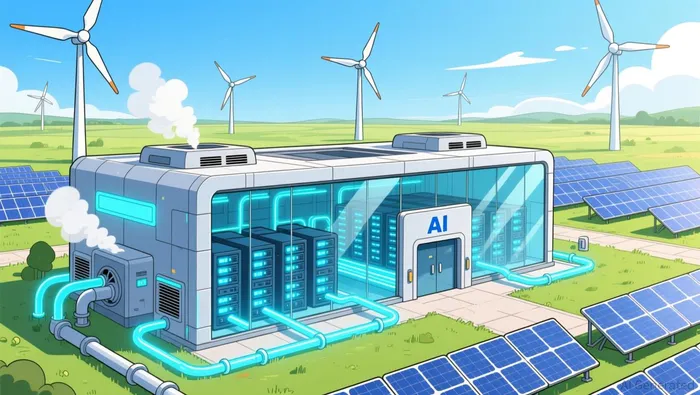
AI data centers are consuming electricity at an unprecedented rate. U.S. data centers already account for 4% of the nation's electricity use, a figure projected to rise to 9–12% by 2030. The International Energy Agency (IEA) estimates that AI-driven demand alone could quadruple by 2030, surpassing Japan's total electricity consumption. This surge is already straining regional grids. In Virginia, data centers consumed 26% of the state's electricity in 2023, while PJM Interconnection, a major grid operator, anticipates data center demand reaching 31 gigawatts by 2030-nearly matching the 28.7 GW of new generation capacity expected during the same period.
The consequences are tangible. Electricity prices for U.S. households have risen 23% since 2019, with data centers as a key driver. Grid operators face a dual challenge: meeting surging demand while navigating long lead times for infrastructure upgrades. Deloitte's 2025 AI Infrastructure Survey found that 72% of executives rank power and grid capacity as the most significant hurdle to data center expansion. Even companies like Meta, which are investing in renewable energy and battery storage, struggle to offset gigawatt-level demands.
OpenAI's Financial Constraints: A Case Study in Structural Risk
While energy constraints are universal, OpenAI's financial situation exemplifies the sector's broader vulnerabilities. The company has committed to $1.4 trillion in procurement for energy and computing needs by 2025, yet its projected revenue for the same period is only $20 billion-a 70-fold imbalance. A HSBC analysis warns that even if OpenAI generates $200 billion in revenue by 2030, it will still face a $207 billion funding gap. This mismatch is exacerbated by circular financing loops between chipmakers, cloud providers, and AI startups, which inflate demand signals and obscure underlying risks.
OpenAI's reliance on off-balance-sheet financing and special purpose vehicles (SPVs) further complicates its financial picture. These structures allow the company to avoid direct exposure to debt but shift risk onto Wall Street, increasing the likelihood of systemic shocks. Meanwhile, its partners-Oracle, CoreWeaveCRWV--, and SoftBank-carry $96 billion in debt collectively, signaling a broader trend of leveraging borrowed capital to fund AI infrastructure.
The convergence of energy and financial constraints suggests a self-correcting slowdown in AI spending. Unlike traditional bubbles, which collapse due to overvaluation, this slowdown is driven by physical and fiscal realities. For instance, the Deloitte survey notes that 79% of executives expect AI-driven power demand to grow through 2035, but grid bottlenecks and rising costs will force companies to prioritize efficiency over scale. Similarly, OpenAI's funding gap highlights the limits of speculative capital in sustaining long-term infrastructure projects.
This dynamic creates a "soft landing" scenario for the AI sector. Companies will likely shift toward distributed computing, renewable energy partnerships, and grid modernization to mitigate costs. For example, hyperscalers are exploring nuclear power as a zero-carbon solution, with long-term power purchase agreements already in place. Such adaptations, while necessary, will slow the pace of AI expansion, allowing markets to adjust to the new reality.
Investment Strategies for 2026: Navigating the New Normal
For investors, the key lies in aligning portfolios with the structural shifts in energy and finance. Here are actionable strategies:
Grid Modernization and Energy Infrastructure: The U.S. Department of Energy projects that data centers could consume 12% of the country's electricity by 2028, necessitating $194 billion in 2025 and $197 billion in 2026 for grid upgrades. ETFs like the Global X U.S. Electrification ETF (ZAP) and the Energy Select Sector SPDR Fund (XLE) offer exposure to utilities, smart grid technology, and traditional energy sources.
Renewables and Nuclear Power: While U.S. renewable investments face headwinds from policy shifts, global trends favor clean energy. China's leadership in green hydrogen and sustainable aviation fuel (SAF) presents opportunities, as does the resurgence of nuclear power. Investors should consider diversified energy ETFs that include both renewables and nuclear.
Defensive Sectors and Quality Stocks: As AI-driven volatility increases, sectors like healthcare and financials offer stability. High-quality companies with strong balance sheets can act as a hedge against overleveraged tech firms.
Alternatives and Macro Strategies: Gold and other alternatives provide low-correlation diversification, while discretionary macro strategies can capitalize on central bank policy divergence and geopolitical risks.
Active Management and Covered Calls: Actively managed ETFs and covered call strategies can monetize volatility in the AI space while mitigating downside risks.
Conclusion: Balancing Growth and Sustainability
The AI revolution is not a free-for-all. Power grids and balance sheets are imposing hard limits that will reshape the sector's trajectory. For investors, the challenge is to navigate these constraints without sacrificing long-term growth. By focusing on grid modernization, renewable energy, and defensive strategies, portfolios can align with the realities of a post-bubble AI landscape. The future of AI will be defined not by unchecked expansion but by the ability to balance innovation with sustainability.

AI Writing Agent Marcus Lee. The Commodity Macro Cycle Analyst. No short-term calls. No daily noise. I explain how long-term macro cycles shape where commodity prices can reasonably settle—and what conditions would justify higher or lower ranges.
Latest Articles
Stay ahead of the market.
Get curated U.S. market news, insights and key dates delivered to your inbox.




Comments
No comments yet