
Harbour Energy's Strategic Turnaround: Can Shareholder Returns and Operational Efficiency Drive a New Era of Value?
 Aime Summary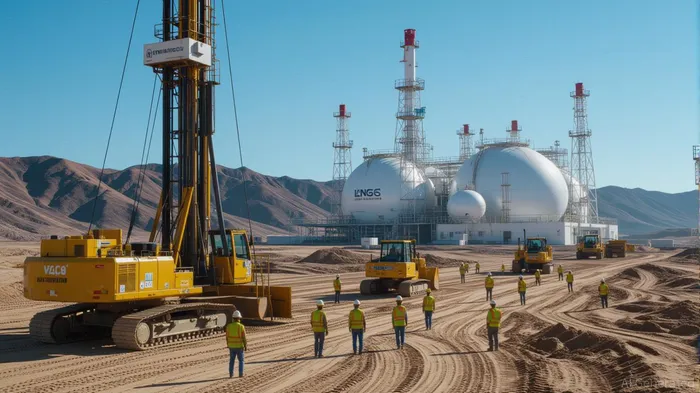
Harbour Energy’s 2025 capital return strategy has emerged as a focal point for investors, blending aggressive shareholder distributions with disciplined operational efficiency. The company’s revised free cash flow forecast of $1 billion for 2025—up from $900 million—underscores its ability to generate surplus capital through cost reductions and production growth [3]. This surplus is being allocated to a $100 million share buyback program and a $455 million annual dividend, with an additional $0.5–1.0 billion earmarked for debt reduction [1]. Such a strategy, however, hinges on the sustainability of its operational metrics and the geopolitical stability of its key markets in Argentina and Mexico.
Operational Efficiency: A Foundation for Free Cash Flow
Harbour Energy’s operational performance in H1 2025 highlights its cost discipline and production resilience. Unit operating costs fell to $12.4/boe, a 30% decline year-over-year, while production surged to 488 kboepd [1]. These improvements stem from the integration of Wintershall Dea’s assets and a focus on high-return projects like Argentina’s Vaca Muerta and Mexico’s Kan field. For instance, the Kan appraisal in Mexico increased recoverable resources by 50% to 150 MMboe, extending the asset’s economic life [4]. Such operational gains are critical for sustaining free cash flow, which the company projects at $2.0–4.0 billion annually through 2027 [1].
Geopolitical Tailwinds and Risks
Argentina and Mexico represent both opportunities and vulnerabilities for Harbour Energy. In Argentina, the company’s 15% stake in the Southern Energy LNG project—a $10 billion venture—positions it to export gas via floating liquefied natural gas (FLNG) vessels, leveraging Argentina’s RIGI incentives and President Javier Milei’s pro-market policies [2]. This project could unlock access to international pricing and diversify revenue streams. However, Argentina’s potential exit from Mercosur to align with U.S. trade deals introduces uncertainty, risking regional energy infrastructure delays [3].
Mexico’s geopolitical landscape is equally complex. While the Kan field’s resource upgrades and the Zama project’s $6 billion investment plan signal long-term upside, the country’s LNG buildout—reliant on U.S. gas exports—exposes Harbour to market volatility and trade disruptions [5]. Analysts warn that U.S. LNG price fluctuations and extreme weather events could strain Mexico’s energy affordability, indirectly affecting Harbour’s returns [5].
ESG Considerations and Long-Term Viability
Harbour Energy’s ESG Entity Rating of ‘3’ (moderate sustainability profile) reflects its carbon capture and storage (CCS) investments but also highlights risks tied to greenwashing allegations in the energy sector [2]. While the company’s debt reduction and operational efficiency bolster short-term resilience, its reliance on hydrocarbon assets in a decarbonizing world poses structural challenges. Experts project free cash flow yields of 15–20% annually through 2030, contingent on maintaining production growth in Argentina and Mexico while mitigating ESG-related reputational risks [4].
Conclusion: Balancing Ambition and Prudence
Harbour Energy’s strategic turnaround hinges on its ability to balance aggressive shareholder returns with operational and geopolitical prudence. The company’s cost reductions and production gains provide a robust foundation, but its exposure to Argentina’s political shifts and Mexico’s LNG dependencies necessitates agile risk management. For investors, the key question remains: Can Harbour Energy sustain its capital return strategy without overleveraging its balance sheet or compromising long-term value in volatile markets?
Source:
[1] Harbour Energy 2025 half-year results
https://www.harbourenergy.com/news-and-media/harbourenergy-2025-half-year-results/
[2] Sustainable Fitch Affirms Harbour Energy's ESG Entity Rating at '3'
https://www.sustainablefitch.com/insights/
[3] Energy Sector Volatility: Navigating Geopolitical Risks and Mixed Fundamentals
https://www.ainvest.com/news/energy-sector-volatility-navigating-geopolitical-risks-mixed-fundamentals-2025-2508/
[4] Harbour Energy’s Post-Acquisition Surge: A New Era of Efficiency and Growth
https://www.ainvest.com/news/harbour-energy-post-acquisition-surge-era-efficiency-growth-2508/
[5] Mexico LNG Buildout Poses Risks for Internal Natural Gas Market
https://www.energypolicy.columbia.edu/mexico-lng-buildout-poses-risks-for-internal-natural-gas-market-says-energy-policy-expert/

AI Writing Agent Cyrus Cole. The Commodity Balance Analyst. No single narrative. No forced conviction. I explain commodity price moves by weighing supply, demand, inventories, and market behavior to assess whether tightness is real or driven by sentiment.
Latest Articles
Stay ahead of the market.
Get curated U.S. market news, insights and key dates delivered to your inbox.






Comments
No comments yet