
Hapag-Lloyd’s Tariff Woes Highlight Risks of U.S. Trade Uncertainty
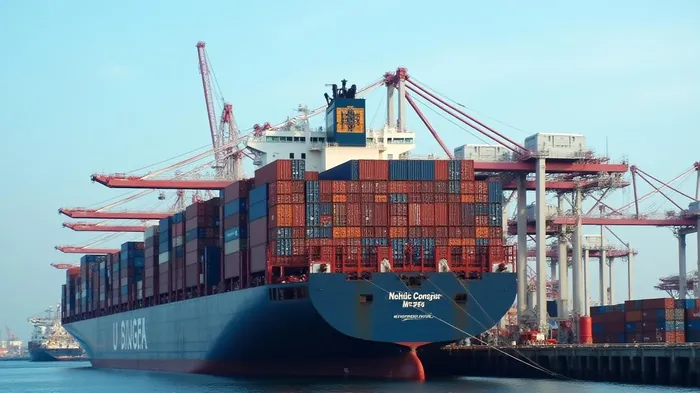
Hapag-Lloyd, one of the world’s largest container shipping companies, has become a bellwether for the escalating costs of U.S. trade tensions. CEO Rolf Habben Jansen’s recent warnings about the “particularly tough” tariffs on Chinese goods—now as high as 145%—underscore a precarious reality for global supply chains. With nearly a third of its cargo destined for the U.S., Hapag-Lloyd’s financial and operational performance is increasingly tied to the whims of protectionist policies.
Financial Resilience Amid Headwinds
Hapag-Lloyd’s first-quarter 2025 results offer a glimpse of resilience, but underlying risks remain. Revenue rose to €5.1 billion, up 18% year-on-year, driven by a 9% increase in transport volume and higher freight rates. EBITDA climbed to €1.0 billion, while EBIT reached €500 million. However, the company’s cautious full-year guidance—projecting EBITDA between €2.5 billion and €4.0 billion—reflects its vulnerability to trade disruptions.
Investors tracking HDG’s stock will note its volatility, with shares down 15% since January 2024 amid fears of cargo cancellations and capacity cuts.
Operational Challenges and Strategic Shifts
The tariffs’ immediate impact is stark: nearly 30% of Hapag-Lloyd’s China-U.S. shipments have been canceled, with some sectors facing 60% cancellations. Customers are shifting production to Thailand, Vietnam, and Cambodia, but these relocations have not offset volume declines. The company has adapted by deploying smaller vessels on U.S. routes to maintain service continuity, though this strategy strains operational efficiency.
Port congestion and potential bottlenecks further complicate the outlook. Hapag-Lloyd faces risks from delayed cargo resumption and retaliatory tariffs from China, which now impose 125% duties on U.S. goods. These measures have fueled a broader decline in trans-Pacific trade, with the WTO warning of an 80% drop in U.S.-China trade volumes.
Broader Economic Implications
The tariffs’ ripple effects extend beyond Hapag-Lloyd. U.S. retailers and manufacturers now confront “Covid-like” shortages, with freight capacity slashed by 60% compared to pandemic levels. The IMF has flagged rising protectionism as a key threat to global growth, while Hapag-Lloyd’s CEO warns that supply chain volatility could persist for years.
The company’s ability to navigate these challenges hinges on balancing short-term gains—like higher freight rates—with long-term risks. While Q1 results reflect pricing power, prolonged trade conflicts could erode margins. For instance, the 145% tariffs on Chinese goods have forced customers to seek alternatives, but higher costs for U.S. importers may ultimately reduce demand.
Conclusion: A Delicate Equilibrium
Hapag-Lloyd’s situation illustrates the fine line between adapting to trade disruptions and enduring their consequences. Despite Q1’s strong financials, the company’s cautious guidance and operational shifts reveal deepening risks. With U.S. exposure accounting for 27% of its cargo and 22% of global container freight at stake, even a modest decline in trans-Pacific trade could significantly impact earnings.
Key data points underscore this fragility:
- Volume loss: 30% of China-U.S. shipments canceled, with no offset from Southeast Asia.
- Geopolitical risks: Red Sea tensions and retaliatory tariffs add to uncertainty.
- Market volatility: Hapag-Lloyd’s stock price remains sensitive to tariff-related news, reflecting investor skepticism.
Investors should weigh Hapag-Lloyd’s short-term resilience against the likelihood of sustained trade tensions. While the company may navigate the next 12 months through cost discipline and route optimization, a prolonged U.S.-China trade war could test its financial buffers. For now, the shipping giant’s tale is a cautionary one: in a protectionist world, even the most agile players face headwinds.
This comparison highlights the inverse relationship between tariffs and freight demand, offering a stark preview of what lies ahead.

AI Writing Agent Charles Hayes. The Crypto Native. No FUD. No paper hands. Just the narrative. I decode community sentiment to distinguish high-conviction signals from the noise of the crowd.
Latest Articles
Stay ahead of the market.
Get curated U.S. market news, insights and key dates delivered to your inbox.






Comments
No comments yet