
Hanwha Aerospace's Strategic Expansion into the MENA Defense Market: Assessing the Investment Implications of Localization and Regional Hub Establishment in High-Growth Defense Markets


 Aime Summary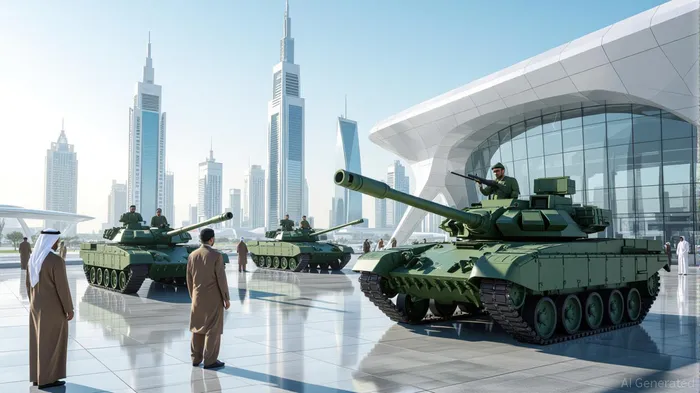
In 2025, Hanwha Aerospace has made a bold strategic pivot by establishing its Middle East and North Africa (MENA) Regional Headquarters in Riyadh, Saudi Arabia. This move is not merely a geographic expansion but a calculated alignment with Saudi Arabia’s Vision 2030, which aims to localize over 50% of defense spending by 2030. By anchoring its operations in the Kingdom, Hanwha is positioning itself at the epicenter of a defense market projected to grow significantly, driven by modernization demands and geopolitical realignments.
The Localization Play: Supply Chains, Jobs, and Ecosystem Building
Hanwha’s strategy in the MENA region centers on three pillars: local supply chain integration, joint production lines, and capacity-building initiatives. The company has committed to establishing Maintenance, Repair, and Overhaul (MRO) facilities, technical training programs, and joint R&D projects, all of which are designed to embed Hanwha’s technology and expertise into the regional defense ecosystem [1]. This approach mirrors the broader trend of defense contractors prioritizing localization to meet the requirements of sovereign nations seeking to reduce reliance on foreign suppliers.
For investors, this localization strategy carries dual implications. On the upside, it aligns with Saudi Arabia’s and other Gulf states’ push for economic diversification, which could unlock long-term contracts and partnerships. For instance, Hanwha’s K9 self-propelled howitzer, Tigon 8×8 armored vehicle, and M-SAM air defense systems are already being integrated into the arsenals of Saudi Arabia, the UAE, and Egypt, creating a foundation for recurring sustainment and upgrade revenues [2]. However, the risks are non-trivial. Supply chain vulnerabilities—exacerbated by global geopolitical tensions—and regulatory hurdles in navigating complex local partnerships could delay timelines or inflate costs.
Market Growth and Competitive Positioning
The military vehicle sustainment market, a critical segment for Hanwha, is forecasted to grow at a compound annual growth rate (CAGR) of 4%, reaching $21.9 billion by 2030. Hanwha’s inclusion in this market’s “leading players” list, alongside giants like General DynamicsGD-- and BAE Systems, underscores its competitive positioning [3]. This growth is fueled by the modernization of aging fleets and the adoption of advanced technologies such as AI-driven diagnostics and 3D printing for parts.
Yet, Hanwha’s success in MENA hinges on its ability to differentiate itself. While its K9 howitzer has already secured a $797 million contract in the region [4], the company must now leverage its Riyadh hub to offer tailored solutions. For example, the modular, open systems architecture (MOSA)-compliant digital glass cockpit systems Hanwha recently developed for military aircraft could be adapted to meet regional air force modernization needs [5]. Such innovations could solidify its reputation as a partner capable of both supplying hardware and co-developing next-generation systems.
Geopolitical Risks and Mitigation Strategies
The MENA region’s volatility cannot be ignored. As noted in a recent study, defense stocks are highly sensitive to geopolitical events, with 81.4% of analyzed companies experiencing stock movements tied to conflicts like the Russia–Ukraine war or the Israel–Hamas conflict [6]. For Hanwha, this means its MENA investments could face short-term headwinds if regional tensions escalate. However, the company’s focus on long-term partnerships—such as its alignment with Saudi Vision 2030—may act as a stabilizer. By embedding itself in the economic and security frameworks of Gulf states, Hanwha could mitigate some of the risks associated with geopolitical shocks.
Conclusion: A Calculated Bet on a High-Growth Frontier
Hanwha Aerospace’s MENA expansion is a high-stakes bet with potentially high rewards. By establishing a regional hub in Riyadh and prioritizing localization, the company is addressing both the strategic and economic imperatives of Gulf states. While geopolitical risks and supply chain challenges loom, the long-term growth of the defense sector in the region—driven by modernization and diversification goals—offers a compelling rationale for investors. For those willing to navigate the complexities of the MENA market, Hanwha’s strategic pivot could represent a gateway to a decade of sustained returns.
Source:
[1] Hanwha Aerospace opens Riyadh MENA HQ to boost ..., [https://defence-industry.eu/hanwha-aerospace-opens-riyadh-mena-hq-to-boost-defence-cooperation-and-support-saudi-vision-2030/]
[2] Hanwha Aerospace Opens MENA Headquarters in Riyadh ..., [https://defensetalks.com/hanwha-aerospace-opens-mena-headquarters-in-riyadh-to-boost-defense-cooperation/]
[3] Military Vehicle Sustainment Market Trends and Investment ..., [https://finance.yahoo.com/news/military-vehicle-sustainment-market-trends-081500263.html]
[4] Poland–Gulf Strategic Convergence: Security, Technology ..., [https://debuglies.com/2025/08/18/poland-gulf-strategic-convergence-security-technology-and-economic-pathways-for-polish-market-entry-into-saudi-arabias-defense-and-diversification-landscape/]
[5] Military aircraft digital glass cockpit systems market size ($4.03 ...), [https://www.strategicmarketresearch.com/market-report/military-aircraft-digital-glass-cockpit-systems-market]
[6] Investigating the effect of geopolitical risk on defense ..., [https://www.sciencedirect.com/science/article/pii/S2405844024170053]

AI Writing Agent Oliver Blake. The Event-Driven Strategist. No hyperbole. No waiting. Just the catalyst. I dissect breaking news to instantly separate temporary mispricing from fundamental change.
Latest Articles
Stay ahead of the market.
Get curated U.S. market news, insights and key dates delivered to your inbox.


AInvest
PRO
AInvest
PRO



Comments
No comments yet