
Hantavirus Is Spreading. Polymarket Pays 25-to-1 if the WHO Calls It a Pandemic.
 Aime Summary
Chile just declared a nationwide health alert after its hantavirus fatality rate doubled to 39%. Venezuela has deaths. The WHO just wrapped up a cruise ship outbreak. Yet Polymarket prices the chance of an official WHO pandemic declaration at just 3.95 cents. That's a 25x payout on a story that's clearly not over.
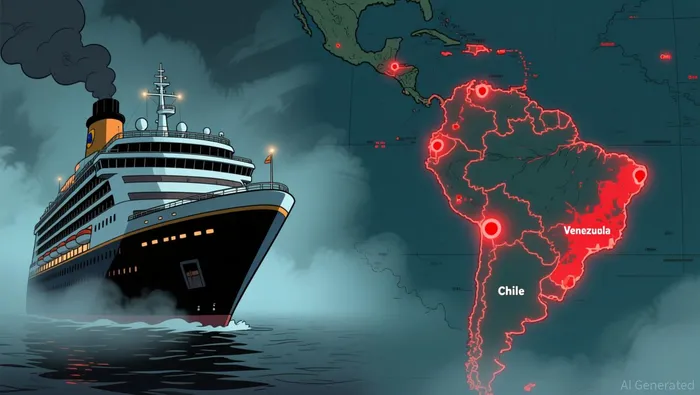
Three months ago, the world watched a cruise ship become a floating quarantine zone. The MV Hondius spent weeks stranded as 13 passengers and crew fell ill with a rodent-borne virus no one expected to spread on a luxury vessel. Three people died. The WHO declared the outbreak officially over on July 2, and the world moved on.
But the virus didn't.
On July 21, Venezuela's health ministry confirmed three hantavirus deaths in Anzoategui state, with two more deaths of health professionals in Barinas still under investigation. One week later, Chile declared its first-ever nationwide health alert for hantavirus -- the country's Ministry of Health reporting 46 cases and 18 deaths so far this year, a fatality rate of 39%. That's more than double the 18% rate in 2025. The alert runs through July 2027.
The Polymarket binary "Hantavirus pandemic in 2026?" settles at $1 if the WHO explicitly characterizes hantavirus or any related syndrome as a pandemic before December 31. Right now it trades at 3.95 cents -- meaning the crowd sees roughly a 96% chance it doesn't happen.
Open this market on Polymarket ->
The case for the longshot
The bull case for YES is simple: the pattern of escalation looks like a disease finding its moment. The cruise ship outbreak proved hantavirus can travel internationally and infect people in novel environments. Chile's fatality rate spike is the kind of signal that draws WHO attention -- a 39% kill rate is brutal by any standard, and the fact that it doubled in one year suggests something in the transmission environment has changed. Venezuela's cases, while health authorities say there is no evidence of person-to-person spread, add geographic breadth to a multi-country cluster.
The WHO's own post-mortem on the cruise ship outbreak acknowledged the virus"s ability to surprise and warned that surveillance gaps in endemic regions make it hard to track. Chile's alert is a direct response to that gap.
The case against
The bear case is also credible. Hantavirus is not new -- it's been endemic in the Americas for decades. The Andean strain that caused the cruise ship outbreak is known to have limited human-to-human transmissibility, and most cases still require rodent contact. The WHO just closed the book on the Hondius incident, so another pandemic declaration on the same virus within months would be unusual. The 3.95c price reflects the reality that a "pandemic" label is a high bar: the WHO has to use the exact word, not just a PHEIC or a health alert.
The math
At 3.95 cents, each YES share costs $0.0395 and pays $1 if the WHO calls it. That is about 25.3x. A $100 position buys roughly 2,532 shares; if the pandemic is declared, those shares return $2,532 for a profit of about $2,432. If the year ends without that declaration, the position goes to zero.
The market carries $327k in liquidity and has traded $17.6 million in volume since launch -- enough depth that the price is real and the crowd has had plenty of time to set it.
What to watch
The key dates are simple: any WHO press briefing, statement, or official publication using the word "pandemic" for hantavirus before December 31 triggers the payout. The November-December window is when the WHO typically issues year-end disease summaries, which is one reason the market hasn't fully decayed despite the 96% implied NO. Watch for further South American case clusters, especially in urban areas where rodent exposure is harder to trace, and for any WHO emergency committee meeting that mentions hantavirus alongside the usual influenza and Ebola updates.
Approximately 25x on a known pathogen with a rising fatality rate and multi-country spread is the kind of tail the market pays you to own. The most likely outcome is that the shares expire worthless. But the gap between "most likely" and "all the evidence" is where interesting bets live.
This is a trade idea, not investment advice. Prediction markets are risky -- you can lose your entire stake. Prices move. Do your own research.
Sources
- Chile declares health alert over hantavirus fatality rate (Xinhua, July 29)
- Venezuela confirms 3 hantavirus deaths (Reuters/US News, July 21)
- Venezuela confirms 3 hantavirus deaths, rules out person-to-person transmission (Xinhua, July 22)
- Hantavirus outbreak from cruise ship officially ends (The Star, July 12)
- The hantavirus outbreak has officially ended. Here are 5 lessons. (Washington Post, July 16)
- Hantavirus pandemic in 2026? (Polymarket)
_43ca838f1775813865579.png?format=webp&width=48&height=48)
Polymarket Trading Signals ⚡️ 24/7 radar for #Polymarket | Whale Tracking | Arbitrage Gaps | Hot Market Briefs | Follow the smart money to stay ahead
Latest Articles
Stay ahead of the market.
Get curated U.S. market news, insights and key dates delivered to your inbox.


AInvest
PRO
AInvest
PRO




Comments
No comments yet