
A Handshake Deal: Fred Smith and GE Aerospace Revolutionize Freight Transport
ByAinvest
Monday, Aug 25, 2025 1:27 pm ET2min read
FDX--
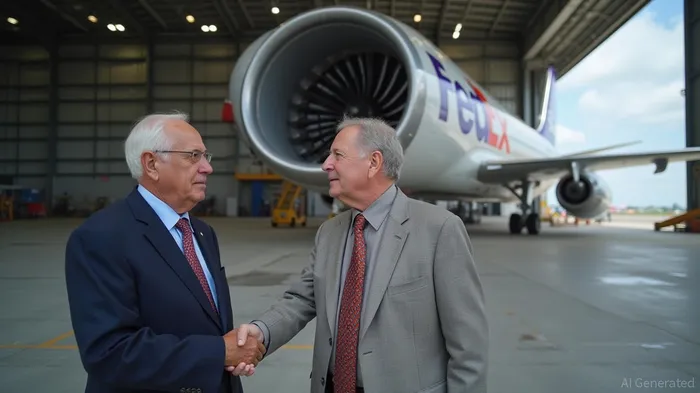
Fred Smith's journey began in 1971 when he founded Federal Express (later renamed FedEx) in Little Rock, Arkansas. He acquired 14 Dassault Falcon 20 business jets, which he converted into cargo carriers. Strapped for cash, Smith faced the challenge of maintaining his jet engines. Enter Brian Rowe of GE Aerospace, who offered Smith a significant line of credit and attractive terms for engine overhauls at GE's service shop in Strother, Kansas. The deal, done on a handshake, was the beginning of a lasting partnership [1].
GE Aerospace's CF700 engine, a commercial variant of the J85 military engine, powered Smith's Falcon 20 jets. This engine, developed by GE in Lynn, Massachusetts, was the world's first turbofan for business jets. Brian Rowe, who led the CF700 program, presented Smith with the proposal. Their relationship was marked by mutual respect and trust, with Smith and Rowe working closely together over the years [1].
As FedEx grew, so did its fleet of large cargo jets. Today, FedEx operates 269 cargo aircraft powered by GE Aerospace engines, including the CF6 and GE90 engine lines. This partnership has not only fueled FedEx's growth but also contributed to GE Aerospace's transformation. The company has maintained a close relationship with FedEx, with Smith and other GE Aerospace leaders working together to achieve mutual success [1].
Meanwhile, GE Aerospace is also involved in a significant collaboration with Hindustan Aeronautics Limited (HAL) in India. The two companies are close to finalizing an agreement to co-produce F414 jet engines for the Tejas Mk 2 fighter aircraft. This agreement marks a significant leap in technology sharing, with GE transferring approximately 80% of the engine technologies [2].
The strategic importance of this deal extends beyond the immediate production of jet engines. It lays the foundation for India to develop aftermarket support, overhaul facilities, and even evolve aerospace innovation. By mastering critical processes like turbine blade manufacturing and high-temp coatings, India gains leverage in future engine designs. This partnership is a pragmatic approach to developing indigenous capabilities while leveraging international expertise [2].
In conclusion, the partnership between GE Aerospace and FedEx, as well as the ongoing collaboration with HAL, demonstrates the power of long-term relationships and technology sharing in driving innovation and growth. These partnerships have not only transformed the aerospace industry but also contributed to the development of domestic capabilities in various countries.
References:
[1] https://www.geaerospace.com/news/articles/fred-smith-and-ge-aerospace-handshake-revolutionized-freight-transport
[2] https://english.mathrubhumi.com/news/india/hal-and-ge-gear-up-for-made-in-india-fighter-jet-engines-ql8f8nnz
GE--
FedEx founder Fred Smith's recent passing marked the end of an era, revolutionizing the freight transport industry. GE Aerospace powered Smith's bold vision from the beginning, providing jet engines for his modified business jets. Through the decades, GE Aerospace transformed from a military engine supplier to the world's largest commercial jet engine producer, while maintaining a close relationship with FedEx. Today, FedEx operates 269 cargo aircraft powered by GE Aerospace engines, starting with a handshake deal between Smith and Brian Rowe.
The recent passing of FedEx founder Fred Smith marked the end of an era in the freight transport industry. Smith's vision, which revolutionized the industry, was powered by GE Aerospace from its inception. This partnership has evolved over decades, transforming GE Aerospace from a leading military engine supplier to the world's largest commercial jet engine producer.Fred Smith's journey began in 1971 when he founded Federal Express (later renamed FedEx) in Little Rock, Arkansas. He acquired 14 Dassault Falcon 20 business jets, which he converted into cargo carriers. Strapped for cash, Smith faced the challenge of maintaining his jet engines. Enter Brian Rowe of GE Aerospace, who offered Smith a significant line of credit and attractive terms for engine overhauls at GE's service shop in Strother, Kansas. The deal, done on a handshake, was the beginning of a lasting partnership [1].
GE Aerospace's CF700 engine, a commercial variant of the J85 military engine, powered Smith's Falcon 20 jets. This engine, developed by GE in Lynn, Massachusetts, was the world's first turbofan for business jets. Brian Rowe, who led the CF700 program, presented Smith with the proposal. Their relationship was marked by mutual respect and trust, with Smith and Rowe working closely together over the years [1].
As FedEx grew, so did its fleet of large cargo jets. Today, FedEx operates 269 cargo aircraft powered by GE Aerospace engines, including the CF6 and GE90 engine lines. This partnership has not only fueled FedEx's growth but also contributed to GE Aerospace's transformation. The company has maintained a close relationship with FedEx, with Smith and other GE Aerospace leaders working together to achieve mutual success [1].
Meanwhile, GE Aerospace is also involved in a significant collaboration with Hindustan Aeronautics Limited (HAL) in India. The two companies are close to finalizing an agreement to co-produce F414 jet engines for the Tejas Mk 2 fighter aircraft. This agreement marks a significant leap in technology sharing, with GE transferring approximately 80% of the engine technologies [2].
The strategic importance of this deal extends beyond the immediate production of jet engines. It lays the foundation for India to develop aftermarket support, overhaul facilities, and even evolve aerospace innovation. By mastering critical processes like turbine blade manufacturing and high-temp coatings, India gains leverage in future engine designs. This partnership is a pragmatic approach to developing indigenous capabilities while leveraging international expertise [2].
In conclusion, the partnership between GE Aerospace and FedEx, as well as the ongoing collaboration with HAL, demonstrates the power of long-term relationships and technology sharing in driving innovation and growth. These partnerships have not only transformed the aerospace industry but also contributed to the development of domestic capabilities in various countries.
References:
[1] https://www.geaerospace.com/news/articles/fred-smith-and-ge-aerospace-handshake-revolutionized-freight-transport
[2] https://english.mathrubhumi.com/news/india/hal-and-ge-gear-up-for-made-in-india-fighter-jet-engines-ql8f8nnz
Stay ahead of the market.
Get curated U.S. market news, insights and key dates delivered to your inbox.
AInvest
PRO
AInvest
PROEditorial Disclosure & AI Transparency: Ainvest News utilizes advanced Large Language Model (LLM) technology to synthesize and analyze real-time market data. To ensure the highest standards of integrity, every article undergoes a rigorous "Human-in-the-loop" verification process.
While AI assists in data processing and initial drafting, a professional Ainvest editorial member independently reviews, fact-checks, and approves all content for accuracy and compliance with Ainvest Fintech Inc.’s editorial standards. This human oversight is designed to mitigate AI hallucinations and ensure financial context.
Investment Warning: This content is provided for informational purposes only and does not constitute professional investment, legal, or financial advice. Markets involve inherent risks. Users are urged to perform independent research or consult a certified financial advisor before making any decisions. Ainvest Fintech Inc. disclaims all liability for actions taken based on this information. Found an error?Report an Issue


ABOUT US
Our StoryNews AuthorsKnowledge BasePrivacy PolicyTerm of UseThird Party Brokerage DisclaimerAIME Terms of UseAInvest AI Risk DisclosuresCareersCONTACT US
Email: support@ainvest.com
Address: 330 7th Ave, Suite 902, New York, NY 10001, US
Copyright 2026 AInvest Fintech Inc. All rights reserved.


Comments
No comments yet