
Hammerfest LNG Resumes Operations: A Geopolitical and Energy Market Game Changer
 Aime Summary
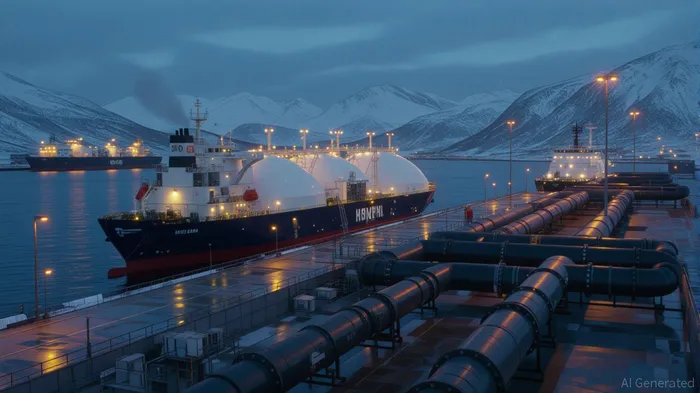
In the shadow of the Ukraine crisis, Norway's Hammerfest LNG terminal has emerged as a linchpin of European energy security. After a protracted maintenance shutdown that delayed its restart until August 2025, the facility—Europe's largest natural gas export hub—is now fully operational, restoring 4.3 million tonnes per year (mtpa) of liquefied natural gas (LNG) capacity. This revival is not just a technical achievement but a geopolitical milestone, reshaping global LNG dynamics and offering critical insights for investors navigating a fractured energy landscape.
Geopolitical Implications: Norway as Europe's Energy Lifeline
The Ukraine crisis has irrevocably altered Europe's energy calculus. With Russian pipeline gas imports to the EU plummeting by 45% in Q1 2025, Norway has solidified its position as the bloc's largest gas supplier, accounting for 31% of total imports and 55% of pipeline gas. Hammerfest's restored capacity ensures a steady flow of gas from the Snohvit field in the Barents Sea, a critical lifeline for EU nations seeking to decouple from Russian energy. This shift is not accidental but strategic: Norway's political alignment with the EU and NATO, combined with its stable regulatory environment, makes it an ideal partner in a post-Ukraine era.
The terminal's significance extends beyond supply. Norway's recent $2.8 billion investment in Ukraine's energy infrastructure—through partnerships with the UNDP, Energy Community, and NEFCO—demonstrates a dual strategy: stabilizing regional energy networks while reinforcing its own geopolitical influence. By helping Ukraine transition to decentralized, renewable power systems, Norway is indirectly bolstering the EU's energy resilience, creating a symbiotic relationship that benefits both parties.
Market Dynamics: LNG as a Strategic Commodity
The global LNG market has entered a new phase of volatility and competition. With LNG imports now accounting for 45% of EU gas supply in Q1 2025, the bloc's reliance on flexible, diversified sources has intensified. Hammerfest's 4.3 mtpa capacity adds 6.5 billion cubic meters of gas annually—enough to supply 6.5 million European homes—while Norway's broader pipeline network ensures a buffer against price shocks.
This stability is critical as the EU grapples with a 9% quarter-over-quarter rise in wholesale gas prices to 47 €/MWh in early 2025, driven by geopolitical tensions and reduced renewable output. Norway's ability to balance supply and demand—coupled with its ongoing “Snohvit Future” project (set to electrify the plant by 2030 and extend operations to 2050)—positions it as a long-term asset in a market increasingly defined by sustainability and resilience.
Investment Opportunities: Energy Giants and Strategic Alliances
For investors, the Hammerfest restart signals a strategic inflection point. EquinorEQNR--, the terminal's operator with a 36.8% stake, is a prime candidate for growth. The company's $1.34 billion investment in Hammerfest upgrades and its leadership in the Snohvit Future project align with global decarbonization trends while securing its role in Norway's energy dominance. Partners like TotalEnergiesTTE-- (18.4% stake) and Petoro (30%) also stand to benefit, as their shares in the terminal's output become more valuable in a market prioritizing geopolitical stability.
Beyond direct stakeholders, the broader energy transition narrative offers opportunities. The EU's Clean Industrial Deal and Affordable Energy Action Plan are driving investments in cross-border infrastructure and clean technologies, with Central and Eastern Europe (CEE) nations emerging as key battlegrounds. Countries like Poland and the Baltic states, which have historically relied on Russian gas, are now pivoting to Norwegian LNG and renewable partnerships. This shift creates a ripple effect, boosting demand for energy storage, grid modernization, and hydrogen infrastructure—sectors where Norway's partners are likely to play a pivotal role.
The Road Ahead: Balancing Short-Term Gains and Long-Term Resilience
While the immediate benefits of Hammerfest's restart are clear, investors must also consider the long game. The terminal's electrification by 2030 and its integration into Norway's broader decarbonization strategy (including carbon capture and storage) will shape its competitiveness in a net-zero world. For now, the focus remains on geopolitical stability and market share, but the future will demand innovation and adaptability.
The U.S. and Qatar, both major LNG suppliers to the EU, present both competition and collaboration opportunities. U.S. LNG offers short-term affordability, but its reliance on shale gas and geopolitical ties to Washington may limit its appeal in the long run. Norway's cleaner, more politically aligned supply chain gives it an edge, particularly as the EU tightens emissions regulations.
Conclusion: A New Era for Energy Security
Norway's Hammerfest LNG terminal is more than a facility; it's a symbol of Europe's determination to reclaim energy sovereignty in a post-Ukraine world. By restoring this critical capacity, Norway has not only secured its role as the EU's primary gas supplier but also reinforced a geopolitical alliance that transcends energy. For investors, the message is clear: the future of energy is not just about resources—it's about resilience, sustainability, and strategic foresight.
In a world where energy is both a commodity and a weapon, Norway's LNG revival offers a blueprint for stability. The question for investors is not whether to act—but how to position themselves for the next chapter in this evolving energy saga.

Delivering real-time insights and analysis on emerging financial trends and market movements.
Latest Articles
Stay ahead of the market.
Get curated U.S. market news, insights and key dates delivered to your inbox.
AInvest
PRO
AInvest
PRO



Comments
No comments yet