
U.S. Halts $400M Funding for California High-Speed Rail Amid Delays, Cost Overruns
The United States government has decided to withdraw approximately 400 million dollars in federal funding for the California High-Speed Rail project. This decision follows a nearly four-month review period, during which the project faced significant scrutiny due to delays, mismanagement, and escalating costs. The project, which aimed to connect Los Angeles and San Francisco with a high-speed rail line, has been plagued by issues since its inception. Despite the initial concept being economically viable, the project has struggled to gain traction due to a series of setbacks.
The U.S. Department of Transportation, led by Secretary Elaine Chao, highlighted several critical issues with the project. Over the past 17 years, the project has consumed 16 billion dollars, yet not a single mile of track has been laid. This stark reality has led to widespread criticism and calls for a reevaluation of the project's feasibility. The department's report, spanning 310 pages, detailed the numerous challenges faced by the project, including delays in construction, poor management, and a lack of economic viability for the central valley section of the route.
The decision to cut federal funding has sparked debate among stakeholders. Some argue that the project's cancellation could be beneficial, as it has become a "zombie project" with little economic value. Others, however, see the potential in the concept of a high-speed rail line connecting major cities and believe that the project could still be salvaged with better management and additional funding.
The cancellation of the California High-Speed Rail project underscores the broader challenges faced by infrastructure projects in the United States. High costs, delays, and mismanagement are common issues that can derail even the most well-intentioned initiatives. The project's failure serves as a cautionary tale for policymakers and stakeholders, highlighting the need for careful planning, transparent management, and realistic cost estimates. As the United States continues to grapple with its infrastructure needs, the lessons learned from the California High-Speed Rail project will be crucial in shaping future initiatives.
The project's failure can be traced back to a series of poor decisions that compromised its economic viability. In 1999, a Republican politician successfully pushed for the rail line to bypass his district, adding significant costs and extending travel time. This decision set a precedent for future choices that prioritized local interests over the project's core goals. Subsequent decisions, such as choosing a more expensive route through Pacheco Pass instead of the more direct Altamont Pass, further compromised the project's efficiency and economic viability.
The project's failure highlights the importance of avoiding "pre-commitment" in infrastructure planning. Instead of committing to a large-scale project without a clear plan, policymakers should invest in smaller, more manageable initiatives. This approach allows for better oversight and the ability to pivot if the project faces significant challenges. The New York University Transportation Cost Project's proposal for an East Coast high-speed rail line demonstrates this approach. The proposal focuses on finding the most cost-effective way to connect major cities within a four-hour travel time, rather than trying to satisfy all stakeholders' demands. This approach results in a more feasible and economically viable project.
In conclusion, the cancellation of the California High-Speed Rail project serves as a reminder of the challenges faced by large-scale infrastructure initiatives. The project's failure underscores the need for careful planning, transparent management, and realistic cost estimates. As the United States continues to invest in its infrastructure, policymakers and stakeholders must learn from the lessons of the California High-Speed Rail project to ensure the success of future initiatives. 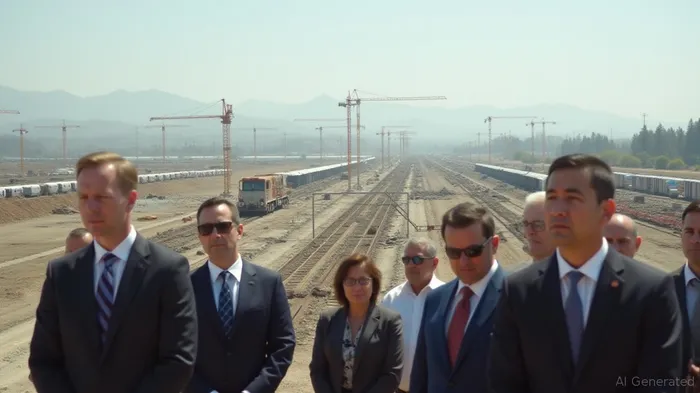

Stay ahead of the market.
Get curated U.S. market news, insights and key dates delivered to your inbox.


AInvest
PRO
AInvest
PRO



Comments
No comments yet