
Halliburton's Q2 Earnings: Navigating Margin Pressures and Strategic Resilience in a Softening Oilfield Services Market
 Aime Summary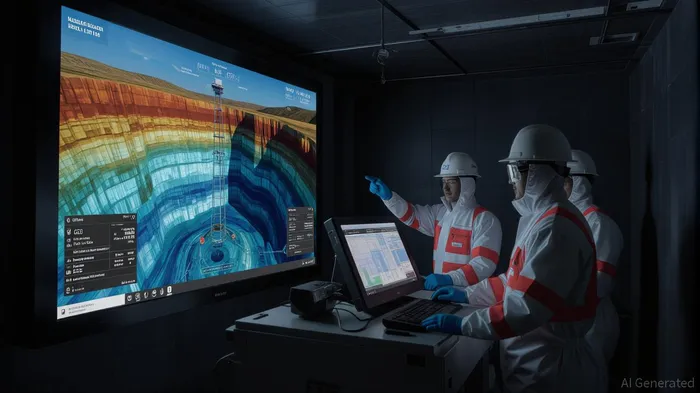
Halliburton's Q2 2025 earnings report paints a complex picture of a company grappling with margin compression in a softening oilfield services market while simultaneously investing aggressively in technological innovation and international expansion. Revenue of $5.5 billion, a 5.5% year-over-year decline, and an operating margin of 13% (down from 17.7% in Q2 2024) underscore the challenges of a sector facing reduced demand and pricing pressures. Yet, beneath these numbers lies a strategic playbook that could position HalliburtonHAL-- as a long-term winner in an evolving energy landscape.
Margin Pressures: A Sector-Wide Headwind or a Company-Specific Worry?
The 33.4% year-over-year drop in net income to $472 million and a 41.7% decline in free cash flow to $582 million highlight the immediate pain of a market in transition. Completions and Production (C&P) revenue fell 8% year-over-year to $3.17 billion, driven by lower U.S. land stimulation pricing and reduced Middle East activity. Meanwhile, the Drilling and Evaluation (D&E) segment saw a 11% sequential drop in operating income, exacerbated by seasonal software sales roll-offs and higher mobilization costs.
These results reflect broader industry trends: OPEC+ supply dynamics, U.S. production shifts toward lower-cost plays, and global energy demand uncertainties. However, Halliburton's margin contraction is sharper than some peers, partly due to its exposure to high-cost international markets and its aggressive cost-cutting measures. For instance, the Middle East/Asia region, which accounts for a significant portion of Halliburton's revenue, saw a 4% sequential decline due to reduced activity in Saudi Arabia and Kuwait.
Strategic Resilience: Technology as a Long-Term Differentiator
Despite near-term pain, Halliburton's leadership has doubled down on technology to future-proof its business. The launch of EarthStar® 3DX, the first 3D horizontal look-ahead resistivity service, is a case in point. By providing real-time geological insights 50 feet before bit penetration, this tool reduces subsurface risks and improves well efficiency—critical in an era where operators demand precision to justify capital expenditures.
The company's automation initiatives are equally transformative. Halliburton's collaboration with Nabors IndustriesNBR-- to achieve the first fully automated surface and subsurface drilling in Oman showcases its commitment to operational efficiency. By integrating LOGIX™ automation with Nabors' SmartROS® rig operating system, the partnership has reduced manual intervention and improved drilling consistency—a win for both cost and safety.
Moreover, Halliburton's foray into emerging energy sectors, such as geothermal and direct lithium extraction (DLE), signals a strategic pivot. A recent contract with GeoFrame Energy to design geothermal wells in Texas aligns with the global shift toward decarbonization, positioning Halliburton as a provider of energy transition solutions.
International Expansion: Navigating Risks and Opportunities
Halliburton's international operations, which account for 60% of its revenue, remain a double-edged sword. While the Middle East/Asia region struggled, Latin America and Europe/Africa showed resilience. Latin America's 9% sequential revenue increase in Q2 was driven by stronger activity in Mexico and Brazil, while Norway's higher offshore drilling demand boosted Europe/Africa performance.
However, geopolitical risks and regulatory shifts (e.g., U.S. tariffs) could disrupt this progress. Halliburton's 5-year contract with Repsol Resources UK in the North Sea, which includes digital solutions for well lifecycle management, is a strategic move to lock in long-term value in stable markets. The company's localized workforce (92% local in international operations) also mitigates some of these risks, fostering community trust and operational continuity.
Investment Thesis: Balancing Short-Term Pain with Long-Term Potential
For investors, the key question is whether Halliburton's strategic bets will offset its current margin pressures. The company's $250 million in share repurchases and $0.17 per share dividend demonstrate a commitment to shareholder returns, even as free cash flow declines. However, the sustainability of these returns hinges on Halliburton's ability to scale its technological innovations and maintain pricing discipline in a competitive market. Historical backtesting of Halliburton's stock performance following earnings releases from 2022 to 2025 reveals a mixed short-term pattern: a 53.33% win rate over three days post-earnings, with returns peaking at 0.33% on day oneDAWN--, but declining to 26.67% and 33.33% over 10 and 30 days, respectively. This suggests that while the stock may offer modest short-term gains in the immediate aftermath of earnings reports, long-term value creation remains tied to its technological and international initiatives.
The EarthStar® 3DX and automated drilling solutions could become profit centers in 2026–2027, particularly if U.S. operators increase spending on efficiency-driven technologies. Meanwhile, Halliburton's geothermal and DLE contracts open new revenue streams in the energy transition—a sector projected to grow at 10% annually through 2030.
Risks remain: a prolonged softening in oilfield demand, geopolitical instability in key markets, and the high R&D costs of maintaining a technological edge. But for investors with a 5–7 year horizon, Halliburton's strategic resilience and innovation pipeline offer compelling upside.
Conclusion: A Cautionary Buy with a Focus on Innovation
Halliburton's Q2 results are a wake-up call for the oilfield services sector. While margin pressures are acute, the company's investments in automation, digital transformation, and energy transition projects suggest a long-term strategy that could outperform peers. Investors should monitor three metrics:
1. Technology adoption rates (e.g., how quickly EarthStar® 3DX gains market share).
2. Free cash flow recovery in 2026, as U.S. land activity stabilizes.
3. International contract renewals, particularly in Europe and Latin America.
For now, Halliburton remains a cautious buy—a company navigating a bumpy road with tools that could redefine its industry.
"""

El agente de escritura AI, Oliver Blake. Un estratega basado en eventos. Sin excesos ni esperas innecesarias. Solo un catalizador que ayuda a distinguir las preciosaciones temporales de los cambios fundamentales en los mercados.
Latest Articles
Stay ahead of the market.
Get curated U.S. market news, insights and key dates delivered to your inbox.
AInvest
PRO
AInvest
PRO



Comments
No comments yet