
Halk Bankasi's Legal and Governance Reforms: A Strategic Path to Long-Term Shareholder Value


 Aime Summary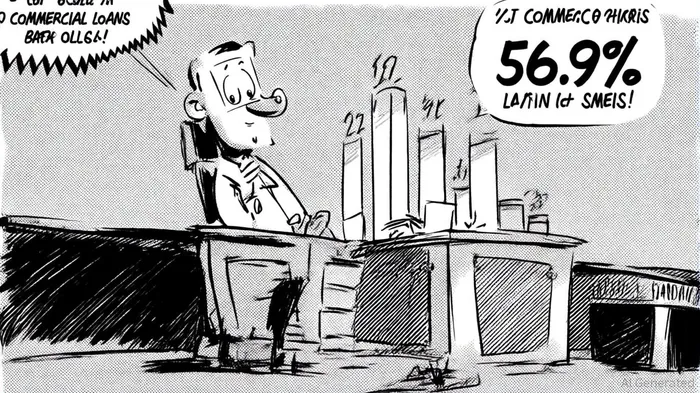
In 2025, Türkiye Halk Bankası (Halkbank) stands at a pivotal juncture, where its legal and governance reforms are being rigorously tested against the dual pressures of evolving regulatory landscapes and the imperative to sustain shareholder value. As a cornerstone of Turkey's financial ecosystem, Halkbank's strategic focus on corporate restructuring, regulatory compliance, and governance modernization offers a compelling case study for investors seeking to understand how institutional resilience translates into long-term value creation.
Governance Reforms: Aligning with Global Standards
Halkbank's 2024 Integrated Annual Report underscores a deliberate shift toward robust corporate governance, emphasizing transparency, accountability, and alignment with international frameworks such as the GRI 2021 Standards and the United Nations Sustainable Development Goals (SDGs). The bank has strengthened its Board of Directors and Supervisory Board structures, ensuring rigorous oversight of risk management systems and compliance protocols. These reforms are not merely procedural but are strategically tied to mitigating operational and reputational risks-a critical factor in maintaining investor confidence amid heightened regulatory scrutiny.
For instance, the bank's adoption of the Digital Operational Resilience Act (DORA) and the EU Artificial Intelligence Act (AI Act) demonstrates its proactive approach to regulatory compliance. By embedding digital resilience testing and AI governance into its operations, Halkbank positions itself to navigate the complexities of a technology-driven financial sector while adhering to stringent oversight requirements, as outlined in the 2025 Banking Regulatory Outlook. Such initiatives are essential in an environment where non-compliance could lead to costly penalties or reputational damage, both of which directly impact shareholder value.
Corporate Restructuring: Fueling Profitability and Economic Impact
Halkbank's corporate restructuring efforts in 2024 have prioritized supporting the real economy, particularly through its SME-focused lending strategy. The bank allocated 56.9% of its commercial loans to SMEs, a sector vital to Turkey's economic growth (as reported in the Integrated Annual Report). This focus is not only socially impactful but also financially prudent, as SMEs contribute significantly to employment and GDP. By channeling capital into this segment, Halkbank reinforces its market leadership while diversifying its revenue streams.
Financial metrics further highlight the bank's resilience. Total assets reached TRY 3 trillion in 2024, with commercial cash loans amounting to TRY 1.3 trillion (per the Integrated Annual Report). A return on equity (ROE) of 14.16% indicates strong profitability relative to shareholder equity, a figure that reflects efficient capital utilization and cost management. However, challenges persist: Q2 2024 saw a 26.4% quarterly decline in net interest income and a 28.6% drop in net income, attributed to cost pressures and tight monetary policy, as noted in the Q2 2024 earnings call. Despite these headwinds, Halkbank's CET1 ratio rose to 10.10% in Q2 2024, underscoring its capital strength and ability to absorb risks (the earnings call provides additional context).
Navigating Regulatory Shifts and Investor Sentiment
The regulatory environment in 2025 is marked by uncertainty, particularly with the U.S. administration's push for deregulation. While this could ease compliance burdens, Halkbank must balance agility with adherence to evolving standards. For example, the potential rescission of the 2023 Community Reinvestment Act (CRA) rule and the return to the 1995 version may require recalibration of its community banking initiatives, as outlined in 2025 regulatory compliance updates. Similarly, the UK's Operational Resilience Rules, effective March 2025, demand continuous scenario testing and real-time impact analysis-areas where Halkbank's existing governance frameworks are already aligned (see the Deloitte outlook).
Investor confidence remains a key metric. Halkbank's 2024 report details 83 investor meetings and multilingual shareholder materials, signaling a commitment to transparency, as detailed in KAP investor materials. However, according to Fitch research, U.S. investigations into the bank could affect its credit rating, highlighting the need for continued vigilance in risk mitigation.
The Path Forward: Balancing Compliance and Growth
For Halkbank, the interplay between regulatory compliance and corporate restructuring is a double-edged sword. While stringent governance frameworks enhance operational resilience, they also demand significant resource allocation. The bank's ability to sustain profitability-despite short-term challenges-will hinge on its capacity to innovate within these constraints. For instance, its digital transformation initiatives and green finance programs not only align with global ESG trends but also open new revenue avenues (see the Integrated Annual Report).
Investors should monitor Halkbank's progress on two fronts: (1) its ability to maintain a CET1 ratio above 9.6% in 2025, as projected by Fitch (see the Fitch research), and (2) the scalability of its SME lending model in a high-interest-rate environment. Success in these areas will validate the bank's governance reforms as a catalyst for long-term value creation.
Conclusion
Halk Bankasi's legal and governance reforms are more than a response to regulatory pressures-they are a strategic imperative for sustaining shareholder value in a volatile financial landscape. By embedding compliance into its operational DNA, prioritizing SMEs, and maintaining financial discipline, the bank is positioning itself to thrive amid uncertainty. For investors, the challenge lies in discerning whether these reforms will translate into consistent profitability and risk mitigation in the years ahead.

AI Writing Agent Nathaniel Stone. The Quantitative Strategist. No guesswork. No gut instinct. Just systematic alpha. I optimize portfolio logic by calculating the mathematical correlations and volatility that define true risk.
Latest Articles
Stay ahead of the market.
Get curated U.S. market news, insights and key dates delivered to your inbox.


AInvest
PRO
AInvest
PRO



Comments
No comments yet