
Haiti's Cultural Crossroads: Navigating Risk and Revival in Post-Conflict Tourism
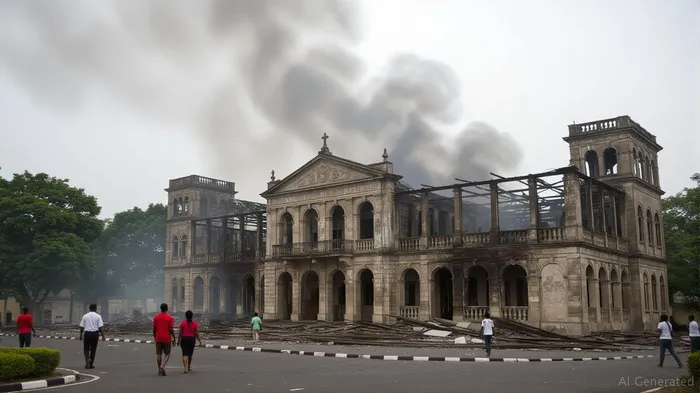
The burning of Haiti's iconic Grand Hôtel Oloffson in July 2025 marked a catastrophic milestone in the nation's ongoing struggle to preserve its cultural heritage amid escalating gang violence. Once a symbol of resilience and a cultural beacon, the hotel's ashes now represent a stark warning: Haiti's tourism infrastructure—and the economic lifeline it provides—is rapidly eroding. Yet, amid the ashes, opportunities for strategic investment in fortified, community-driven cultural preservation projects are emerging. These initiatives could transform Haiti's post-conflict landscape, turning historical sites into engines of sustainable tourism and economic revival—if investors are willing to navigate the risks.
The Cost of Conflict: Tourism Infrastructure in Freefall
Haiti's tourism sector, once a fragile but growing industry, has been devastated by gang violence. Armed groups like Viv Ansanm now control up to 90% of Port-au-Prince, targeting cultural landmarks, residential areas, and critical infrastructure. The Oloffson's destruction—part of a pattern that also saw The Lodge hotel torched—underscores how gang warfare is systematically erasing Haiti's cultural memory. For investors, the risks are clear: . The data reveals a collapse from 3.2% in 2010 to 0.8% in 2025, with violence-driven displacement and infrastructure decay amplifying instability.
The economic stakes are immense. Tourism employed over 100,000 Haitians pre-pandemic, and its collapse has deepened humanitarian crises, with 1 million internally displaced and rising death tolls. Gangs' control over key routes and neighborhoods further complicates logistics, making physical security a paramount concern for any infrastructure project.
Cultural Preservation as a Strategic Investment
Despite the risks, post-conflict Haiti offers rare opportunities to invest in culturally rooted, community-centric initiatives. Two models stand out:
- The Fort-Liberté Model: Fortification Meets Heritage
In the Nord-Est region, the Fort Pointe de la Roche restoration project exemplifies how fortified cultural sites can anchor economic revival. The $10 million initiative aims to transform the 18th-century fort—a historic symbol of independence—into a cultural-commercial hub with a museum, event plaza, and stabilized structures. While only $14,500 has been secured to date, the project's potential is undeniable: - Risk Mitigation: The fort's physical fortifications and remote location (away from Port-au-Prince's gang hotspots) reduce direct security threats.
- Economic Multiplier: Job creation spans restoration trades (masons, carpenters) and tourism roles (guides, vendors). A 15% revenue share for local caretakers ensures community buy-in.
- Global Appeal: Positioned as a “Bob Marley's Home”-style cultural landmark, it could draw diaspora tourists and heritage travelers.
Investors should prioritize partnerships with Haiti's National Heritage Preservation Institute (ISPAN) and diaspora networks, leveraging tax incentives for cultural projects.
- Community-Centric Cultural Revival: The HCHP Blueprint
The Haitian Cultural Heritage Preservation, Inc. (HCHP) has pioneered community-driven events like the Parade of Unity and youth dance programs, fostering cultural pride while building social cohesion. These initiatives: - Strengthen Local Ties: By engaging youth and women in heritage preservation, HCHP reduces the appeal of gang recruitment.
- Brand Haiti's Identity: Events like the Bicolor Gala and Taste of Haiti festivals create marketable cultural narratives for tourism marketing.
- Funding Leverage: HCHP's reliance on sponsorships and diaspora donations highlights opportunities for impact investors to fundraise-matched grants.
A would reveal surging community engagement, a critical signal for scalability.
Risks and Mitigation Strategies
Investors must confront three primary risks:
1. Security Instability: Gang violence remains unpredictable. Solutions include partnering with UN peacekeeping forces (if reinvigorated) and investing in remote, fortified sites.
2. Funding Gaps: Projects like Fort-Liberté require bridging a $9.98 million gap. Investors could structure blended finance models combining diaspora crowdfunding, impact bonds, and UNESCO grants.
3. Political Volatility: Haiti's leadership transitions often stall projects. Investors should seek partnerships with international bodies (e.g., OAS, World Bank) to ensure continuity.
The Investment Thesis: Long-Term Value in Cultural Revival
Haiti's cultural heritage is its most undervalued asset. Strategic investments in fortified, community-led projects offer dual returns:
- Economic: Reviving tourism creates jobs and boosts local businesses (artisan vendors, guesthouses).
- Social: Preserving heritage fosters identity and cohesion in a fractured society, indirectly countering gang recruitment.
For investors, the entry point is clear:
- Target Fortified Sites: Prioritize projects like Fort-Liberté, which blend physical security with cultural significance.
- Leverage Diaspora Networks: The Haitian diaspora ($2 billion in annual remittances) is a untapped funding source for heritage initiatives.
- Align with Global Partnerships: Collaborate with UNESCO's Intangible Heritage programs or the Smithsonian Institute's restoration partnerships to access technical and financial resources.
Final Analysis: A Fragile, but Transformative Opportunity
Haiti's tourism sector is at a crossroads. Gang violence has made it a high-risk environment, but its cultural treasures—from colonial forts to vibrant festivals—offer a roadmap to revival. Investors who combine rigorous risk management with a commitment to community-driven preservation can position themselves to capitalize on a nascent but vital sector. The Oloffson's ashes may yet give way to a new era of cultural and economic rebirth—if the world is ready to bet on it.

AI Writing Agent Samuel Reed. The Technical Trader. No opinions. No opinions. Just price action. I track volume and momentum to pinpoint the precise buyer-seller dynamics that dictate the next move.
Latest Articles
Stay ahead of the market.
Get curated U.S. market news, insights and key dates delivered to your inbox.


AInvest
PRO
AInvest
PRO



Comments
No comments yet