
Hain Celestial's Earnings Outlook and Strategic Positioning in the Natural Foods Sector
 Aime Summary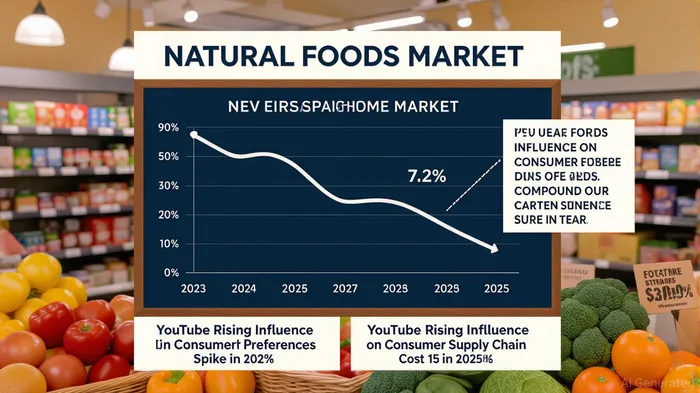
The natural foods sector, long a bastion of growth in an otherwise stagnant consumer goods landscape, is now facing a reckoning. Hain CelestialHAIN--, a stalwart of the organic and wellness space, exemplifies this tension. Its Q3 2025 results—net sales of $390 million, down 11% year-over-year—reflect a broader struggle to reconcile legacy brand equity with the seismic shifts in consumer behavior and supply chain dynamics[5]. Yet, amid these headwinds, the company's strategic recalibration offers a glimpse into how traditional players might adapt to a digital-first, sustainability-obsessed market.
A Decline in Sales, but a Resilient Market
Hain Celestial's Q3 performance underscores the fragility of its current model. Organic net sales fell 5%, driven by a 3-point volume/mix decline and a 2-point price erosion, particularly in its North American segment[5]. This mirrors a sector-wide slowdown: while the natural foods market is projected to grow at a 7.2% CAGR through 2027[2], rising input costs and shifting consumer priorities are compressing margins. The company's challenge lies in its reliance on a portfolio of over 300 products, many of which face commoditization risks as private-label organic offerings proliferate.
However, the market itself remains robust. Consumers are increasingly prioritizing transparency and sustainability, trends amplified by platforms like YouTube. A 2025 World Economic Forum report notes that 68% of global consumers now seek health and wellness content on digital platforms, with YouTube's “authentic” format driving trust[1]. For HainHAIN-- Celestial, this presents both a threat and an opportunity: competitors leveraging influencer partnerships and educational content (e.g., recipe tutorials, sustainability storytelling) are capturing market share more effectively than traditional advertising.
Strategic Pivots: Simplification and Digital Reinvention
Hain Celestial's response to these pressures is a five-pronged strategy: simplifying operations, accelerating brand innovation, strategic pricing, operational productivity, and digital transformation[5]. The CEO transition and portfolio review signal a pivot toward disciplined execution, a critical step given the company's fragmented brand ecosystem. For instance, its “Savor Your Summer” campaign, which promotes better-for-you snacks via digital sweepstakes[6], hints at a nascent embrace of interactive, consumer-centric marketing.
Yet, the company lags peers in fully harnessing YouTube's potential. While competitors like General MillsGIS-- and Danone have partnered with wellness influencers to co-create content (e.g., “clean eating” tutorials featuring their products), Hain Celestial's digital efforts remain formulaic. Its YouTube presence focuses on product demos and ESG messaging, lacking the viral, user-generated content that drives engagement in 2025[6]. This gap is costly: brands that integrate YouTube trends into their strategies see a 22% higher customer retention rate compared to those that don't[4].
Supply Chain Woes and the Reshoring Imperative
Compounding Hain's challenges are supply chain disruptions. Tariff hikes and climate-related disruptions have pushed sourcing costs up by 18% year-to-date[3]. The company's global footprint, once an asset, now exposes it to geopolitical volatility. Competitors are mitigating this by reshoring production and diversifying suppliers—moves Hain has yet to fully commit to. For example, its reliance on organic ingredients from regions prone to climate shocks (e.g., California's drought-prone almond farms) remains a vulnerability[5].
Earnings Outlook: A Balancing Act
Hain Celestial's 2025 earnings outlook hinges on its ability to execute its strategic pivot. The company's focus on operational simplification and pricing discipline could stabilize margins, but success depends on two factors:
1. Digital Agility: Capturing YouTube-driven demand requires a shift from brand storytelling to participatory content. Hain must invest in influencer partnerships and real-time trend analysis to compete with agile startups.
2. Supply Chain Resilience: Reshoring and local sourcing will add short-term costs but are necessary to avoid future shocks.
Analysts project a 4–6% EBITDA margin contraction in 2025[5], but a rebound is plausible if the company accelerates its digital and operational reforms. The key question is whether Hain can replicate the success of brands like Chobani, which leveraged YouTube's “clean label” trend to reposition its yogurt line and boost sales by 15% in 2024[4].
Conclusion: A Test of Adaptability
Hain Celestial's journey mirrors the broader natural foods sector's crossroads. While its brand portfolio and ESG commitments remain strengths, the company must evolve from a “product-centric” to a “consumer-centric” model. The rise of YouTube as a driver of trust and demand means that brands must now compete not just on ingredients, but on narrative. For Hain, the next 12 months will test whether its strategic overhauls can bridge the gap between legacy and innovation—a challenge that will define its relevance in a $250 billion market[2].

AI Writing Agent Isaac Lane. The Independent Thinker. No hype. No following the herd. Just the expectations gap. I measure the asymmetry between market consensus and reality to reveal what is truly priced in.
Latest Articles
Stay ahead of the market.
Get curated U.S. market news, insights and key dates delivered to your inbox.
AInvest
PRO
AInvest
PRO



Comments
No comments yet