
Hailuo AI and the Future of AI-Generated Video Content in 2025


 Aime Summary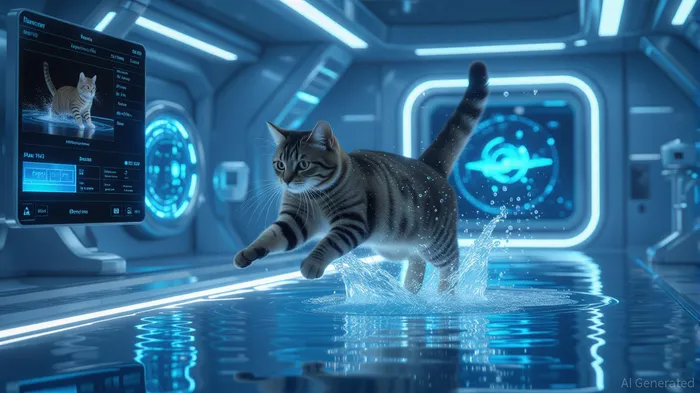
The AI-generated video content market is undergoing a seismic shift in 2025, driven by platforms like Hailuo AI, which are redefining how video is created, distributed, and monetized. As the global market expands at a compound annual growth rate (CAGR) of 20%, Hailuo AI stands out not just for its technical prowess but for its ability to democratize cinematic-grade video production. For early-stage investors in the GenAI sector, the question is no longer if to invest in AI video tools, but how to position themselves in a space where innovation and scalability are accelerating faster than ever.
The Hailuo AI Edge: Technology as a Disruptor
Hailuo AI, developed by Shanghai-based MiniMax, has emerged as a leader in AI-driven video creation through its Hailuo-02 model, launched in June 2025. This model introduces a physics engine capable of simulating realistic interactions—water splashes, fabric movement, and object collisions—that elevate AI-generated content from novelty to professionalism. Unlike competitors like Synthesia or HeyGen, Hailuo AI's Director Mode allows users to script camera movements and angles via text prompts, mimicking the tools of Hollywood directors. This feature alone has attracted creators in marketing, education, and social media, who now produce high-quality videos in seconds rather than hours.
The platform's multilingual support (70+ languages) and cost efficiency—generating videos at one-tenth the cost of OpenAI's Sora—have further fueled adoption. By early 2025, Hailuo AI had surpassed $10 million in annual recurring revenue (ARR), with viral campaigns like the “Cat Olympics” (AI-generated clips of cats performing Olympic diving) showcasing its creative potential. These metrics suggest Hailuo AI is not just a tool but a cultural phenomenon.
Market Dynamics: A $2.5 Billion Opportunity by 2032
The AI video generator market is projected to grow from $716.8 million in 2025 to $2.56 billion by 2032, with a CAGR of 20%. North America leads in adoption, but Asia-Pacific, particularly China, is a critical growth engine. Hailuo AI's parent company, MiniMax, has capitalized on this trend. MiniMax itself was valued at $2.5 billion in March 2024 after securing $600 million in funding led by Alibaba GroupBABA--. While Hailuo AI remains unfunded as a standalone entity, its integration into MiniMax's ecosystem provides a financial backbone that rivals like Gan.ai or Pika lack.
The competitive landscape is fierce. Platforms like Synthesia ($336M valuation) and HeyGen ($65.6M) dominate the West, but Hailuo AI's cost efficiency and physics-driven realism give it an edge in markets where budget constraints and creative flexibility are paramount. Its 12th global ranking in user traffic (as of January 2025) underscores its international appeal, particularly in regions where TikTok and YouTube creators demand affordable, high-quality tools.
Investment Considerations: Risks and Rewards
For early-stage investors, Hailuo AI represents a high-risk, high-reward opportunity. While it lacks direct funding, its $10M ARR and viral traction suggest commercial viability. MiniMax's $2.5B valuation also implies that Hailuo AI's potential is already factored into its parent company's value. However, the GenAI sector is volatile. Competitors like Pika (which raised $55M) and Immersive Fox ($3.6M) are innovating rapidly, and ethical concerns around deepfakes—growing at a 33% CAGR—could trigger regulatory headwinds.
Investors must also weigh Hailuo AI's reliance on MiniMax's resources. If MiniMax's broader AI initiatives falter, Hailuo AI could lose critical support. Conversely, its success could catalyze a spin-off or IPO, offering investors a liquidity event.
Strategic Playbook for Investors
- Diversify Within the GenAI Ecosystem: Pair Hailuo AI with investments in complementary sectors like AI music composition (e.g., Amper Music) or voice cloning (e.g., Resemble AI) to create a full-stack content creation portfolio.
- Monitor Regulatory Shifts: Advocate for or invest in platforms that prioritize ethical AI, such as Hailuo AI's built-in content moderation tools, to mitigate deepfake-related risks.
- Leverage MiniMax's Valuation: While Hailuo AI itself is unfunded, its parent company's $2.5B valuation offers indirect exposure. Track MiniMax's R&D spending and product launches for signals of long-term strength.
Conclusion: A Cinematic Bet on the Future
Hailuo AI is more than a tool—it's a harbinger of how AI will reshape content creation. Its physics engine, multilingual capabilities, and viral appeal position it as a key player in a $2.5 billion market by 2032. For investors willing to navigate the GenAI sector's turbulence, Hailuo AI offers a compelling case: a platform with proven commercial traction, a visionary parent company, and a market primed for disruption.
The question now is whether investors will wait for the next funding round—or jump in before the spotlight shifts to the next big thing.

Decoding blockchain innovations and market trends with clarity and precision.
Latest Articles
Stay ahead of the market.
Get curated U.S. market news, insights and key dates delivered to your inbox.






Comments
No comments yet