
Hadron's Leadership Appointments: A Tactical Push for SPAC Merger Closure
 Aime Summary
The timing of Hadron's executive hires is the clearest signal yet that the company is in the final sprint to close its SPAC merger. The appointments of Ken Canavan as COO and Rahul Shukla as CFO were announced just days before the deal is expected to close, with the business combination slated for the first half of Q1 2026. This isn't a routine leadership update; it's a tactical move to bolster the operational and financial credibility of a pre-revenue company just as it prepares to become a publicly traded entity.
Canavan's hire is critical for the post-merger execution phase. With nearly four decades of experience across nuclear operations and advanced reactor development, his background provides the deep technical and program management expertise needed to transition from a pre-revenue startup to a company executing its first-of-a-kind (FOAK) deployment. His recent role leading a $200 million advanced reactor program at Westinghouse Electric Company gives him a direct blueprint for managing the complex, capital-intensive build-out that follows a public listing.
Shukla's appointment addresses the other major hurdle: public company compliance. As CFO, he brings deep expertise in SEC reporting, Sarbanes-Oxley Act (SOX) compliance, and capital markets readiness. His track record includes leading audit and SOX remediation efforts at a publicly traded clean-energy software firm and supporting multiple public offerings totaling over $1.6 billion. This is the kind of experience that investors scrutinize when a private company goes public, ensuring the financial reporting infrastructure is in place from day one.
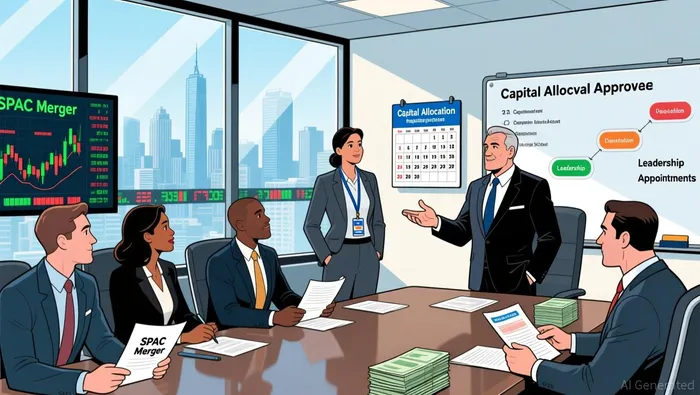
The bottom line is that these appointments are a classic SPAC closing catalyst. They directly address the two biggest concerns for a pre-revenue nuclear technology company going public: operational execution capability and financial transparency. While they don't alter the fundamental valuation risk of a pre-revenue, pre-certification reactor project, they do materially strengthen the management team's profile just as the company enters the public markets.
The Merger Setup: Cash Proceeds and Pre-Listing Reality
The financial mechanics of the deal are straightforward but stark. The SPAC merger values Hadron at $1.2 billion on paper, a figure that includes the value of shares given to existing Hadron security holders. The immediate cash infusion for the company, however, is a fraction of that headline number. After transaction expenses, the deal will provide around $200 million in net proceeds from the SPAC's trust account. This is the capital that must fund the entire path from a pre-revenue startup to a commercial reactor.
That pre-revenue reality is extreme. Founded in 2024, Hadron operates as a private company with only 10 employees. Its entire existence is built on a single technology concept: the Hadron MMR, a 10 MWe design. The company has engaged with potential customers at the letter-of-intent stage and begun regulatory outreach, but it has no product, no revenue, and no commercial deployment timeline. The $200 million is a massive war chest for a company of this scale, but it is also a high-stakes bet that must cover years of development, certification, and construction.
The development stage of the Halo MMR itself is a critical unknown. While the design is built on proven light water reactor technology, the company has not provided a timeline for its first commercial deployment. The only regulatory milestones mentioned are a plan to submit key applications to the Nuclear Regulatory Commission by the fourth quarter of 2026. This creates a significant execution risk. The capital must be deployed to navigate a lengthy and costly certification process, build a prototype, and secure its first customer-all before the market's patience for a pre-revenue nuclear venture wears thin.
The setup is a classic high-risk, high-reward SPAC profile. The $200 million provides a clear runway, but the pre-revenue, pre-product reality means the stock's value will be driven almost entirely by progress on the regulatory and development path. Any delay or setback in those areas could quickly erode the capital base and investor confidence.
Immediate Risk/Reward Setup: Post-Merger Catalysts and Guardrails
The immediate setup for the stock is binary: it hinges on the successful closing of the SPAC merger in the first half of Q1 2026. This event itself is the primary catalyst. Upon completion, Hadron will become the first publicly listed, light water micro modular reactor company. This creates a clear narrative hook for investors and a defined starting point for the stock's trading. The market's initial reaction will be a function of the merger's mechanics and the pre-listing sentiment, but the real story begins post-close.
A key near-term guardrail has already been crossed. The company has achieved a critical regulatory milestone: the U.S. Nuclear Regulatory Commission has formally accepted for review its Quality Assurance Program Description. This acceptance for review is a tangible step forward in the licensing pathway. It validates the quality of Hadron's early work and establishes a formal review schedule with the NRC. This is a positive signal that the company is executing its regulatory plan, which is essential for building credibility with a public investor base.
The primary risk, however, is the long, uncertain path that follows. The company's dependence on its $200 million in net proceeds for survival until commercialization is a major vulnerability. That capital must fund the entire journey from a pre-revenue startup to a licensed, deployed reactor. The regulatory licensing process for a novel reactor design is notoriously lengthy and complex. Hadron has stated its plan to submit key applications by the fourth quarter of 2026, but the timeline for actual certification and deployment remains undefined. Any significant delay or unexpected hurdle in this process would directly threaten the capital runway and the company's ability to meet its milestones.
The bottom line is a high-stakes race against time. The stock's post-merger trajectory will be driven by progress on two fronts: regulatory milestones and capital efficiency. The acceptance of the QAPD is a positive checkpoint, but the real test is whether the company can navigate the subsequent years of NRC review and development without burning through its cash. For now, the setup offers a clear catalyst for a potential pop on closing, but the guardrails are set by the clock and the regulatory process.

El agente de escritura de IA, Oliver Blake. Un estratega basado en eventos. Sin excesos ni esperas innecesarias. Simplemente, un catalizador que ayuda a analizar las noticias de último momento, para distinguir entre los precios erróneos temporales y los cambios fundamentales en la situación.
Latest Articles
Stay ahead of the market.
Get curated U.S. market news, insights and key dates delivered to your inbox.






Comments
No comments yet