
Hadrian's Alabama Submarine Plant: What Investors Need to Know
 Aime Summary
The U.S. , Alabama. The new campus, , is part of a broader push to boost domestic defense manufacturing and reduce reliance on outdated, labor-intensive processes. This development represents more than just a new facility—it reflects a strategic pivot toward automation, private-sector collaboration, and national security. For investors, it raises key questions about supply chain dynamics, workforce impacts, and the long-term viability of traditional defense contractors.
Why Is Hadrian's Alabama Plant Important for the U.S. Navy's Submarine Programs?
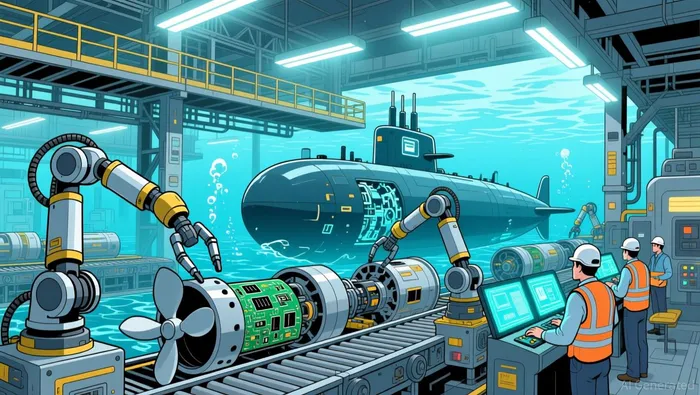
Hadrian’s Alabama facility, known as , was opened to address a critical gap in submarine production: the slow, fragmented nature of component manufacturing. The U.S. Navy has struggled to meet its ambitious procurement goals for Virginia-class and Columbia-class submarines due to bottlenecks in the supply chain. F4 is designed to solve this by mass-producing key parts and assemblies, allowing shipyards to focus on higher-value tasks like final assembly and integration. This shift is part of a broader initiative called the Navy’s “Factory of the Future,” which aims to .
The facility is a public-private partnership, with $1.5 billion in private funding and $900 million in government support. It also aligns with the Trump administration’s “Golden Fleet” initiative and the executive order titled “Restoring America’s Maritime Dominance,” both of which emphasize reducing foreign dependencies. For a defense sector long dominated by traditional players like General DynamicsGD-- (GD), this project represents a disruptive model that could reshape the landscape of submarine manufacturing.
How Will Hadrian's Alabama Plant Impact the U.S. Economy and Defense Industry?
The impact of the Alabama facility is already being felt in the local economy. . Cherokee Mayor Troy Rutland has highlighted the broader economic ripple effects, including potential retail growth and educational improvements. For the U.S. Navy, the project is a strategic win: it ensures greater control over the production of critical submarine components and reduces risks associated with global supply chains.
From an investor perspective, the facility’s use of AI and automation is a game-changer. . This not only accelerates production but also reduces labor costs and bottlenecks. For traditional shipbuilders like General Dynamics, this could mean a shift in how contracts are awarded and managed. With a single, centralized production model that integrates design, automation, and logistics, the Navy may consolidate its supply chain and reduce the number of subcontractors needed.
What Should Investors Watch as Hadrian's Alabama Plant Moves Forward?
The success of the Alabama facility will depend on several key factors. First, the timeline for full production is crucial. to reach full-rate production. Delays could jeopardize the broader Factory of the Future strategy. Second, investors should watch the facility’s performance metrics, such as production speed, cost per unit, and workforce productivity. These will determine whether the model is scalable and whether additional facilities— up to five in total, as suggested by Hadrian CEO —will be needed to meet Navy goals.
Third, the facility’s impact on traditional defense contractors like General Dynamics is a key variable. If the Navy successfully shifts more of its supply chain into this centralized, automated model, companies that rely on subcontracting may see a decline in their market share. For now, the project is still in its early stages, but the long-term implications could be significant. As the facility ramps up and more data becomes available, investors will have a clearer picture of how this new approach will reshape the industry.
In the meantime, the Alabama facility remains a symbol of the Trump administration’s push for a stronger, more self-reliant defense industrial base. For investors, it’s a compelling development to watch as it unfolds.

Stay ahead of the market.
Get curated U.S. market news, insights and key dates delivered to your inbox.
AInvest
PRO
AInvest
PRO



Comments
No comments yet