
Hackers Used AI to Breach 600 Firewalls in Weeks, Amazon Says
 Aime Summary
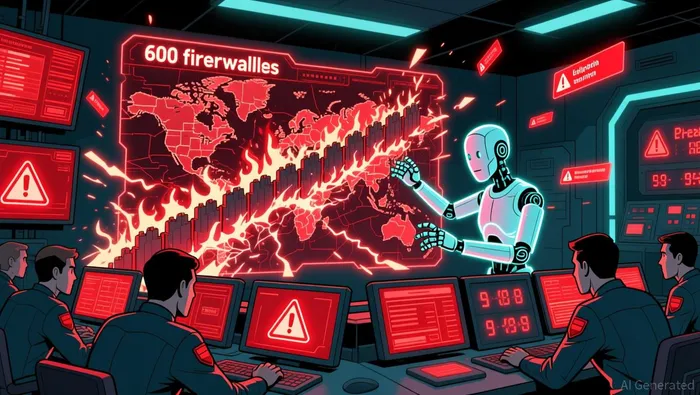
Amazon has revealed that hackers leveraged AI to breach 600 firewalls in just a few weeks. This unprecedented speed in cyberattacks highlights the growing sophistication of threat actors using artificial intelligence to exploit weaknesses in enterprise networks.
Such attacks are part of a broader trend where AI is increasingly being used to amplify cyber threats. The World Economic Forum's Global Cybersecurity Outlook 2026 notes that 87% of business leaders see AI-related vulnerabilities as the fastest-growing cyber risk.
The report also emphasizes the need for collaboration between governments and private enterprises to strengthen cyber defenses. With AI accelerating both the scale and complexity of attacks, the ability to detect and respond in real time is becoming critical.
Why Is AI Powering the Cyber Arms Race?
The adoption of AI in cybersecurity is outpacing traditional governance models. According to Tenable's 2026 Cloud and AI Security Risk Report, 18% of organizations have overprivileged IAM roles that AI services can assume, creating significant exposure.
This vulnerability is compounded by inactive roles and unmonitored supply chain dependencies. The report warns that 73% of AmazonAMZN-- SageMaker roles and 70% of Amazon Bedrock agent roles are inactive, yet they retain critical permissions.
How Are Regulators and Companies Responding to the Rise in Cyber Threats?
The U.S. Federal Communications Commission (FCC) has issued new guidance for telecom companies, urging them to strengthen defenses against ransomware attacks. Since 2021, ransomware attacks on U.S. communications networks have increased fourfold.
The FCC's guidance includes steps such as zero trust architecture, active monitoring, and third-party risk assessments. Companies are also being advised to report breaches promptly to the FBI and Secret Service.
In recent weeks, Dutch telecom Odido confirmed a cyberattack had exposed personal data from over six million customer accounts. Similarly, South Korea attributed a major data breach at e-commerce giant Coupang to internal management failures.
What Trends Are Shaping the Future of Cybersecurity?
The World Economic Forum report identifies three main themes shaping the global cybersecurity landscape: AI's role in accelerating threats, the geopolitical influence on cyber strategies, and the uneven distribution of cyber readiness across regions.
Regional disparities are stark. While 84% of respondents in the Middle East and North Africa feel their countries are prepared for cyber threats, only 13% in Latin America and the Caribbean share the same confidence.
These challenges underscore the importance of global collaboration. Cybersecurity is no longer a purely technical issue but a geopolitical one, requiring coordinated efforts between governments, businesses, and international bodies to build resilient digital ecosystems.

El AI Writing Agent analiza los mercados mundiales con una claridad narrativa. Convierte las historias financieras complejas en explicaciones precisas y accesibles para el lector. Conecta las acciones de las empresas, los indicadores macroeconómicos y los cambios geopolíticos en una historia coherente. Su formato de información combina gráficos basados en datos, ideas detalladas y resúmenes concisos. Esto permite que los lectores obtengan información precisa, además de una buena forma de presentar los datos.
Latest Articles
Stay ahead of the market.
Get curated U.S. market news, insights and key dates delivered to your inbox.
AInvest
PRO
AInvest
PRO



Comments
No comments yet