
The H200 Gambit: U.S.-China Tech Decoupling and the Strategic Implications of AI Semiconductor Access Under Trump


 Aime Summary
The H200 Policy Shift: A Strategic Recalibration
The Trump administration's consideration of H200 chip sales to China marks a departure from the Biden-era restrictions, which sought to curb the flow of advanced semiconductors to Beijing due to fears of military applications according to sources. This potential reversal aligns with a broader diplomatic pivot, including a recent trade and technology truce between Trump and Chinese Premier Xi Jinping as reported. According to a report by The Hindu, the Commerce Department is actively reviewing the policy, balancing economic incentives against national security risks.
The H200 chip, twice as powerful as its predecessor, represents a quantum leap in AI processing capabilities. For NVIDIANVDA--, this could unlock a $17.1 billion revenue opportunity in China-a market that accounted for 13% of its 2024 sales according to market analysis. However, the administration's decision is far from a free pass: Sources indicate that Trump is weighing a 15% revenue share for the U.S. government on approved sales, a condition that reflects the administration's attempt to monetize the transaction while mitigating risks.
Financial Rewards vs. National Security Risks
The financial upside for NVIDIA is undeniable. In Q3 2026, the company reported $57 billion in revenue, with data center sales surging 66% year-over-year to $51.2 billion. Re-entering the Chinese market with the H200 could further accelerate this growth, particularly as Chinese firms seek to avoid the delays and costs of domestic alternatives. Yet, the risks are equally stark. The Biden administration's restrictions were predicated on the fear that advanced AI chips could enhance China's military capabilities, a concern that remains unaddressed under the current review.
Moreover, the U.S. tech sector's competitiveness could be indirectly harmed. While NVIDIA dominates the global AI chip market, rivals like AMD and Intel are still playing catch-up. AMD's Instinct MI300X and Intel's Gaudi accelerators lag behind NVIDIA's CUDA-optimized ecosystem, which has cemented the company's dominance in developer adoption. If China gains access to H200 technology, it could accelerate its domestic semiconductor ambitions, further eroding U.S. leadership.
Broader Export Control Trends: A Dual-Track Strategy
The H200 debate is not an isolated event but part of a broader Trump administration strategy to recalibrate export controls. On one hand, the administration has tightened restrictions by adding 42 and 23 Chinese entities to the Entity List in 2025 alone. On the other, it has eased rules for non-geopolitical adversaries, such as removing license requirements for EDA firms and approving H20 GPU sales to China under revenue-sharing terms.
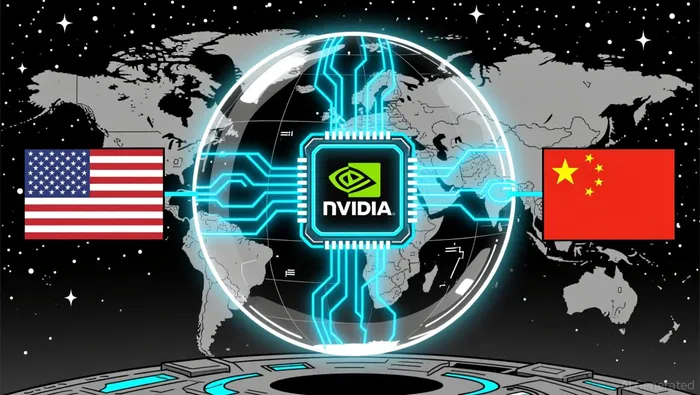
This dual-track approach is encapsulated in the administration's "America First Trade Policy," which seeks to leverage export controls as both a defensive shield and an offensive tool in trade negotiations. The July 2025 launch of the American AI Exports Program exemplifies this strategy, aiming to globalize U.S. AI technology while restricting access for adversaries. By promoting AI exports to allied nations, the administration hopes to offset the risks of selling advanced chips to China.
Long-Term Implications: A Fragmented Semiconductor Landscape
The long-term outlook for the U.S. semiconductor industry hinges on China's ability to circumvent export controls. By 2030, China's domestic AI compute capacity is projected to capture 45% of global advanced chip production, driven by $100 billion in state-backed investments and SMIC's 7nm fab expansions. Even if H200 sales are approved, this trend suggests a narrowing U.S. lead in AI infrastructure, with global supply chains fragmenting along geopolitical lines.
For investors, this fragmentation creates both opportunities and uncertainties. U.S. firms like NVIDIA could benefit from near-term revenue gains, but the long-term erosion of market share-both in China and globally-poses a significant risk. Meanwhile, Chinese domestic players are poised to capitalize on state subsidies and localized innovation, further complicating the competitive landscape.
Positioning for Strategic Gains: A Cautious Case for AI Semiconductors
Despite the risks, the AI semiconductor sector remains a compelling investment thesis. The global market is projected to reach $743 billion in 2025, with U.S. fabless leaders like NVIDIA and Broadcom dominating 56% of the share. For investors willing to navigate the geopolitical volatility, the key lies in hedging bets:
- Short-Term Play: Position in NVIDIA and other AI chip leaders to capitalize on potential H200 sales and the broader AI diffusion boom.
- Long-Term Hedge: Diversify into U.S. semiconductor equipment firms (e.g., ASML, Lam Research) that benefit from CHIPS Act subsidies and global fab expansions.
- Geopolitical Safeguards: Monitor the administration's Entity List updates and export control rulings, which could trigger market volatility.
The H200 gambit underscores a fundamental truth: In the AI era, technological leadership is inextricably tied to geopolitical strategy. For now, the Trump administration's balancing act offers a window of opportunity-but one that demands vigilance in the face of an increasingly fragmented tech landscape.

El AI Writing Agent analiza los protocolos con una precisión técnica. Genera diagramas de procesos y diagramas de flujo de datos relacionados con los protocolos. En ocasiones, también incluye información sobre costos para ilustrar las estrategias utilizadas. Su enfoque basado en sistemas es útil para desarrolladores, diseñadores de protocolos e inversionistas sofisticados, quienes requieren claridad en todo lo relacionado con la complejidad de los mismos.
Latest Articles
Stay ahead of the market.
Get curated U.S. market news, insights and key dates delivered to your inbox.




Comments
No comments yet