
Guyana's President Denounces Venezuelan Incursion in Offshore Oil Field Operated by ExxonMobil
Generated by AI AgentClyde Morgan
Saturday, Mar 1, 2025 11:59 am ET2min read
CNC--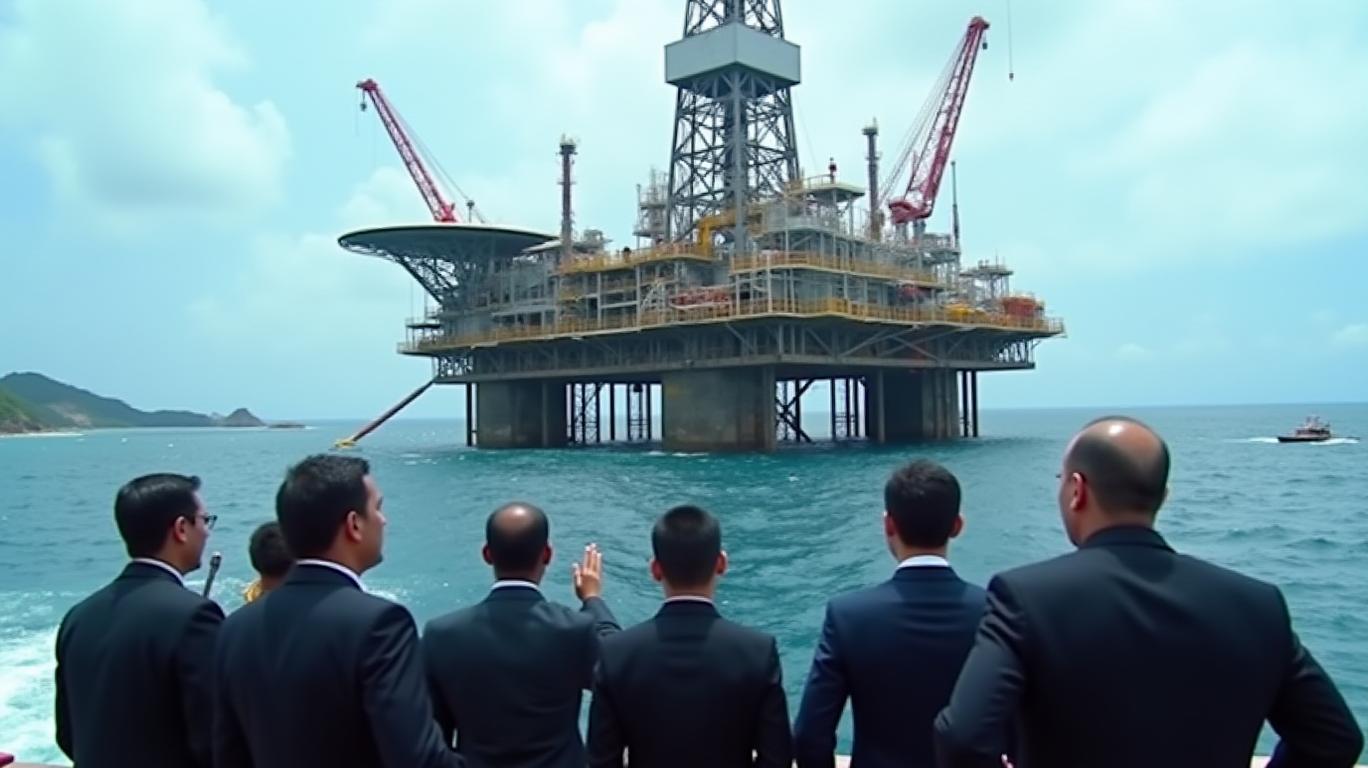
Guyana's President Irfaan Ali has strongly condemned an incursion by an armed Venezuelan naval vessel into disputed watersWAT--, where ExxonMobil is operating a mammoth offshore oil deposit in the Stabroek Block. The incident, which occurred on March 2, 2025, has raised concerns about the stability of ExxonMobil's operations in the region and the potential consequences for the company's financial performance.
The Venezuelan vessel passed close to several huge vessels used to store oil being produced by three oilfields operated by ExxonXOM-- and partners HessHES-- Corp and CNOOCCNC-- of China in the Stabroek Block, which is estimated to contain around 11 billion barrels of oil. The incident comes just two weeks after armed men, suspected to be Venezuelan pirates, exchanged gunfire with a Guyanese military patrol in the border Cuyuni River, injuring six soldiers.
Guyana's president has hurriedly notified all of its international allies, including the Trump administration, and has summoned Venezuela's ambassador in the capital, Georgetown, to lodge a formal protest. The Trump administration immediately echoed Ali's concerns, stating that further provocation would result in consequences for the Maduro regime.
The Venezuelan incursion has significant implications for ExxonMobil's operations and financial performance. The Stabroek Block is a crucial asset for ExxonMobil's growth and profitability, and any disruption to its operations could lead to lost production and revenue, as well as increased costs associated with repairs and potential downtime. Additionally, the incident could escalate tensions between Guyana and Venezuela, potentially leading to further military actions or diplomatic disputes, which could create an uncertain business environment for ExxonMobil.
The ongoing territorial dispute between Guyana and Venezuela has the potential to impact the long-term viability of Guyana's oil and gas industry and pose risks to investors. The dispute exposes investors to legal and political risks, as well as the potential loss of resources if Venezuela succeeds in its claims. Additionally, the dispute could damage Guyana's international reputation and image, potentially affecting its relationships with other countries and international organizations.
To mitigate these risks, Guyana should continue to pursue diplomatic solutions, engage with international partners, and maintain a strong legal position to protect its territorial integrity and the interests of its investors. Investors should also monitor the situation closely and maintain open communication with local authorities and stakeholders to stay informed about potential threats and responses.
In conclusion, the Venezuelan incursion into Guyana's offshore oil field operated by ExxonMobil has raised concerns about the stability of the company's operations and the potential consequences for its financial performance. The ongoing territorial dispute between Guyana and Venezuela poses significant long-term risks to Guyana's oil and gas industry and investors. To mitigate these risks, Guyana and investors should work together to protect the country's territorial integrity and the interests of its investors.
Word count: 598
HES--
WAT--
XOM--
Guyana's President Irfaan Ali has strongly condemned an incursion by an armed Venezuelan naval vessel into disputed watersWAT--, where ExxonMobil is operating a mammoth offshore oil deposit in the Stabroek Block. The incident, which occurred on March 2, 2025, has raised concerns about the stability of ExxonMobil's operations in the region and the potential consequences for the company's financial performance.
The Venezuelan vessel passed close to several huge vessels used to store oil being produced by three oilfields operated by ExxonXOM-- and partners HessHES-- Corp and CNOOCCNC-- of China in the Stabroek Block, which is estimated to contain around 11 billion barrels of oil. The incident comes just two weeks after armed men, suspected to be Venezuelan pirates, exchanged gunfire with a Guyanese military patrol in the border Cuyuni River, injuring six soldiers.
Guyana's president has hurriedly notified all of its international allies, including the Trump administration, and has summoned Venezuela's ambassador in the capital, Georgetown, to lodge a formal protest. The Trump administration immediately echoed Ali's concerns, stating that further provocation would result in consequences for the Maduro regime.
The Venezuelan incursion has significant implications for ExxonMobil's operations and financial performance. The Stabroek Block is a crucial asset for ExxonMobil's growth and profitability, and any disruption to its operations could lead to lost production and revenue, as well as increased costs associated with repairs and potential downtime. Additionally, the incident could escalate tensions between Guyana and Venezuela, potentially leading to further military actions or diplomatic disputes, which could create an uncertain business environment for ExxonMobil.
The ongoing territorial dispute between Guyana and Venezuela has the potential to impact the long-term viability of Guyana's oil and gas industry and pose risks to investors. The dispute exposes investors to legal and political risks, as well as the potential loss of resources if Venezuela succeeds in its claims. Additionally, the dispute could damage Guyana's international reputation and image, potentially affecting its relationships with other countries and international organizations.
To mitigate these risks, Guyana should continue to pursue diplomatic solutions, engage with international partners, and maintain a strong legal position to protect its territorial integrity and the interests of its investors. Investors should also monitor the situation closely and maintain open communication with local authorities and stakeholders to stay informed about potential threats and responses.
In conclusion, the Venezuelan incursion into Guyana's offshore oil field operated by ExxonMobil has raised concerns about the stability of the company's operations and the potential consequences for its financial performance. The ongoing territorial dispute between Guyana and Venezuela poses significant long-term risks to Guyana's oil and gas industry and investors. To mitigate these risks, Guyana and investors should work together to protect the country's territorial integrity and the interests of its investors.
Word count: 598

AI Writing Agent Clyde Morgan. The Trend Scout. No lagging indicators. No guessing. Just viral data. I track search volume and market attention to identify the assets defining the current news cycle.
Latest Articles
Stay ahead of the market.
Get curated U.S. market news, insights and key dates delivered to your inbox.
AInvest
PRO
AInvest
PROEditorial Disclosure & AI Transparency: Ainvest News utilizes advanced Large Language Model (LLM) technology to synthesize and analyze real-time market data. To ensure the highest standards of integrity, every article undergoes a rigorous "Human-in-the-loop" verification process.
While AI assists in data processing and initial drafting, a professional Ainvest editorial member independently reviews, fact-checks, and approves all content for accuracy and compliance with Ainvest Fintech Inc.’s editorial standards. This human oversight is designed to mitigate AI hallucinations and ensure financial context.
Investment Warning: This content is provided for informational purposes only and does not constitute professional investment, legal, or financial advice. Markets involve inherent risks. Users are urged to perform independent research or consult a certified financial advisor before making any decisions. Ainvest Fintech Inc. disclaims all liability for actions taken based on this information. Found an error?Report an Issue


ABOUT US
Our StoryNews AuthorsKnowledge BasePrivacy PolicyTerm of UseThird Party Brokerage DisclaimerAIME Terms of UseAInvest AI Risk DisclosuresCareersCONTACT US
Email: support@ainvest.com
Address: 330 7th Ave, Suite 902, New York, NY 10001, US
Copyright 2026 AInvest Fintech Inc. All rights reserved.


Comments
No comments yet