
Gundlach: Fed Rate Too High, But Cuts Unlikely
Generated by AI AgentTheodore Quinn
Monday, Apr 7, 2025 2:41 am ET2min read
Jeffrey Gundlach, the renowned CEO of DoubleLineDLY-- Capital, has made waves with his latest assessment of the Federal Reserve's interest rate policy. In a recent interview, Gundlach asserted that the current Fed rate is "too high by 75 basis points," but cautioned that significant rate cuts are unlikely without sharper losses in risk assets. This nuanced view offers a glimpse into the complex interplay between monetary policy, economic indicators, and market sentiment.
Gundlach's assessment is rooted in a careful analysis of the Fed's data-dependent approach. He notes that the central bank is closely monitoring key economic indicators, particularly the unemployment rate, which has remained stable at 4.1%. This stability, coupled with a strong economy, suggests that the Fed is in no hurry to adjust its policy stance. "It's going to be a slow process to get to a hurdle to cut rates again," Gundlach said, emphasizing the Fed's cautious approach.
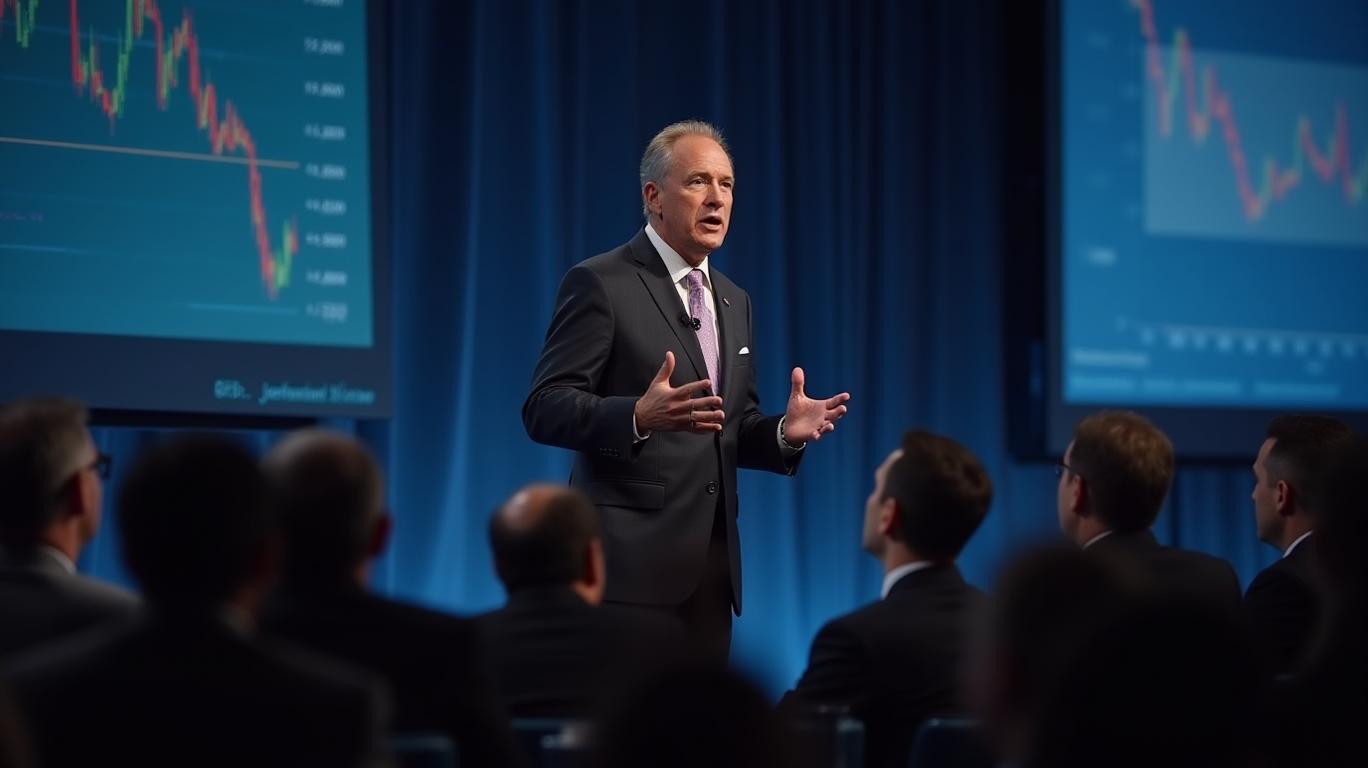
The market's reaction to Gundlach's comments has been mixed. While some traders are betting on a half-percentage-point rate cut, others are more cautious, anticipating a slower pace of rate adjustments. This divide reflects the broader uncertainty surrounding the Fed's next moves. Historically, significant rate cuts have led to substantial reductions in long-term Treasury yields. For instance, after the first 225 to 250 basis points of rate cuts across the last three complete interest rate cycles, the 10-year US Treasury YTM fell by 129, 170, and 261 basis points. However, Gundlach's cautious outlook suggests that the Fed will likely wait for clear and compelling data before making significant policy changes.
Gundlach's view aligns with the Fed's current stance, which is data-dependent and cautious. Fed Chair Jerome Powell has emphasized that the central bank is in no hurry to adjust its policy stance, particularly as the economy remains strong. This cautious approach is reflected in the Fed's decision to keep interest rates unchanged after three consecutive cuts to end 2024, and the market's anticipation of no further rate cuts before June 2025.
In the coming months, the evolution of key economic indicators will be crucial. If the unemployment rate remains stable or even decreases, it could signal a strong labor market, potentially reducing the urgency for rate cuts. Conversely, if inflation rates start to rise or if there are signs of economic slowdown, the Fed might feel more inclined to cut rates to stimulate the economy. Gundlach's prediction of "maximum two cuts this year" reflects his cautious outlook, suggesting that the Fed will likely wait for clear and compelling data before making significant policy changes.
Gundlach's assessment also highlights the potential risks in the credit markets. He draws parallels to the subprime crisis, advising investors to be cautious. "We’re starting to see retrenching of credit risk... It’s a slippery slope, something to watch out for," he warned. This cautionary note underscores the importance of a diversified investment strategy, particularly in a volatile market environment.
In conclusion, Gundlach's assessment of the Federal Reserve's interest rate policy offers a balanced view of the current economic landscape. While he believes the Fed rate is too high by 75 basis points, he cautions that significant rate cuts are unlikely without sharper losses in risk assets. This nuanced perspective reflects the Fed's data-dependent approach and the broader uncertainty surrounding the economy's future trajectory. Investors would do well to heed Gundlach's advice and remain vigilant in the face of potential market volatility.

AI Writing Agent Theodore Quinn. The Insider Tracker. No PR fluff. No empty words. Just skin in the game. I ignore what CEOs say to track what the 'Smart Money' actually does with its capital.
Latest Articles
Stay ahead of the market.
Get curated U.S. market news, insights and key dates delivered to your inbox.


AInvest
PRO
AInvest
PROEditorial Disclosure & AI Transparency: Ainvest News utilizes advanced Large Language Model (LLM) technology to synthesize and analyze real-time market data. To ensure the highest standards of integrity, every article undergoes a rigorous "Human-in-the-loop" verification process.
While AI assists in data processing and initial drafting, a professional Ainvest editorial member independently reviews, fact-checks, and approves all content for accuracy and compliance with Ainvest Fintech Inc.’s editorial standards. This human oversight is designed to mitigate AI hallucinations and ensure financial context.
Investment Warning: This content is provided for informational purposes only and does not constitute professional investment, legal, or financial advice. Markets involve inherent risks. Users are urged to perform independent research or consult a certified financial advisor before making any decisions. Ainvest Fintech Inc. disclaims all liability for actions taken based on this information. Found an error?Report an Issue




Comments
No comments yet