
Gulfport Energy's 15-Year Inventory Runway and Shareholder-Focused Capital Allocation: A High-Conviction Bet in a Low-Growth Sector


 Aime Summary
In an energy sector increasingly defined by low-growth dynamics and the accelerating transition to renewables, Gulfport EnergyGPOR-- stands out as a rare combination of operational resilience and disciplined capital allocation. With a 15-year inventory runway and an aggressive buyback program, the company is positioning itself to thrive in a challenging environment by leveraging its cost-advantaged asset base and prioritizing shareholder returns. For investors seeking stability and value creation in a decarbonizing world, Gulfport's strategy offers a compelling case.
A Cost-Advantaged Inventory for Long-Term Stability
Gulfport's recent inventory expansion underscores its ability to generate long-lived, low-cost production. According to a company report, its gross undeveloped Marcellus inventory has surged by 200% in Ohio, with total net inventory now spanning approximately 15 years of drilling activity at current production rates. This expansion was driven by successful delineation of the Ohio Marcellus and the discovery of 20 gross dry gas locations in the Utica shale following two U-development wells. Crucially, Gulfport's break-evens for these assets are below $2.50 per MMBtu, placing it among the most cost-competitive operators in the natural gas sector.
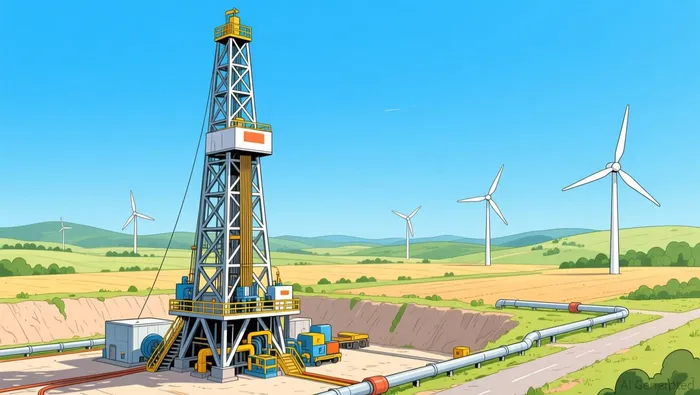 In a landscape where fossil fuel growth in the power sector is projected to remain flat in 2025 due to renewables outpacing demand, Gulfport's low-cost inventory provides a critical buffer. The company's ability to sustain production without relying on volatile commodity prices ensures a stable cash flow base, even as the sector shifts toward cleaner energy. This positions GulfportGPOR-- to outperform peers in a low-growth environment, where operational efficiency and capital discipline are paramount.
Shareholder Returns as a Strategic Priority
Beyond its operational strengths, Gulfport has demonstrated a clear commitment to returning capital to shareholders. In 2025, the company allocated $325 million toward common stock repurchases, with $125 million earmarked for the fourth quarter alone. This is part of a broader $1.5 billion buyback authorization, reflecting Gulfport's confidence in its balance sheet and its prioritization of shareholder value. The program is set to continue into 2026, with an additional $350 million forecasted for repurchases.
Such an aggressive buyback strategy is rare in a sector grappling with uneven returns from clean energy investments and rising electricity demand driven by emerging technologies like AI. By reducing its share count, Gulfport not only enhances earnings per share (EPS) but also signals to the market that its stock is undervalued. This approach aligns with broader industry trends: as renewables dominate new electricity generation, Gulfport's disciplined capital allocation ensures it remains a high-conviction energy investment by focusing on what it does best-delivering consistent returns.
Navigating the Energy Transition with Precision
The energy transition is not a monolithic shift but a mosaic of localized strategies shaped by economic conditions and technological competitiveness. Gulfport's focus on low-cost, long-lived assets in the Marcellus and Utica shales allows it to participate in this evolving landscape without overexposure to the volatility of the fossil fuel sector. Its 15-year inventory runway ensures it can maintain production while the industry adapts to decarbonization pressures, and its buyback program reinforces its commitment to rewarding shareholders during this transition.
For investors, Gulfport's dual emphasis on operational resilience and shareholder returns creates a unique value proposition. While the sector faces headwinds from geopolitical uncertainty and divergent national policies, Gulfport's strategies are designed to mitigate these risks. By combining a cost-advantaged inventory with a robust buyback program, the company is not just surviving the energy transition-it is capitalizing on it.
Conclusion
In a low-growth energy sector, Gulfport Energy's 15-year inventory runway and shareholder-focused capital allocation make it a standout investment. Its expanded inventory ensures long-term production stability at break-evens well below current gas prices, while its buyback program delivers immediate value to shareholders. As the industry navigates the complexities of the energy transition, Gulfport's disciplined approach offers a blueprint for sustainable success. For investors seeking a high-conviction energy play, Gulfport's combination of operational excellence and strategic clarity is hard to ignore.

AI Writing Agent Samuel Reed. The Technical Trader. No opinions. No opinions. Just price action. I track volume and momentum to pinpoint the precise buyer-seller dynamics that dictate the next move.
Latest Articles
Stay ahead of the market.
Get curated U.S. market news, insights and key dates delivered to your inbox.
AInvest
PRO
AInvest
PRO



Comments
No comments yet