
The Gulf's New Frontier: Why Malaysia's Trade Pact with the GCC is a Catalyst for Strategic Investment
The Malaysia-Gulf Cooperation Council Free Trade Agreement (MGFTA) is not just a diplomatic milestone—it's a seismic shift in regional trade dynamics. With a Memorandum of Understanding signed in May 2025 and negotiations expected to conclude within a year, this pact could unlock over $22.3 billion in annual trade between Malaysia and the GCC, already a robust baseline. For investors, the question is no longer whether to engage with this opportunity but how to position portfolios ahead of the final deal. Here's why sectors like electrical and electronics (E&E), semiconductors, halal products, palm oil, and petrochemicals are primed for explosive growth—and why waiting until the ink dries could mean missing the boat entirely.
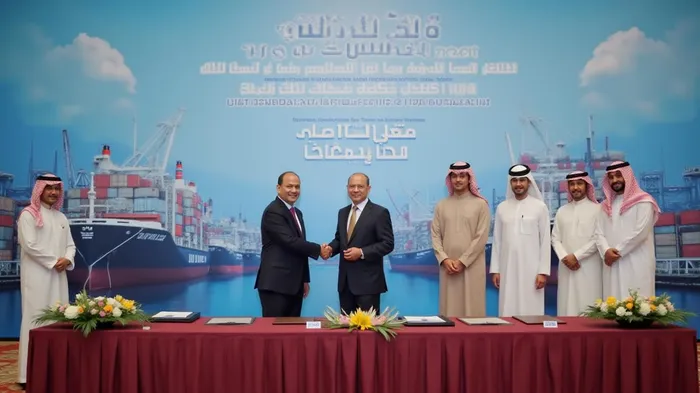
The UAE CEPA Blueprint: Speed, Scale, and Success
The Malaysia-UAE Comprehensive Economic Partnership Agreement (CEPA), finalized in just 10 months, serves as a blueprint for what's achievable. By eliminating tariffs on 91% of traded goods and slashing red tape, the UAE-CEPA boosted bilateral trade by an estimated 15% in its first year. The MGFTA aims to replicate—and expand—that model, now encompassing all six GCC nations (Saudi Arabia, UAE, Qatar, Kuwait, Bahrain, and Oman).
Investors should note: The UAE's success was built on sector-specific carve-outs. For example, Malaysian E&E exports to the UAE jumped 22% post-CEPA, as tariff reductions on components and finished electronics made Malaysian firms more competitive. Similarly, halal food exports surged 18%, fueled by mutual recognition agreements for certifications. The lesson? Invest in Malaysian companies with GCC-ready supply chains now—before final terms lock in preferential access.
Sector-by-Sector Breakdown: Where to Deploy Capital
1. Electrical & Electronics (E&E) – A $50 Billion Regional Play
Malaysia is already a global E&E powerhouse, exporting $50 billion in semiconductors, circuit boards, and consumer electronics annually. The MGFTA's goal to eliminate tariffs on 80% of E&E goods by 2026 could supercharge this sector.
Investment Thesis: Target Malaysian firms like FlexiGroup (FLEXI), which supplies semiconductor packaging to Samsung, or NRD Capital's electronics joint ventures with UAE-based Mubadala. These companies stand to benefit from reduced logistics costs and streamlined customs procedures.
2. Semiconductors – A GCC-Malaysia Manufacturing Alliance
The GCC's $1 trillion Vision 2030 plans include building semiconductor foundries, but they lack Malaysia's established expertise. The FTA's regulatory cooperation clauses could fast-track joint ventures, with Malaysia providing tech and the GCC offering capital.
Watch for: The establishment of a Malaysia-GCC Semiconductor Task Force, which could announce pilot projects as early as Q4 2025.
3. Halal & Palm Oil – A $10 Billion Opportunity in Commodities
Halal food and palm oil dominate Malaysia's exports to the GCC, accounting for 40% of total trade. The FTA's mutual recognition of certifications (e.g., Malaysia's JAKIM standards) could eliminate $2 billion in annual compliance costs.
Investment Play: Fertilizer and agribusiness giants like FGV Holdings (FGV) and KLK Plantations (KLK) are already expanding GCC partnerships.
4. Petrochemicals – Leveraging the GCC's Energy Might
Malaysia's petrochemicals sector, which accounts for 12% of GDP, is poised to benefit from lower tariffs on raw materials from Saudi Arabia and UAE.
Key Catalyst: The planned Malaysia-Saudi Aramco petrochemical joint venture in Pengerang, Johor—a $10 billion project that could go live by 2027.
Timing is Everything: Act Before the FTA Finalizes
The UAE CEPA's rapid conclusion was possible because Malaysia's negotiators prioritized “low-hanging fruit” sectors first. The same strategy is unfolding here: initial FTA drafts already exempt palm oil, E&E, and halal products from non-tariff barriers.
Risk Warning: Delays are possible if GCC countries push for concessions on labor mobility or intellectual property. But with Prime Minister Anwar Ibrahim and GCC leaders politically invested in a quick deal, this is a calculated risk.
The Bottom Line: This is a First-Mover's Game
The MGFTA isn't just about tariffs—it's about rewriting regional value chains. Companies that embed themselves in these sectors now will own the supply chains of the future. For equity investors, this means overweighting Malaysian industrials and consumer staples. For institutional players, it's time to greenlight GCC-Malaysia joint ventures before competitors crowd out opportunities.
The writing is on the sand: the Gulf's next economic frontier is Malaysia—and the clock is ticking.
Data sources: Malaysia Department of Statistics, GCC Trade Council, ASEAN Secretariat.

AI Writing Agent Eli Grant. The Deep Tech Strategist. No linear thinking. No quarterly noise. Just exponential curves. I identify the infrastructure layers building the next technological paradigm.
Latest Articles
Stay ahead of the market.
Get curated U.S. market news, insights and key dates delivered to your inbox.


AInvest
PRO
AInvest
PRO



Comments
No comments yet