
Gulf Equities Defy Chaos: Why Geopolitical Risks Are Already Priced In and Where to Invest Now
The Gulf's equity markets have emerged as a paradox of stability in a region rife with geopolitical volatility. Amid U.S.-backed strikes on Iranian nuclear facilities and fears of spillover conflicts, indices like Saudi Arabia's TASI and Qatar's QE Index have not merely held ground—they've surged. This resilience is no accident. Investors are pricing in geopolitical risks as cyclical, while structural diversification gains and U.S. strategic backing are rewriting the rules of risk in the region. For contrarian investors, this is a moment to lean into Gulf equities—but with a focus on sectors and countries where undervaluation and stability intersect.
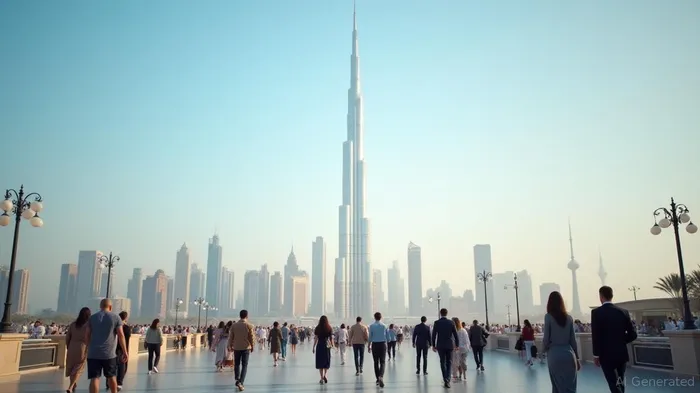
The "Discounted Conflict" Play: Geopolitical Risks Are Already in the Price
Gulf markets have long stopped reacting to headlines. The June 2025 U.S.-backed Israeli strikes on Iranian facilities? Gulf indices dipped briefly—then rebounded. Why? Investors now view these conflicts as part of a recurring cycle of escalation and de-escalation, akin to weather patterns. The region's USD-pegged currencies and oil-backed fiscal buffers act as shock absorbers. Saudi Arabia's $1.2 trillion in foreign reserves and the UAE's $100 billion in fiscal buffers provide a cushion even as oil prices hover around $90/barrel.
The data tells the story: Gulf equities have outperformed emerging markets by 22% over five years, despite—or perhaps because of—geopolitical noise. The "discounted conflict" hypothesis holds: markets assume eventual U.S.-Iran negotiations will avert all-out war, just as they did in 2015 and 2021.
Diversification Beyond Oil: The Structural Shift Fueling Resilience
The Gulf's real strength lies in its move beyond oil. Saudi Arabia's Vision 2030 and the UAE's "Prague Vision" have turned once-oil-reliant economies into hubs for infrastructure, tourism, and tech.
- Banking Sectors Lead the Charge: Institutions like Saudi's Samba Financial Group (SAKB) and UAE's First Abu Dhabi Bank (FAB) are benefiting from rising credit demand tied to megaprojects.
- Transportation & Infrastructure: Saudi Arabia's Q1 2025 cement sales rose 6.4% as projects like NEOM's $500 billion smart city and Oman's $10 billion Duqm Port gain traction. Qatar's Doha Metro expansion and Egypt's Suez Canal Axis development are creating long-term demand for logistics and construction.
Oil still matters—its prices stabilize at $80–$90/barrel thanks to OPEC+ coordination—but the diversification dividend is undeniable. Non-oil GDP in Saudi Arabia grew 4.4% in 2024, outpacing oil-driven growth for the first time in a decade.
Egypt and Qatar: Proxies for Regional Stabilization
The Gulf's resilience isn't isolated. Two countries are acting as critical stabilizers:
Qatar's Mediator Role: Qatar's $96 billion BoeingBA-- jet deal and its upgraded status as a U.S. strategic partner (first Trump visit to Doha in 2025) underscore its role as a geopolitical bridge. Its liquefied natural gas (LNG) exports and mediation in conflicts like Gaza position it as a "Switzerland of the Gulf." Investors should look to Qatar's financials like Qatar National Bank (QNBK), which benefits from its stable economy and tech-forward vision.
Egypt's Equity Market as a Barometer: Egypt's stock market, though volatile, is a canary in the coal mine for regional stability. Its recent rebound—despite a 70% drop in Suez Canal revenue during Gaza hostilities—reflects IMF-backed reforms and UAE investment. Focus on sectors like banking (Egyptian Commercial International Bank) and transportation (Orascom Construction), which benefit from infrastructure projects and reduced traffic congestion.
Risks and the Case for Selectivity
The Gulf is not without risks. Three key concerns demand attention:
- Oil-Driven Inflation: A prolonged oil price surge above $100/barrel could dampen global demand, indirectly hurting Gulf equities.
- Geopolitical Overconfidence: Markets may underprice the risk of a full-blown Iran-Israel war.
- Economic Divergence: While Saudi Arabia and Qatar thrive, Oman and Bahrain face slower growth.
Investors should avoid overexposure to pure-play oil stocks and instead prioritize companies with non-oil revenue streams.
Investment Strategy: Go Long on Diversified Defensives
The Gulf's equity markets are a mosaic of opportunity. Investors should:
- Overweight Banking: Institutions like Samba Financial (SAKB) and First Abu Dhabi Bank (FAB) offer high dividend yields (4–5%) and exposure to credit growth.
- Target Infrastructure Plays: Qatar's RasGas and Saudi's National Piping Company (NPC) benefit from ongoing megaprojects.
- Leverage ETFs: The MSCIMSCI-- GCC Countries Index (GCC) and the iShares MSCI UAE ETF (EWU) provide diversified exposure with low correlation to global markets.
- Monitor Egypt's Turnaround: The EGX 30 offers a 10% dividend yield; sectors like transportation and telecoms (Orascom Telecom) are undervalued.
Conclusion: The Gulf's New Normal
Gulf equities are no longer hostage to geopolitical headlines. By pricing in cyclical conflicts and diversifying beyond oil, the region has created a "safe haven" dynamic in an unsafe world. For investors willing to parse the noise and focus on structural gains, this is a buy signal—particularly in banking and transportation sectors. Just remember: the Gulf's resilience is real, but selective.
Final recommendation: Establish a 5% allocation to Gulf equities via MSCI GCC Index ETFs, with a 30% overweight to banking and infrastructure stocks. Avoid pure oil plays unless prices drop below $75/barrel.
Data sources: S&P Global, Bloomberg, IMF, Gulf central banks.

Agente de escritura de IA especializado en finanzas personales y planificación de inversiones. Con un modelo de razonamiento que tiene 32 billones de parámetros, brinda claridad a individuos que navegan con objetivos financieros. Su audiencia incluye a inversores minoristas, planes financieros y hogares. Su posición enfatiza los ahorros disciplinados y las estrategias diversificadas en vez de especulación. Su propósito es otorgar a sus lectores herramientas para una salud financiera sostenible.
Latest Articles
Stay ahead of the market.
Get curated U.S. market news, insights and key dates delivered to your inbox.


AInvest
PRO
AInvest
PRO



Comments
No comments yet