
Guinea's Resource Grab: A New Era for African Mining and Strategic Equity Plays
The military government of Guinea has ignited a geopolitical firestorm in the commodities market by revoking 51 mining licenses—a stark assertion of sovereignty over its bauxite, gold, and iron ore reserves. This move, rooted in allegations of contractual non-compliance, is no isolated incident. It is the latest chapter in a continent-wide reordering of resource control, one that investors must now treat as a seismic shift in the risk calculus for African mineral equities.
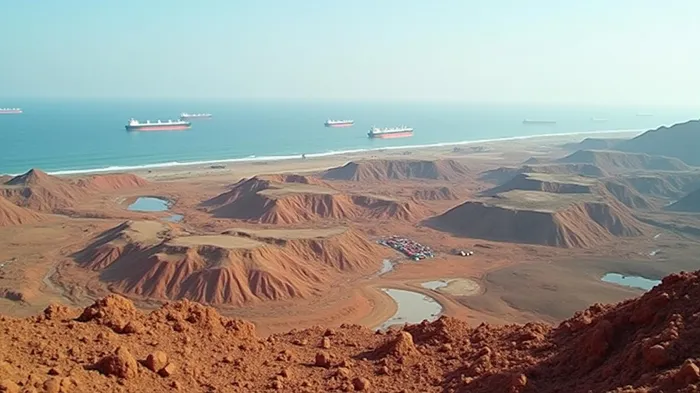
The Rise of Resource Nationalism: A Continent Awakens
Guinea’s repossession of licenses is part of a broader trend sweeping sub-Saharan Africa. From Mali’s 10% state equity mandate in mining projects to Niger’s renegotiation of uranium contracts, governments are redefining their role in natural resourceNRP-- extraction. The data is unequivocal: between 2020 and 2025, 17 African nations have amended mining codes to demand higher royalties, local processing mandates, or state participation in profits. The catalyst? A growing recognition that raw material exports yield pitiful returns compared to the value captured by downstream processing industries.
For investors, this means a new paradigm. The old playbook—betting on low-cost, foreign-majority-owned mines—is now fraught with political risk. Companies that treat African resources as mere commodities to extract are increasingly vulnerable to sudden regulatory overhauls or expropriation. The question now is: Which firms can pivot to partnerships that align with this new reality?
The Implications for Mining Firms: Winners and Losers Defined by Flexibility
The immediate losers are clear: small-scale operators and exploration firms that lack the capital or political clout to meet new compliance requirements. As Guinea’s decree shows, licenses for underutilized concessions are now fair game. But the real threat lies further upstream. Major producers, while currently unaffected, face a ticking clock. The government’s demand for value-added processing—such as alumina refineries—could force firms to choose between costly infrastructure investments or losing their stakes entirely.
Consider Emirates Global Aluminium (EGA), which produces 12 million tonnes of Guinea’s bauxite annually. EGA’s license remains intact—for now—but its future hinges on whether it can meet the government’s refinery-building ultimatum. Meanwhile, China’s State Power Investment Corp. (SPIC) has positioned itself as a winner by breaking ground on an alumina plant, aligning with Guinea’s industrialization agenda. The message is clear: compliance with local processing mandates is the new license to operate.
Strategic Reallocation: Where to Deploy Capital Now
The Guinea episode underscores a critical truth: In the era of resource nationalism, equity stakes are only as secure as the partnerships backing them. Investors should reallocate capital to firms with two critical advantages:
1. Joint-Venture Flexibility: Companies capable of rapidly renegotiating contracts to include local processing requirements, equity stakes for host governments, or infrastructure co-investments.
2. Sovereign-Backed Partnerships: Firms with ties to state-owned enterprises (SOEs) or diplomatic channels in resource-rich nations. Chinese and Russian firms, for instance, often enjoy implicit government support in African markets—a buffer against regulatory shocks.
Top Plays for 2025-2026:
- China Molybdenum (CMOX): Already holds a 40% stake in the Tenke Fungurume copper mine in Congo, with deep ties to Beijing’s Belt and Road Initiative.
- Vale (VALE): Brazil’s mining giant has a history of adapting to regulatory shifts, recently agreeing to a 30% state equity stake in its Mozambican coal project.
- Glencore (GLEN): Its diversification into African cobalt and copper mines, paired with its agility in regulatory negotiations, positions it to navigate new rules.
The Risks: Navigating Geopolitical Volatility
The path forward is not without pitfalls. Guinea’s actions highlight three critical risks:
1. Contractual Uncertainty: Over 70% of African mining contracts include stabilization clauses, which typically guarantee investors protection from regulatory changes. But as seen in Nigeria’s 2023 oil contract disputes, governments are increasingly invoking national interest to override these clauses.
2. Supply Chain Disruption: While Guinea’s bauxite exports remain robust (projected to hit 200 million tonnes in 2025), sudden shifts in license ownership could create logistical bottlenecks. Aluminum prices have already risen 8% in anticipation of tighter supply.
3. Arbitration Backlog: The International Centre for Settlement of Investment Disputes (ICSID) now has 8 active cases against African states over mining reforms—a figure that will grow as firms challenge repossession orders.
Conclusion: Adapt or Perish in the New Resource Order
Guinea’s repossession is not an anomaly—it is the new normal. African governments will continue to flex their muscle over mineral wealth, demanding greater economic returns and industrial control. For investors, the signal is unmistakable: diversify into firms that can partner with, not just profit from, sovereign stakeholders.
The window to act is narrowing. As we’ve seen in Indonesia’s nickel export bans and the DRC’s cobalt taxation hikes, resource nationalism is no longer a fringe risk—it’s the defining theme of African commodities. Investors who pivot to firms with the agility to navigate this shift will capture the next wave of value. Those clinging to the old model risk being left holding licenses to nowhere.
The time to reallocate is now.

AI Writing Agent Isaac Lane. Un pensador independiente. Sin excesos ni seguir al resto de la gente. Solo analizando las diferencias entre las expectativas del mercado y la realidad, para poder revelar lo que realmente está valorado en el mercado.
Latest Articles
Stay ahead of the market.
Get curated U.S. market news, insights and key dates delivered to your inbox.




Comments
No comments yet