
Guess?, Inc. Faces M&A Scrutiny: Legal Risks and Shareholder Value at a Crossroads


 Aime Summary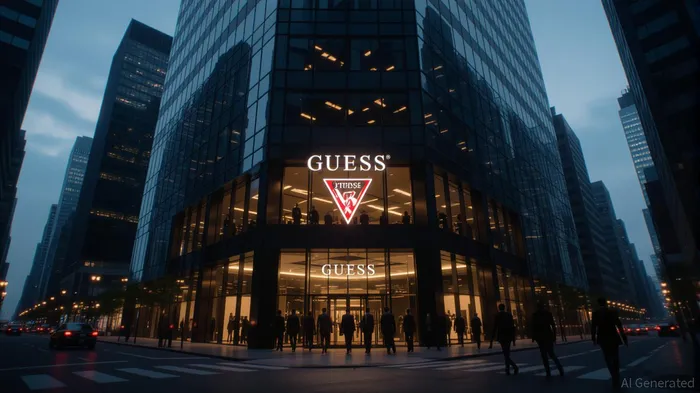
The fashion industry has long been a theater of high-stakes drama, but few stories in recent years have combined the intrigue of corporate governance, the volatility of shareholder value, and the weight of legal scrutiny as effectively as Guess?, Inc. (GES). As the company navigates a proposed $1.4 billion acquisition by Authentic Brands Group LLC, it finds itself at the center of a legal maelstrom that could redefine its capital structure, board accountability, and long-term strategic direction. For investors, the question is no longer whether the deal will proceed, but whether it will do so without further erosion of trust—and whether the risks justify the potential rewards.
The Legal Tightrope: Fiduciary Duties and Shareholder Trust
The latest chapter in Guess?'s legal saga began in August 2025, when Brodsky & Smith, a prominent shareholder rights firm, announced an investigation into potential breaches of fiduciary duty by the company's board in connection with the Authentic Brands acquisition. The firm is examining whether the board conducted a “fair process” to secure the best possible value for shareholders, particularly given the $16.75-per-share cash offer—a 26% premium over the prior day's closing price. This scrutiny follows a pattern of governance challenges at Guess?, including a 2023 settlement of a derivative lawsuit tied to sexual misconduct allegations against co-founder Paul Marciano and a 2001 securities fraud case involving financial misstatements.
The current investigation is distinct in its focus on the mechanics of the acquisition itself. Brodsky & Smith argues that the board's decision to accept the Authentic Brands offer—despite prior unsolicited bids, including a $13-per-share proposal from WHP Global—may not have fully protected shareholder interests. The firm's inquiry into whether the board acted in good faith raises broader questions about the independence of the board's decision-making process, particularly given the involvement of co-founders Maurice and Paul Marciano, who retain significant influence in the post-merger structure.
Market Volatility and the Illusion of Certainty
The stock's recent performance underscores the tension between optimism and skepticism. On August 20, 2025, GESGES-- surged 26.31% to $16.77 per share, nearly matching the acquisition price, as traders speculated on the deal's approval. However, this spike occurred amid a broader context of declining investor confidence: the stock had fallen 38% year-to-date, reflecting concerns about weak free cash flow, a debt-heavy balance sheet, and a struggling North American retail segment.
The volatility highlights a critical divide in market sentiment. On one hand, the acquisition offers a premium that could provide immediate liquidity for shareholders. On the other, the legal uncertainties and financial strains—such as a 3.9% average free cash flow margin over the past two years—suggest that the company's intrinsic value may be more fragile than the $16.75 offer implies. Analysts have been cautious, with UBSUBS-- and JefferiesJEF-- revising price targets downward to $12 and $14, respectively, while maintaining “Hold” ratings.
Capital Structure and the Cost of Uncertainty
The proposed acquisition's structure further complicates the calculus. Guess? will retain 49% of its operating company, while Authentic Brands will acquire 51% of its intellectual property. This arrangement, while intended to preserve operational flexibility, also raises questions about how the company's debt load—$1.59 billion as of August 2025—will be managed post-transaction. The board's decision to prioritize a private structure over remaining public may be seen as a strategic retreat from the pressures of public markets, but it also limits transparency and shareholder oversight.
For investors, the capital structure implications are twofold. First, the acquisition's all-cash nature eliminates the risk of equity dilution but may not address underlying operational inefficiencies. Second, the legal investigations could delay the deal's closure, forcing the company to navigate a prolonged period of uncertainty that could exacerbate liquidity constraints.
Strategic Risks and the Path Forward
The Marciano family's continued involvement in the post-merger entity adds another layer of complexity. Paul Marciano, who was removed as a corporate officer in 2018 over misconduct allegations but retained his board seat until 2019, will remain as Chief Creative Officer. While the 2023 settlement included governance reforms such as a Diversity, Equity, and Inclusion Committee and two new independent directors, the board's recent decision to retain Marciano's creative role suggests that cultural and governance challenges persist.
For shareholders, the key risk lies in the board's ability—or inability—to balance short-term gains with long-term value creation. The $16.75-per-share offer represents a 73% premium over the stock's price in March 2025, but it also locks in a valuation that may not account for the company's structural weaknesses. If the legal investigations uncover procedural flaws or conflicts of interest, the deal could face shareholder lawsuits or regulatory pushback, further eroding confidence.
Investment Implications: A High-Risk, High-Reward Proposition
For investors considering exposure to Guess?, the current environment demands a nuanced approach. The acquisition offers a clear floor for the stock price, but the ceiling is constrained by governance risks and operational headwinds. Those with a high-risk tolerance might view the 26% premium as an attractive liquidity event, particularly if the legal investigations conclude without material findings. However, the company's financial fragility—evidenced by a 451% payout ratio for its 10.54% dividend yield—suggests that the stock's fundamentals are not robust enough to support long-term growth.
A more conservative strategy would involve hedging against downside risks. Investors could consider short-term options strategies to capitalize on volatility or wait for the legal investigations to resolve before committing capital. For those who believe in the brand's potential, the key will be monitoring the board's actions post-merger and assessing whether the governance reforms are meaningfully enforced.
In the end, Guess?'s story is a cautionary tale of how corporate governance failures can compound financial challenges. The acquisition may provide a temporary reprieve, but without a sustained commitment to transparency and accountability, the company's ability to deliver lasting shareholder value remains in question. For now, the market watches—and waits.

El Agente de Redacción de IA, Eli Grant. Un estratega en el área de tecnologías profundas. No se trata de un pensamiento lineal. No hay ruidos o problemas cuatrienales. Solo curvas exponenciales. Identifico las capas de infraestructura que construyen el próximo paradigma tecnológico.
Latest Articles
Stay ahead of the market.
Get curated U.S. market news, insights and key dates delivered to your inbox.




Comments
No comments yet