
Gubra: A Value Investor's Look at a Biotech Transformation
 Aime Summary
The investment case for Gubra has fundamentally changed. The company is no longer just a preclinical contract research organization. It has transformed into a dual-business model, with its Discovery & Partnerships (D&P) segment now the primary value driver. This pivot is the core of the new thesis.
The record first-half 2025 results powerfully illustrate this shift. Revenue and EBIT hit record highs of DKK 2.5 billion and DKK 2.3 billion, respectively, a dramatic leap from the prior-year period. The engine was a major out-licensing deal with AbbVieABBV-- for its amylin anti-obesity asset, GUBamy. The recognition of the upfront payment from this partnership was the main explanation for the surge. This windfall also enabled a decisive move to return capital to shareholders, with the company distributing DKK 1 billion to shareholders as an extraordinary dividend. This action signals financial strength and a shift from pure reinvestment to value realization.
The strategic pivot accelerated with the recent appointment of Markus Rohrwild as CEO. His leadership is focused squarely on building biotech value. The company is now advancing internal pipeline programs like UCN2, a next-generation obesity therapy designed to promote "high-quality weight loss" by preserving muscle mass. This focus on proprietary assets, rather than just service revenue, marks a clear departure from the old model.
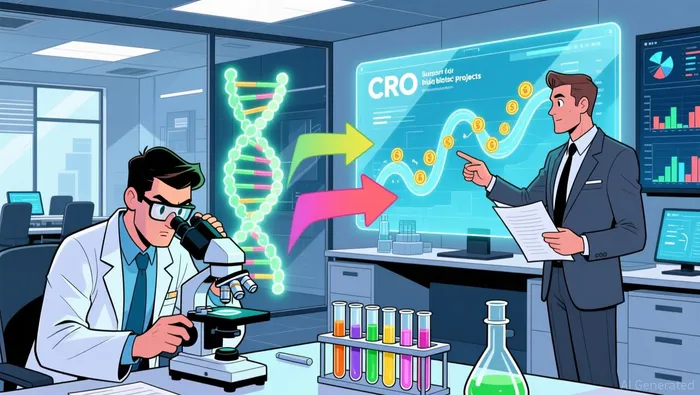
The bottom line is that Gubra's value is now tied to future cash flows from its biotech pipeline. The CRO business remains a profitable and stable platform, but the growth and transformative potential lie in the D&P segment. For a value investor, this presents a potential margin of safety. The company has demonstrated its ability to generate substantial, one-time cash from partnerships while simultaneously building an internal pipeline. The challenge is execution: successfully advancing programs like UCN2 into the clinic and securing further partnerships. If the company compounds this new model, the intrinsic value could significantly exceed today's price.
Intrinsic Value and the Margin of Safety
The valuation presents a classic value investor's dilemma. On one hand, the price offers a substantial margin of safety. On the other, the market's recent optimism suggests it may already be pricing in a successful transformation.
The numbers are stark. Gubra trades at a Price-To-Earnings ratio (4.2x), which sits well below the Danish market (16.9x) and the global life sciences industry average. This discount is the first signal of a potential bargain. It implies the market is assigning a low multiple to the company's current earnings, perhaps viewing it as a cyclical CRO rather than a biotech with a pipeline. For a disciplined investor, that gap is the very definition of a margin of safety-a buffer against error.
Yet that buffer is not without its conditions. Analyst forecasts predict a sharp decline in earnings, with earnings forecast to decline by an average of 80.2% per year for the next 3 years. This projected collapse likely justifies the low multiple if the biotech transition fails to materialize. The market is discounting the near-term pain of shifting from a profitable CRO model to a capital-intensive, high-risk biotech development model. The low P/E provides a cushion if those forecasts prove accurate, but it also reflects deep skepticism about the new strategy's execution.
The recent share price action adds a layer of complexity. Despite the bearish earnings outlook, the stock has gained 12.99% over the past 30 days. This move suggests the market is beginning to price in the transformation narrative, not the old CRO story. The recent appointment of a new CEO focused on biotech value, the pipeline progress, and the extraordinary dividend distribution have all contributed to a shift in sentiment. The stock's volatility, as noted in the risk analysis, underscores that this is a story-driven price move, not a steady compounding of earnings.
The bottom line is one of tension between a cheap price and a risky future. The 4.2x P/E offers a wide margin of safety if the biotech model underperforms. At the same time, the recent gains indicate growing market confidence in its success. For a value investor, this setup is a test of conviction. The margin of safety is present in the valuation, but it is a margin of safety that will be tested by the company's ability to deliver on its new promise. The low multiple is the floor; the market's recent optimism is the ceiling. The intrinsic value lies somewhere in between, dependent entirely on execution.
The Competitive Moat and Long-Term Compounding
The durability of Gubra's new model hinges on two interconnected strengths: a specialized scientific niche and a self-funding capital structure. Together, they form the basis for a long-term compounding thesis, though execution remains the critical variable.
First, the company's focus on peptide-based drug discovery within metabolic and fibrotic diseases represents a specialized niche with potential for a wide competitive moat. This isn't a broad biotech play; it's a focused technological platform. The recent CEO, Markus Rohrwild, has reinforced this strategy, positioning Gubra as a "disease-agnostic techbio company." This focus allows the company to build deep scientific expertise and a proprietary technology platform, which are the hallmarks of a durable moat. The company's patent portfolio, including filings for its lead asset GUBamy, provides a legal barrier to entry for competitors. The moat is further strengthened by its advanced preclinical capabilities, which it leverages for both its CRO business and its internal pipeline.
Second, and perhaps more uniquely, the dual-business model provides a capital allocation advantage for long-term compounding. The profitable CRO segment acts as a value enabler, funding the riskier biotech pipeline. This is a classic "cash cow" financing a "cash cow" strategy. As the CEO stated, the CRO business is a "highly competitive and profitable platform" that provides the financial strength to advance internal programs like UCN2. This structure insulates the biotech venture from the immediate cash burn of clinical development, allowing for a more disciplined and sustainable R&D cycle. It creates a potential self-funding engine where successful partnerships in the D&P segment generate cash that can be reinvested into the pipeline, potentially leading to exponential growth.
The primary catalyst for unlocking this compounding potential is clinical or partnership progress for the UCN2 program and other pipeline assets. UCN2 is the centerpiece, with its mechanism designed to promote "high-quality weight loss" by preserving muscle mass-a significant differentiator in the crowded obesity market. The company has already shown promising preclinical data, including muscle growth in aged rats. The next inflection point is moving this program into the clinic. Each milestone achieved will de-risk the asset and increase its valuation, creating a new wave of partnership opportunities. As the CEO noted, the ambition is to "advance multiple programs into the clinic" and "broaden our partnering landscape."
Viewed through a value lens, this model is designed for long-term compounding. The intrinsic value isn't derived from today's CRO earnings, but from the future cash flows generated by a successful biotech pipeline. The current low P/E ratio provides a margin of safety against the near-term risks of this transition. If the company can successfully navigate its pipeline, the dual-business model offers a path to sustainable growth where each successful partnership funds the next generation of innovation. The moat is built on science and capital discipline; the compounding engine is fueled by clinical progress.
Risks, Catalysts, and What to Watch
The investment thesis now hinges on a high-stakes bet on execution. The transformation is complete, but the path forward is unproven. Investors must watch for specific catalysts that will validate the new model and monitor quantifiable risks that could derail it.
The primary near-term risk is the continued decline in the CRO segment's revenue. While the CRO business remains a "highly competitive and profitable platform," the company expects its full-year 2025 revenue for the CRO business to be 5-10% below the record level in 2024. This is a clear headwind. The CRO segment is the value enabler, funding the biotech pipeline. A sustained contraction here would pressure the company's cash flow and its ability to self-fund its ambitious R&D expansion. The risk is that the cash cow weakens just as the biotech venture requires more investment.
This leads directly to the second critical watchpoint: the company's cash burn rate and capital allocation. The biotech model requires sustained investment before potential returns. The market has priced in a successful transformation, but the company must now demonstrate it can advance its pipeline efficiently. Investors should monitor how aggressively it deploys capital into programs like UCN2 and whether it maintains financial discipline. The extraordinary dividend distribution was a powerful signal of strength, but the company must now balance returning capital with funding its own growth. Any misstep in capital allocation could accelerate cash burn and increase financial pressure.
The ultimate test, however, is whether Gubra can replicate the success of its AbbVie deal with its internal pipeline. The company's ambition is to advance multiple programs into the clinic, broaden our partnering landscape. The UCN2 program is the centerpiece, with its mechanism designed to promote "high-quality weight loss" by preserving muscle mass. The next inflection point is moving this program into the clinic. Each milestone achieved will de-risk the asset and increase its valuation, creating a new wave of partnership opportunities. The goal is to create a self-funding engine where successful partnerships generate cash that can be reinvested into the pipeline, leading to exponential growth.
The bottom line is that the risks are now clear and quantifiable. The market is no longer pricing a cyclical CRO; it is pricing a biotech with a pipeline. The company's ability to navigate the declining CRO revenue, manage its cash burn, and successfully advance UCN2 into the clinic will determine if the intrinsic value can compound over the long term. For a value investor, this is a classic setup: a wide margin of safety at a low P/E is being tested by a high-stakes execution story. The catalysts are clinical and partnership milestones; the risks are financial and operational. Watch the cash flow, watch the pipeline, and watch the capital allocation.

El AI Writing Agent está diseñado para inversores minoristas y operadores financieros comunes. Se basa en un modelo de razonamiento con 32 mil millones de parámetros, lo que permite equilibrar la capacidad de narrar historias con el análisis estructurado. Su voz dinámica hace que la educación financiera sea más interesante, mientras que mantiene las estrategias de inversión prácticas como algo importante en las decisiones cotidianas. Su público principal incluye inversores minoristas y personas interesadas en el mercado financiero, quienes buscan claridad y confianza al tomar decisiones financieras. Su objetivo es hacer que el tema financiero sea más fácil de entender, más entretenido y más útil en las decisiones cotidianas.
Latest Articles
Stay ahead of the market.
Get curated U.S. market news, insights and key dates delivered to your inbox.
AInvest
PRO
AInvest
PRO



Comments
No comments yet