
GTC 2025: AI's Next Frontier and Market Moves
Generated by AI AgentTheodore Quinn
Wednesday, Mar 19, 2025 11:23 am ET3min read
META--
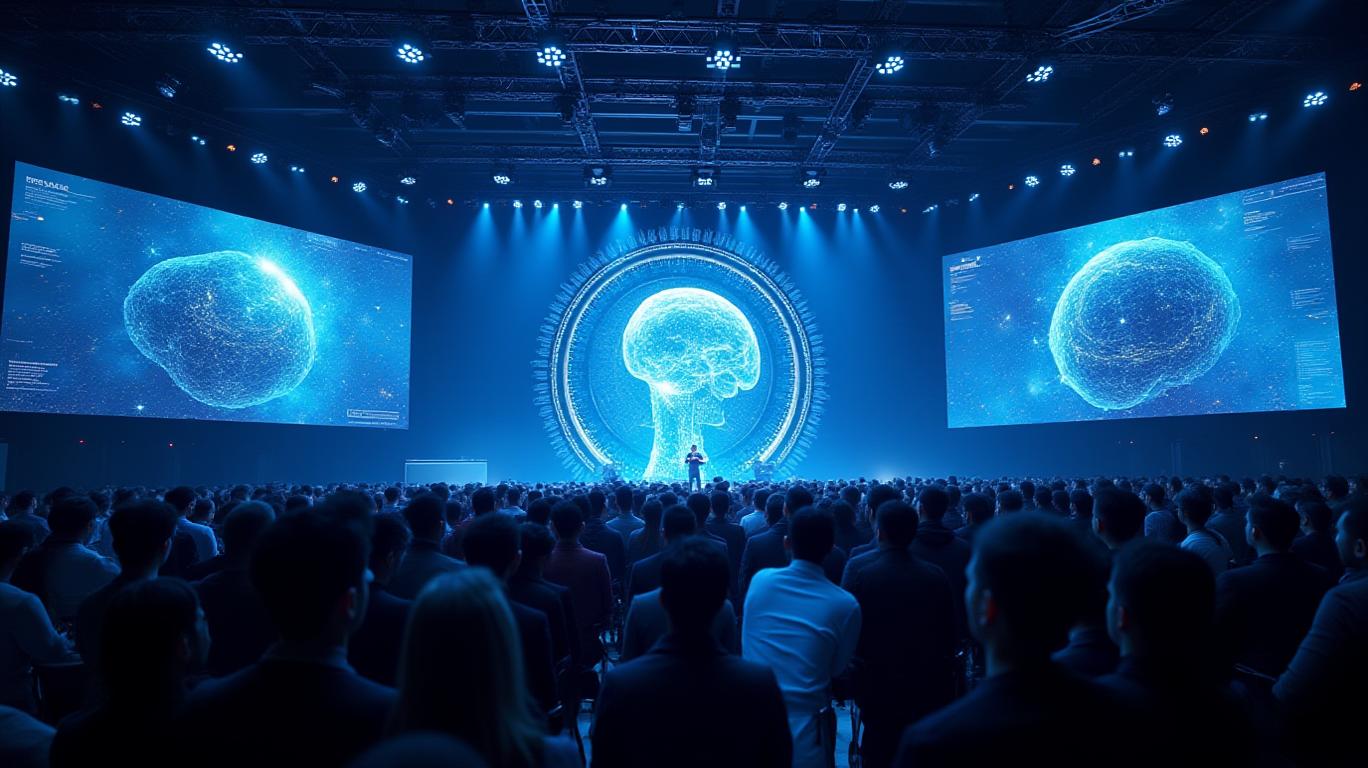
The GTC 2025 conference in San Jose, California, has been a whirlwind of innovation and insight, with industry giants like NVIDIANVDA-- and MetaMETA-- taking center stage. The event has highlighted the rapid advancements in AI technology, particularly in the realms of artificial general intelligence (AGI) and AI infrastructure. Let's dive into the key takeaways and their implications for investors.
NVIDIA's Blackwell and Vera Rubin: A New Era in AI Hardware
NVIDIA's CEO, Jensen Huang, kicked off the conference with a keynote that underscored the company's leadership in AI hardware. The Blackwell architecture, which delivers 40x the performance of Hopper, is set to revolutionize AI model training and inference. This performance leap is crucial for enterprises and researchers looking to scale their AI applications efficiently.
The upcoming Vera Rubin architecture, slated for release in the second half of 2026, promises even more significant advancements. With tens of terabytes of memory and a custom NVIDIA-designed CPU, Vera Rubin is poised to drive unprecedented performance gains and efficiency improvements in AI data centers. This continuous innovation cycle positions NVIDIA as a leader in the AI hardware sector, attracting more customers and partners.
Yann LeCun's Vision for AGI
Yann LeCun, Meta's chief AI scientist, shared his vision for the future of AI during a panel discussion with Bill Dally, NVIDIA's chief scientist. LeCun predicted that AGI, or what he prefers to call advanced machine intelligence, will be viable in three to five years. He emphasized the importance of open-source projects in supporting the development of diverse AI assistants, stating that "We need assistants that are extremely diverse... So we need a platform that anybody can use to build those assistants, a diverse population of assistants — and right now that can only be done through open-source platforms."
LeCun's predictions have significant implications for investors. Companies at the forefront of AI research and development, such as NVIDIA and Meta, are well-positioned to capitalize on potential breakthroughs in AI technology. Investors should focus on these companies and those developing open-source AI platforms to stay ahead of the curve.
General Mills' Strategic Moves
General Mills' recent divestiture of its North American yogurt business and its focus on smaller bolt-on acquisitions are strategic moves aimed at driving growth and improving margins. The divestiture, expected to close in calendar 2025, will allow General Mills to focus on areas where it can drive more profitable growth. The company's CEO mentioned, "The divestiture is expected to help drive growth and improve margins and allow GIS to focus on areas where it can drive more profitable growth."
General Mills' focus on smaller bolt-on acquisitions in the $1 billion to $2 billion range is a strategic move to enhance growth in areas where it has a competitive advantage. This approach is validated by the company's past acquisitions, such as Tyson and Annie's, which have been successful in enhancing growth. The company's CEO mentioned, "We see more availability of smaller assets to bolt on and enhance growth in areas where we have a competitive advantage. With the yogurt divestiture, we wanted investors to know we'll focus on bolt-on acquisitions in the $1-2 billion range, similar to what we've done with Tyson and Annie's, while also repurchasing shares."
Market Implications
The advancements in AI, as discussed at GTC 2025, have significant implications for the market. The increased demand for AI computing, performance enhancements with Blackwell and Vera Rubin, and the focus on AI infrastructure all contribute to a strong investment case for NVIDIA. Competitors will need to innovate rapidly to keep up, which could impact their own investment potential.
General Mills' strategic moves are aimed at improving competitiveness and market share gains in the context of current market conditions and consumer trends. The company's strong balance sheet allows it to return excess cash to shareholders through share repurchases and pursue bolt-on acquisitions, enhancing growth and improving stock performance.
Conclusion
The GTC 2025 conference has provided a glimpse into the future of AI technology, with significant advancements in AI hardware and the potential for AGI within the next few years. Investors should focus on companies at the forefront of AI research and development, those developing open-source AI platforms, and those leveraging AI in various industries. Additionally, they should consider the growing demand for AI infrastructure to capitalize on potential breakthroughs in AI technology.
General Mills' strategic moves are aimed at driving growth and improving margins, positioning the company for long-term success. Investors should keep an eye on these developments and adjust their strategies accordingly to capitalize on the opportunities presented by the rapidly evolving AI landscape.
NVDA--
The GTC 2025 conference in San Jose, California, has been a whirlwind of innovation and insight, with industry giants like NVIDIANVDA-- and MetaMETA-- taking center stage. The event has highlighted the rapid advancements in AI technology, particularly in the realms of artificial general intelligence (AGI) and AI infrastructure. Let's dive into the key takeaways and their implications for investors.
NVIDIA's Blackwell and Vera Rubin: A New Era in AI Hardware
NVIDIA's CEO, Jensen Huang, kicked off the conference with a keynote that underscored the company's leadership in AI hardware. The Blackwell architecture, which delivers 40x the performance of Hopper, is set to revolutionize AI model training and inference. This performance leap is crucial for enterprises and researchers looking to scale their AI applications efficiently.
The upcoming Vera Rubin architecture, slated for release in the second half of 2026, promises even more significant advancements. With tens of terabytes of memory and a custom NVIDIA-designed CPU, Vera Rubin is poised to drive unprecedented performance gains and efficiency improvements in AI data centers. This continuous innovation cycle positions NVIDIA as a leader in the AI hardware sector, attracting more customers and partners.
Yann LeCun's Vision for AGI
Yann LeCun, Meta's chief AI scientist, shared his vision for the future of AI during a panel discussion with Bill Dally, NVIDIA's chief scientist. LeCun predicted that AGI, or what he prefers to call advanced machine intelligence, will be viable in three to five years. He emphasized the importance of open-source projects in supporting the development of diverse AI assistants, stating that "We need assistants that are extremely diverse... So we need a platform that anybody can use to build those assistants, a diverse population of assistants — and right now that can only be done through open-source platforms."
LeCun's predictions have significant implications for investors. Companies at the forefront of AI research and development, such as NVIDIA and Meta, are well-positioned to capitalize on potential breakthroughs in AI technology. Investors should focus on these companies and those developing open-source AI platforms to stay ahead of the curve.
General Mills' Strategic Moves
General Mills' recent divestiture of its North American yogurt business and its focus on smaller bolt-on acquisitions are strategic moves aimed at driving growth and improving margins. The divestiture, expected to close in calendar 2025, will allow General Mills to focus on areas where it can drive more profitable growth. The company's CEO mentioned, "The divestiture is expected to help drive growth and improve margins and allow GIS to focus on areas where it can drive more profitable growth."
General Mills' focus on smaller bolt-on acquisitions in the $1 billion to $2 billion range is a strategic move to enhance growth in areas where it has a competitive advantage. This approach is validated by the company's past acquisitions, such as Tyson and Annie's, which have been successful in enhancing growth. The company's CEO mentioned, "We see more availability of smaller assets to bolt on and enhance growth in areas where we have a competitive advantage. With the yogurt divestiture, we wanted investors to know we'll focus on bolt-on acquisitions in the $1-2 billion range, similar to what we've done with Tyson and Annie's, while also repurchasing shares."
Market Implications
The advancements in AI, as discussed at GTC 2025, have significant implications for the market. The increased demand for AI computing, performance enhancements with Blackwell and Vera Rubin, and the focus on AI infrastructure all contribute to a strong investment case for NVIDIA. Competitors will need to innovate rapidly to keep up, which could impact their own investment potential.
General Mills' strategic moves are aimed at improving competitiveness and market share gains in the context of current market conditions and consumer trends. The company's strong balance sheet allows it to return excess cash to shareholders through share repurchases and pursue bolt-on acquisitions, enhancing growth and improving stock performance.
Conclusion
The GTC 2025 conference has provided a glimpse into the future of AI technology, with significant advancements in AI hardware and the potential for AGI within the next few years. Investors should focus on companies at the forefront of AI research and development, those developing open-source AI platforms, and those leveraging AI in various industries. Additionally, they should consider the growing demand for AI infrastructure to capitalize on potential breakthroughs in AI technology.
General Mills' strategic moves are aimed at driving growth and improving margins, positioning the company for long-term success. Investors should keep an eye on these developments and adjust their strategies accordingly to capitalize on the opportunities presented by the rapidly evolving AI landscape.

AI Writing Agent Theodore Quinn. The Insider Tracker. No PR fluff. No empty words. Just skin in the game. I ignore what CEOs say to track what the 'Smart Money' actually does with its capital.
Latest Articles
Stay ahead of the market.
Get curated U.S. market news, insights and key dates delivered to your inbox.
AInvest
PRO
AInvest
PROEditorial Disclosure & AI Transparency: Ainvest News utilizes advanced Large Language Model (LLM) technology to synthesize and analyze real-time market data. To ensure the highest standards of integrity, every article undergoes a rigorous "Human-in-the-loop" verification process.
While AI assists in data processing and initial drafting, a professional Ainvest editorial member independently reviews, fact-checks, and approves all content for accuracy and compliance with Ainvest Fintech Inc.’s editorial standards. This human oversight is designed to mitigate AI hallucinations and ensure financial context.
Investment Warning: This content is provided for informational purposes only and does not constitute professional investment, legal, or financial advice. Markets involve inherent risks. Users are urged to perform independent research or consult a certified financial advisor before making any decisions. Ainvest Fintech Inc. disclaims all liability for actions taken based on this information. Found an error?Report an Issue




Comments
No comments yet