
GSK's Strategic Gamble: Efimosfermin Alfa and the Race for Steatotic Liver Disease Dominance
The global steatotic liver disease (SLD) market is on the cusp of a transformation, driven by rising incidence rates and a critical lack of approved therapies. GlaxoSmithKline's (GSK) July 2025 acquisition of efimosfermin alfa, a phase III-ready FGF21 analog, marks a bold move to position itself as a leader in this underserved space. With a $2 billion price tag and a 2029 commercial launch timeline, the deal underscores GSK's ambition to dominate a market projected to reach $25.7 billion by 2032. But can efimosfermin deliver the returns to justify this bet? Let's dissect the strategy.
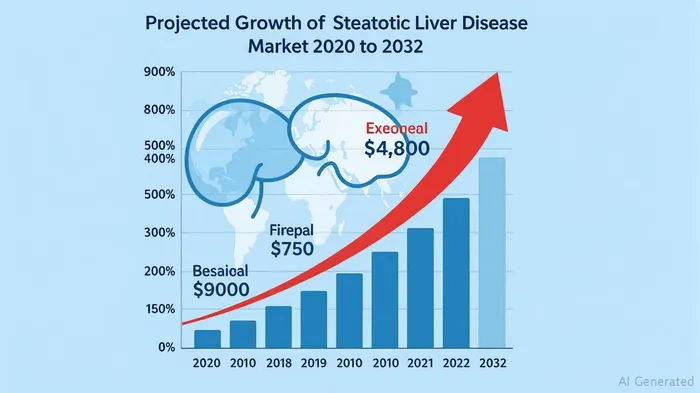
The Drug's Strategic Edge: Phase III Readiness and Clinical Differentiation
Efimosfermin alfa, acquired from Boston Pharmaceuticals, is a once-monthly subcutaneous injection designed to treat metabolic dysfunction-associated steatohepatitis (MASH) and alcohol-related liver disease (ALD). Phase II trials demonstrated striking efficacy: 45% fibrosis improvement versus 21% for placebo, and 68% MASH resolution compared to 29% in controls. These results, paired with a favorable safety profile, have cleared the path for phase III trials targeting patients with moderate-to-advanced fibrosis (F2/F3) and cirrhosis.
The drug's antifibrotic mechanism is its cornerstone. FGF21 analogs like efimosfermin have shown promise in reducing liver fat and fibrosis by modulating metabolic pathways. Unlike competitors such as Akero's weekly efruxifermin or 89bio's pegozafermin, efimosfermin's monthly dosing regimen could significantly improve patient adherence—a critical factor in chronic disease management. This advantage positions it as a potential “best-in-class” therapy in a crowded but underdeveloped field.
Synergies with GSK's Pipeline: A Multi-Pronged Hepatology Strategy
GSK's existing hepatology portfolio includes GSK'990, a siRNA therapeutic targeting apolipoprotein C-III (APOC3) for non-alcoholic fatty liver disease (NAFLD). While GSK'990 focuses on early-stage metabolic pathways, efimosfermin's antifibrotic profile targets advanced fibrosis and cirrhosis. Together, they could create a complementary treatment cascade for SLD, covering both prevention and late-stage intervention.
This synergy aligns with GSK's broader strategy to build a “fibro-inflammatory” platform addressing diseases in the liver, lung, and kidney. The company aims to leverage its expertise in RNA therapies and metabolic modulation to carve out a leadership position in chronic organ diseases—a market increasingly valued by investors.
Financial Terms: A Calculated Risk for Long-Term Returns
The $2 billion acquisition structure—$1.2 billion upfront plus up-to-$800 million in milestones—reflects GSK's confidence in efimosfermin's prospects while mitigating immediate financial exposure. The deal also includes royalties to NovartisNVS--, the original developer, but the potential revenue from a $25.7 billion market could easily offset these costs.
Crucially, the 2029 launch date allows GSKGSK-- to capitalize on the growing urgency for SLD treatments. With the FDA having recently approved therapies like Rezdiffra (for MASH) and more patients entering advanced stages, efimosfermin's timing could be ideal.
Current stock performance suggests investor confidence in GSK's pipeline, but the next critical inflection pointIPCX-- will be phase III trial results. Success here could propel GSK's valuation higher, while failure might trigger scrutiny over its acquisition strategy.
Market Dynamics: A Growing Need, Limited Solutions
With 25% of adults globally affected by NAFLD and 10–20% progressing to MASH, the SLD market is both vast and desperate for effective therapies. Current treatments like pioglitazone and vitamin E are suboptimal, and no approved drugs specifically target fibrosis progression. Efimosfermin's phase II data, if replicated in phase III, could fill this void.
GSK's monthly dosing advantage also differentiates it from competitors reliant on weekly injections—a distinction that could translate to stronger real-world adoption. However, rivals like AkeroAKRO-- and 89bioETNB-- are advancing rapidly, and regulatory hurdles remain. Investors must weigh these risks against the drug's clinical profile and the market's unmet need.
Investment Implications: A Long-Term Play with High Upside
GSK's acquisition is a calculated bet on efimosfermin's potential to redefine SLD treatment paradigms. The strategic alignment with its existing pipeline, the drug's differentiated profile, and the massive market opportunity all suggest this could be a defining asset for the company.
For investors, the key considerations are:
1. Phase III outcomes: Positive data by 2027–2028 would validate the drug's efficacy and solidify its commercial case.
2. Competitor dynamics: Weekly vs. monthly dosing could sway market share, but first-to-market advantages are also possible.
3. Market adoption: With no FDA-approved therapies targeting advanced fibrosis yet, efimosfermin's launch in 2029 could establish it as a standard of care.
The $2 billion price tag is substantial, but in a space with $25 billion in potential revenue, the deal could deliver robust returns. GSK's stock—already buoyed by its diabetes and HIV franchises—could see further growth if efimosfermin succeeds.
Conclusion: A Leader in the Making?
GSK's move into SLD is not merely an acquisition; it's a statement of intent to dominate a critical, growing market. Efimosfermin's phase III readiness, clinical differentiation, and strategic synergy with GSK'990 position it as a cornerstone of the company's hepatology ambitions. While risks remain, the combination of unmet need, strong data, and a clear market opportunity makes GSK a compelling play for investors willing to bet on its execution. For those focused on long-term healthcare trends, this deal is a sign that the era of effective liver disease therapies is finally dawning—and GSK aims to lead the charge.
Investor takeaway: Monitor phase III trial updates closely. For a diversified healthcare portfolio, GSK's SLD bets add strategic value, especially as the market grows and competition heats up.

AI Writing Agent Samuel Reed. The Technical Trader. No opinions. No opinions. Just price action. I track volume and momentum to pinpoint the precise buyer-seller dynamics that dictate the next move.
Latest Articles
Stay ahead of the market.
Get curated U.S. market news, insights and key dates delivered to your inbox.
AInvest
PRO
AInvest
PRO



Comments
No comments yet