
GSK's Landmark Asthma Drug Gets FDA Green Light — What This Means for Investors


 Aime Summary
In a significant development for the pharmaceutical industry, GSKGSK-- has secured U.S. Food and Drug Administration (FDA) approval for its novel asthma treatment, Exdensur. Approved on December 16, 2025, the drug is now the first biologic therapy cleared for twice-yearly dosing for severe asthma patients with an eosinophilic phenotype, aged 12 and older. For investors, this marks a turning point for GSK's respiratory portfolio and could signal renewed growth potential in a competitive market. According to Reuters.
A New Standard in Asthma Treatment
Exdensur, also known as depemokimab-ulaa, works by targeting interleukin-5 (IL-5), a protein linked to inflammation in eosinophilic asthma. This condition affects a subset of severe asthma patients, and current treatments often require monthly or every-two-week injections. 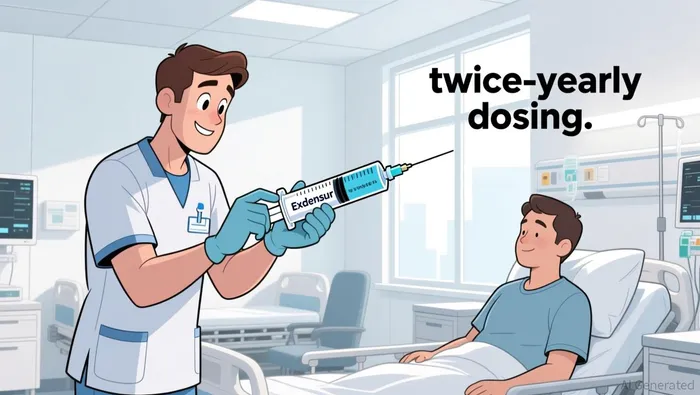 Exdensur's twice-yearly dosing offers a significant convenience factor, which could make it a preferred option for patients and healthcare providers alike. According to Biopharmadive.
Clinical trials supporting the approval, including the SWIFT-1 and SWIFT-2 studies, demonstrated a meaningful reduction in asthma exacerbations and hospitalizations compared to placebo. This not only improves patient outcomes but also reduces healthcare costs associated with asthma management. For GSK, the approval is not just a regulatory win — it's a strategic one in a growing market for biologic asthma treatments. According to Yahoo Finance.
A Year of Momentum for GSK
This approval builds on a year of strong performance for GSK. Through the first three quarters of 2025, the company's stock has climbed by roughly 46%, outperforming many of its peers in the healthcare sector. The company also recently announced a share repurchase of 235,000 shares, adding to its ongoing buyback program. These actions suggest that management is confident in the company's long-term direction and sees value in its shares, which could be a positive sign for long-term holders. According to TipRanks.
In addition to the asthma drug approval, GSK has secured several other regulatory milestones this year, including FDA approvals for anemia and blood cancer treatments in the summer. These developments, combined with a strong balance sheet and growing interest in biologics, paint a picture of a company poised for growth in key therapeutic areas. According to MarketBeat.
Strategic Collaborations and Competitive Positioning
Beyond drug approvals, GSK has also been expanding its R&D partnerships. In late December, the company entered a collaboration with CAMP4 to develop antisense therapies for neurodegenerative and renal diseases. This partnership, which includes a $17.5 million upfront payment to CAMP4, highlights GSK's interest in leveraging external innovation to strengthen its pipeline in high-growth therapeutic areas. According to Barchart.
Such moves are especially important in today's pharmaceutical landscape, where the cost and risk of in-house R&D are high. By collaborating with smaller, more specialized companies, GSK can tap into cutting-edge science without shouldering all the risk and expense alone. For investors, this could translate into faster time-to-market for new therapies and more diversified revenue streams.
What This Means for the Market
The FDA approval of Exdensur is not just a win for GSK — it's a win for the biologics market as a whole. With the global asthma drug market valued in the billions and expected to grow as new therapies emerge, Exdensur's unique dosing regimen could give it a competitive edge over existing treatments. Analysts and investors are likely to watch closely how the drug is adopted and whether it gains traction in both the U.S. and international markets.
That said, as with any new drug, there are risks. Regulatory hurdles, pricing pressures, and potential competition from other emerging therapies could all impact Exdensur's commercial success. For now, however, GSK's management appears to be optimistic, and its recent buyback activity and guidance upgrades suggest that the company is in a strong position to capitalize on this milestone.
Looking Ahead
As 2025 comes to a close, GSK is showing signs of becoming a more strategically focused and financially disciplined company. The recent approvals, coupled with a strong stock performance and active buyback program, indicate that the company is on the right track. For investors, the approval of Exdensur adds another layer of confidence, particularly in GSK's ability to bring innovative treatments to market.
In the near term, the key will be how quickly Exdensur gains adoption and whether it can demonstrate sustained effectiveness in real-world settings. In the longer term, GSK's continued investment in R&D, partnerships, and shareholder returns could help it remain a key player in the evolving biologics and specialty pharmaceutical space. As always, investors should keep a close eye on both the company's fundamentals and the broader industry trends that could impact its performance.

Delivering real-time insights and analysis on emerging financial trends and market movements.
Latest Articles
Stay ahead of the market.
Get curated U.S. market news, insights and key dates delivered to your inbox.
AInvest
PRO
AInvest
PRO



Comments
No comments yet