
GRVT Token Gains Major Exchange Listings as Grvt Platform Launches Hybrid Trading
 Aime Summary
- Major cryptocurrency exchanges including CoinbaseCOIN--, Bitget, Upbit, and Bithumb have added GRVT trading pairs, providing immediate access to the token across global and regional markets.
- The Grvt platform utilizes a hybrid architecture on ZKsyncZK-- Validium to offer institutional-grade execution speeds while maintaining self-custodial security for users.
- The token launch included a controversial 12-month vesting schedule for community allocations, which has generated mixed reactions regarding immediate liquidity and holder incentives.
Global cryptocurrency exchanges are rapidly expanding their support for the Grvt hybrid trading platform, establishing GRVT as a new asset in the decentralized finance (DeFi) sector. Coinbase has announced support for GRVT deposits ahead of full trading activation, signaling institutional interest in the project. Bitget also listed GRVT for spot trading, aiming to bridge centralized exchange efficiency with on-chain liquidity.
South Korean markets have seen immediate activity with the token. Upbit added GRVT against the Korean won, BitcoinBTC--, and TetherUSDT--, while Bithumb launched the GRVT/KRW pair. These moves provide direct fiat access for regional traders and are expected to boost the token's visibility and liquidity in Asia.
What is the Grvt Platform Architecture?
Grvt operates as a self-custodial on-chain wealth platform built on a custom Layer 2 powered by the ZKsync ZK Stack in Validium mode. The protocol enables users to access crypto, tokenized real-world assets, equities, and derivatives while retaining full custody of their assets. This architecture leverages EthereumETH-- for transaction validity while storing data off-chain to improve scalability and preserve trading privacy.
The platform addresses liquidity fragmentation by allowing deposited assets to simultaneously earn yield, serve as trading collateral, and support investment activity. The ecosystem is organized into three verticals: Earn, which applies base yield; Invest, offering curated products like market-making vaults; and Trade, supporting spot and perpetual futures through institutional-grade infrastructure.
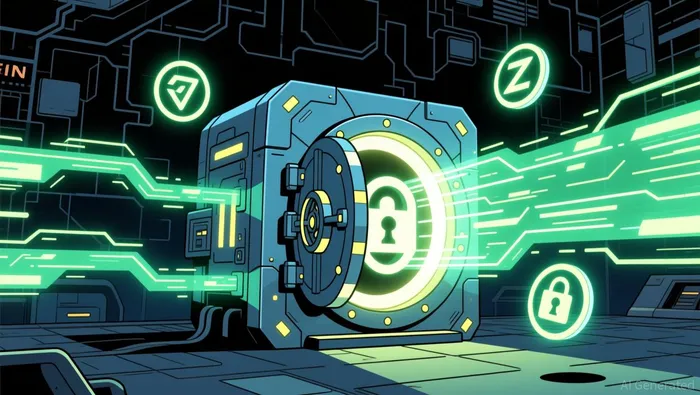
The underlying technology utilizes a hybrid engine where order matching occurs off-chain, enabling execution speeds of up to 600,000 transactions per second. State transitions are periodically settled on-chain via zero-knowledge proofs on Ethereum. This mechanism is designed to eliminate front-running and keep transaction details private, delivering centralized exchange-level performance alongside decentralized security.
Why Do Exchanges Support GRVT Now?
Coinbase, Bitget, and other major exchanges are positioning themselves to offer GRVT trading to capture market interest in hybrid infrastructure projects. Coinbase has not specified an exact date for when deposits will activate, as the timeline depends on when the team unlocks token transfers. KuCoin is set to begin GRVT/USDT trading, creating a three-exchange launch scenario that suggests a broader unlock event is approaching.
For Coinbase, the listing aligns with its strategy of expanding asset offerings beyond major cryptocurrencies while maintaining compliance with U.S. securities laws. The exchange stated that the listing is conditional on meeting internal liquidity benchmarks, a standard requirement for new asset listings. This approach adds credibility and liquidity to the token, potentially attracting more developers and traders to the platform.
The listing on major exchanges like Upbit and Bithumb also underscores the continued importance of South Korea as a liquidity hub. For South Korean traders, the addition of GRVT to KRW markets provides a convenient on-ramp to the token without needing to convert through stablecoins. This move is expected to increase trading volume and stabilize price discovery.
How Does the Token Unlock Schedule Impact Investors?
GRVT completed its token generation event on July 30, launching 1 billion tokens. The project allocated 28% of the total supply to community rewards, which are subject to a 12-month vesting schedule. Only 40% of airdrop allocations were unlocked at the token generation event, with the remaining 60% released in 20% increments at months four, eight, and twelve.
The initial unlock released approximately 11.43% of the total supply, resulting in a circulating supply of roughly 114 million tokens. At launch prices between $0.26 and $0.27, this established a circulating market cap near $30 million. The next scheduled unlocks are set for August 29 and November 29.
The vesting structure aims to mitigate immediate selling pressure and align incentives with long-term platform growth. However, the delayed access has sparked user disappointment, with the upcoming unlocks serving as critical tests for token holder retention. The project has raised over $14 million, including a $19 million Series A in 2025, and the token serves as a utility and membership instrument within the ecosystem.

Blending traditional trading wisdom with cutting-edge cryptocurrency insights.
Latest Articles
Stay ahead of the market.
Get curated U.S. market news, insights and key dates delivered to your inbox.


AInvest
PRO
AInvest
PRO




Comments
No comments yet