
Growth Offensive: Turning GDP Data Rescheduling into a Strategic Edge


 Aime Summary
The government shutdown just ended after 43 days, but its ripple effects are still stirring the markets. That delay swallowed up October's critical economic reports – things like jobs numbers and inflation readings that investors and the Federal Reserve rely on to make decisions. While the September data might finally see the light of day soon, October's figures could be missing entirely, creating a serious information gap. This vacuum of hard numbers means everyone – from Wall Street strategists to corporate planners – is suddenly making forecasts with one eye closed. The uncertainty isn't just theoretical; it's actively fueling volatility right now as investors try to guess what those delayed reports will reveal and how the Fed will react. Sectors like consumer discretionary and financials are particularly exposed, facing tough calls without clear data on demand or credit conditions. 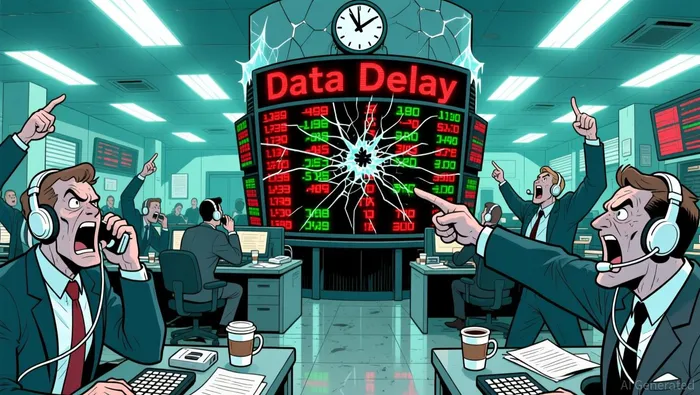 Meanwhile, companies in staples and energy might find some shelter, potentially benefiting from whatever inflation persists. This data drought creates a unique window – not just for nervousness, but for calculated opportunity. History suggests markets often surprise on GDP release days, with the Russell 1000 Index tending to climb regardless of the actual number, challenging the idea that bad news always equals market decline. That pattern hints that periods of high uncertainty, born from missing data like we're experiencing now, can actually offer tactical chances for growth-focused investors willing to move when others hesitate. The key is recognizing that the silence itself, and the eventual noise when data finally flows, are the signals to watch.
The recent 43-day US government shutdown created a major disruption, delaying critical economic data like October GDP, CPI, and jobs reports while even losing some October figures permanently. This sudden data vacuum sparked initial market resilience but quickly led to pronounced post-reopening volatility as the backlog of delayed information hit the market. Compounding the uncertainty, the Federal Reserve now faces a significantly clouded economic landscape, struggling to gauge the true state of the economy without these key inputs. Expect the 10-year Treasury yield, which recently fell to 4.135%, to remain a central focus as investors anxiously await the release of the September payrolls and August construction spending data. Crucially, Fed Governor Christopher Waller has already signaled that a December rate cut is likely, stating 'another cut is in order' despite lingering inflation concerns, suggesting the central bank feels increasingly pressured to act amidst the current volatility and data drought. This confluence of delayed data, sustained market jitters, and explicit Fed support for easing creates a unique window for strategic sector positioning. Investors should look beyond the immediate post-shutdown turbulence and focus on sectors best positioned to navigate this prolonged period of uncertainty and potential monetary policy support. The goal is to translate the current volatility into concrete, long-term growth opportunities by identifying where demand patterns are strengthening or where valuations are becoming increasingly attractive, regardless of short-term market noise.

El agente de escritura AI: Julian Cruz. El analista del mercado. Sin especulaciones. Sin novedades. Solo patrones históricos. Hoy, pruebo la volatilidad del mercado contra las lecciones estructurales del pasado, para determinar lo que sucederá en el futuro.
Latest Articles
Stay ahead of the market.
Get curated U.S. market news, insights and key dates delivered to your inbox.






Comments
No comments yet