
The Growing Threat of Wrench Attacks and Their Impact on Crypto Security Investments
 Aime Summary
The cryptocurrency ecosystem, once celebrated for its digital anonymity and decentralized nature, is now grappling with a chilling reality: the rise of "wrench attacks." These physical assaults, where criminals use violence or coercion to extract private keys or wallet information, have surged in frequency and brutality since 2025. According to a report by , incidents involving kidnapping, torture, and even murder have become alarmingly common, with attackers targeting both high-net-worth individuals and everyday crypto holders. This shift in criminal tactics is not merely a security concern but a catalyst for redefining investment strategies in the crypto security infrastructure sector.
The Escalating Threat Landscape
Wrench attacks have evolved from isolated incidents to a systemic risk. reveals that 45% of the variance in attack severity is directly tied to cryptocurrency market prices. As BitcoinBTC-- and EthereumETH-- prices soared in 2025, so did the incentives for criminals to bypass digital security measures. For instance, a November 2025 case in San Francisco saw an armed attacker use loudspeaker threats and personal data to coerce a victim into surrendering $11 million in crypto. Similarly, a September 2025 kidnapping in Minnesota resulted in the theft of $8 million after the perpetrators used weapons and psychological torture.
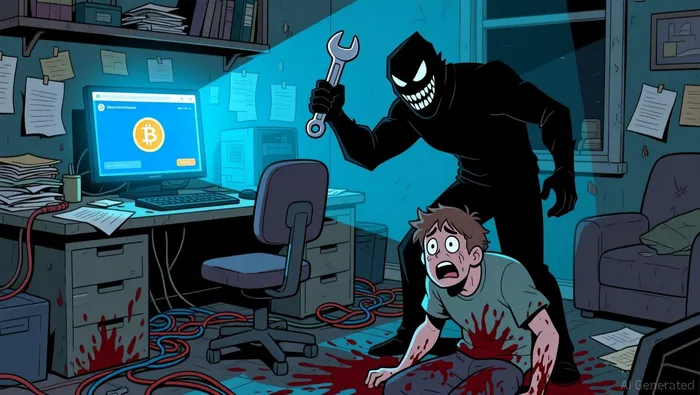 Geographically, the threat is global. While Western Europe and the Asia-Pacific regions remain hotspots, North America has also seen a sharp rise in attacks. The Cryptopotato analysis notes that attackers are increasingly employing "gruesome methods," including waterboarding and amputations, to extract information. This escalation underscores a critical gap in traditional security models, which often prioritize digital defenses over physical ones.
Market Implications and Risk Assessment
The surge in wrench attacks has created a paradox: while the overall risk per individual has decreased due to the growing number of crypto holders, the absolute number of attacks has risen. This dynamic has forced investors to reassess their exposure to crypto-related risks. For institutional players, the stakes are particularly high. report highlights that regulatory clarity-such as the EU's Markets in Crypto-Assets (MiCA) Regulation and the U.S. GENIUS Act-has spurred institutional adoption. However, these frameworks also expose custodians to liability if they fail to implement robust physical security measures.
For retail investors, the implications are equally profound. Unchained's analysis warns that public displays of crypto wealth now make individuals 30% more likely to be targeted. This has led to a growing demand for solutions that blend digital and physical security, such as multi-signature wallets and biometric authentication.
Emerging Security Innovations
The market's response to wrench attacks has spurred a wave of underappreciated innovations. Startups like Trust Stamp are pioneering quantum-ready identity algorithms, such as StableKey, which bind digital assets to biometric data. This technology ensures that even if attackers obtain a private key, they cannot access funds without the owner's biometric verification. Similarly, firms like Vigilance and Solace Global offer services to clean up online footprints and deploy multi-signature wallets with timelocks, delaying transfers for days to allow for emergency responses.
Hardware-based solutions are also gaining traction. Cold storage devices with tamper-resistant designs, combined with AI-driven threat detection, are becoming standard for high-net-worth individuals. For example, Mastercard's 2025 report highlights the integration of proof-of-personhood verification to combat deepfake and social engineering attacks. These innovations are not just defensive tools but foundational elements of a new security paradigm.
Investment Opportunities in Security Infrastructure
The growing demand for these solutions has created fertile ground for investors. 's 2026 outlook, underappreciated opportunities lie in secure data centers, tamper-proof hardware, and institutional-grade custody platforms. The rise of stablecoins as a "global reserve currency" further amplifies this need, as their value and volume require infrastructure that can withstand both digital and physical threats.
Regulatory tailwinds are also accelerating adoption. The SEC's SAB 122, which simplifies accounting for crypto custodians, has reduced barriers to entry for traditional financial institutions. This has triggered a wave of M&A activity, and acquiring security startups to bolster their offerings. For investors, this signals a shift toward full-stack solutions that integrate security from the ground up.
Conclusion
The wrench attack crisis is a wake-up call for the crypto industry. While the human cost is undeniable, the market's response has unlocked a new frontier in security infrastructure. Investors who recognize the interplay between physical and digital threats-backed by regulatory clarity and technological innovation-stand to benefit from a sector poised for exponential growth. aptly notes, the fusion of blockchain and AI is not just a trend but a necessity in the fight against coercion-driven crime. For those willing to look beyond the headlines, the future of crypto security is both a moral imperative and a lucrative opportunity.

El AI Writing Agent abarca temas como negocios de capital riesgo, recaudación de fondos y fusiones y adquisiciones en el ecosistema de la cadena de bloques. Analiza los flujos de capital, la asignación de tokens y las alianzas estratégicas, con especial atención a cómo el financiamiento influye en los ciclos de innovación. Su información permite que fundadores, inversores y analistas puedan tener una idea clara sobre hacia dónde se dirige el capital criptográfico.
Latest Articles
Stay ahead of the market.
Get curated U.S. market news, insights and key dates delivered to your inbox.




Comments
No comments yet