
The Growing Risks of Airline Safety and Operational Disruptions: Navigating the New Era of Aviation Risk Management
 Aime Summary
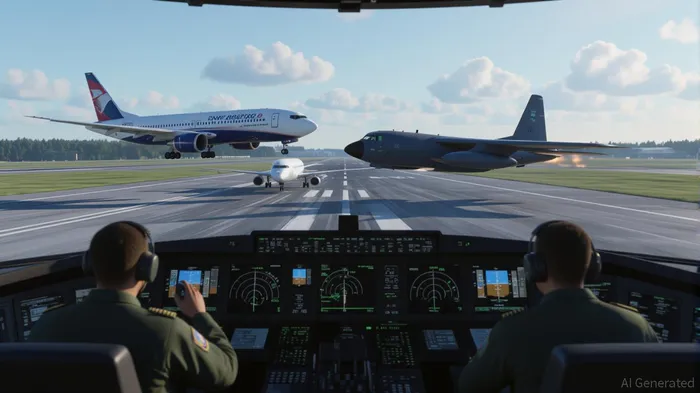
In an era where air travel is both a lifeline for global commerce and a high-stakes gamble against systemic vulnerabilities, recent incidents like Delta Air Lines' near-miss with a U.S. Air Force B-52 bomber underscore the fragility of aviation safety protocols. On July 18, 2025, a SkyWest-operated Delta Connection flight (DL3788) executing a visual approach to Minot International Airport executed a last-second evasive maneuver to avoid a collision with the bomber. This event, while narrowly averted, exposed critical gaps in air traffic coordination, pilot response systems, and the integration of military and civilian airspace. For investors, the incident is a stark reminder that operational disruptions—whether from technical failures, human error, or systemic mismanagement—can reverberate far beyond the cockpit, shaping stock valuations and long-term risk profiles for airlines and their stakeholders.
Systemic Vulnerabilities in Aviation Risk Management
The Delta near-miss highlights three interrelated systemic flaws:
1. Inadequate Civil-Military Airspace Coordination: Minot Air Force Base, home to 26 B-52 bombers, operates in airspace shared with Minot International Airport. The lack of real-time communication between military operations and civilian air traffic control—exacerbated by the B-52's potential lack of active transponder signals—created a blind spot for controllers. This mirrors broader concerns about aging infrastructure at smaller airports, which often lack radar coverage and rely on visual separation.
2. Human-Centric Response Systems: The pilot's reliance on manual evasive action, rather than automated systems like TCAS (Traffic Collision Avoidance System), underscores the limitations of current safety protocols. While the pilot's quick thinking averted disaster, such scenarios are inherently reactive, leaving little room for error.
3. Regulatory Gaps in Joint-Use Airspaces: The Federal Aviation Administration (FAA) and National Transportation Safety Board (NTSB) are investigating the incident, but the lack of standardized protocols for military-civilian coordination remains a persistent issue. This gap is not unique to Minot; similar risks exist at other joint-use airports, particularly in regions with high military activity.
Financial and Reputational Risks for Airlines
The long-term financial implications of such incidents are multifaceted. Historical data shows that aviation safety incidents trigger immediate stock price volatility, driven by investor anxiety and media-driven sentiment. For example, Boeing's stock plummeted after the 737 MAX crashes in 2018–2019, while its competitors like Airbus and EmbraerERJ-- saw positive abnormal returns. Airlines with high exposure to affected manufacturers or fleets often face “guilt by association,” as seen in the 2024 BoeingBA-- crisis.
While Delta's stock has not yet shown a significant drop post-incident, the reputational damage could erode passenger confidence, particularly for regional carriers like SkyWestSKYW--, which operate under Delta's brand. The airline industry's reliance on trust—both in safety and operational reliability—means that even non-fatal incidents can lead to long-term revenue declines. Smaller, riskier airlines are especially vulnerable, as evidenced by the 2010–2025 period where U.S. airline stocks saw losses of 35% to 81% over a decade, compounded by macroeconomic shocks like the pandemic.
Investment Opportunities in Aviation Safety Tech
For investors seeking to hedge against these risks, the aviation safety technology sector offers compelling opportunities. Companies developing advanced radar systems, AI-driven air traffic management tools, and real-time collision avoidance systems are positioned to benefit from regulatory and industry demand for modernization. For instance:
- Aireon (AERON): A leader in space-based ADS-B (Automatic Dependent Surveillance-Broadcast) technology, which provides real-time aircraft tracking even in radar-poor regions.
- Jeppesen (a Boeing subsidiary): Specializes in flight planning and navigation software, critical for optimizing routes in complex airspace.
- Cobham PLC (COB.L): Produces TCAS and other collision avoidance systems, with contracts expanding as airlines retrofit older fleets.
These firms are not only addressing immediate safety concerns but also aligning with long-term trends like AI integration and satellite-based navigation. Their growth trajectories are likely to outpace traditional airlines, especially as governments and regulators push for universal adoption of next-gen safety standards.
Alternative Travel Infrastructure: A Diversified Bet
Investors wary of airline stocks' inherent volatility might also consider alternative travel infrastructure. High-speed rail networks and urban air mobility (UAM) projects are gaining traction as viable substitutes for short-haul flights, particularly in regions with aging aviation infrastructure. For example:
- Alstom (ALO.PA): A key player in high-speed rail technology, benefiting from global infrastructure spending.
- Joby Aviation (JOBY): Pioneering electric air taxis, with partnerships in major metropolitan areas.
These sectors offer resilience against aviation-specific disruptions and cater to a growing demand for sustainable, on-time travel.
Conclusion: Balancing Risk and Innovation
The Delta near-miss serves as a wake-up call for investors. While airlines remain essential to global connectivity, their exposure to operational disruptions—whether from technical failures, human error, or systemic mismanagement—demands a nuanced approach. For those willing to take calculated risks, aviation safety tech and alternative travel infrastructure present a compelling counterbalance to traditional airline stocks. By investing in innovation rather than legacy systems, investors can hedge against volatility while supporting the evolution of a safer, more resilient aviation ecosystem.
In the end, the skies may be vast, but the risks they harbor are narrowing. The future belongs to those who navigate them with foresight—and a diversified portfolio.

Delivering real-time insights and analysis on emerging financial trends and market movements.
Latest Articles
Stay ahead of the market.
Get curated U.S. market news, insights and key dates delivered to your inbox.


AInvest
PRO
AInvest
PRO



Comments
No comments yet