
The Growing Risk of App-Based Crypto Scams and Their Impact on Institutional Investor Sentiment


 Aime Summary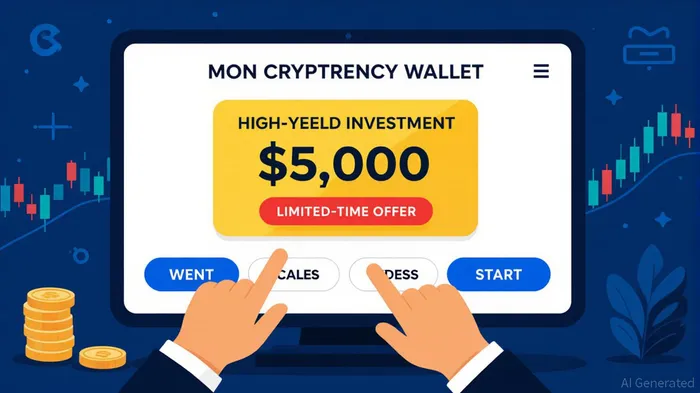
The rise of app-based cryptocurrency scams in emerging markets has become a critical concern for institutional investors. As digital assets gain traction in regions with rapidly expanding mobile-first financial ecosystems, the sophistication and scale of fraud have outpaced regulatory and technological safeguards. In 2025, losses from these scams have already reached $3.1 billion globally, with emerging markets accounting for a disproportionate share. For institutional investors, the implications are clear: without robust due diligence frameworks and regulatory preparedness, the crypto space risks becoming a high-stakes minefield.
The Anatomy of App-Based Scams in Emerging Markets
App-based crypto scams in 2025 are no longer rudimentary phishing attempts. Cybercriminals now deploy malicious browser extensions, deepfake-driven social engineering, and AI-powered chatbots to mimic trusted platforms. These scams often begin with a seemingly legitimate app or website offering "exclusive" investment opportunities, airdrops, or high-yield returns. Once users connect their wallets or input private keys, funds are drained in real time.
For example, a 57-year-old investor in Cyprus lost €37,000 after being lured by a "crypto advisor" via Signal, who promised 10x returns on a $500 deposit. Similarly, a California resident fell victim to a fake Arkadiko Finance support team, which tricked them into revealing a seed phrase, resulting in a $100,000 loss. These cases highlight a troubling trend: scammers are exploiting the trust users place in mobile apps and decentralized finance (DeFi) platforms, particularly in regions where digital literacy is low and regulatory oversight is fragmented.
Regulatory Preparedness: A Mixed Landscape
Emerging markets are grappling with the dual challenge of fostering crypto innovation while mitigating fraud. Some nations, like Nigeria and India, have begun adopting blockchain analytics tools (e.g., Chainalysis, Elliptic) to track illicit flows and identify scam addresses. Others are experimenting with KYT (Know Your Transaction) systems to monitor real-time transactions for suspicious activity. However, enforcement remains inconsistent.
The U.S. and EU models—such as the CLARITY Act and MiCAR framework—offer a blueprint for institutional due diligence. These frameworks mandate KYC/AML compliance, define digital asset classifications, and enforce licensing for crypto service providers. In emerging markets, similar efforts are nascent. For instance, Brazil's Central Bank has proposed a sandbox for DeFi platforms, while South Africa is piloting regulatory sandboxes for crypto custodians. Yet, gaps persist: weak enforcement capacity, limited public awareness, and the decentralized nature of DeFi all hinder progress.
Institutional Investor Sentiment: Caution and Opportunity
The proliferation of scams has directly impacted institutional investor sentiment. A 2025 survey by Chainalysis found that 62% of institutional investors in emerging markets now require third-party audits of crypto platforms before committing capital. Others are shifting toward hardware wallets and multi-signature solutions to mitigate risks. However, the lack of standardized due diligence frameworks remains a barrier.
Institutions are also reevaluating their exposure to app-based DeFi protocols. For example, the collapse of Mango Markets in 2024—where a trader exploited smart contract vulnerabilities to siphon $185 million—has led to a 30% decline in institutional participation in unregulated DeFi platforms. Instead, investors are favoring regulated stablecoins and tokenized securities, which are subject to clearer legal frameworks.
The Path Forward: Strengthening Due Diligence and Regulation
To safeguard capital in the crypto space, emerging markets must adopt a multi-pronged approach:
1. Enhance Blockchain Analytics: Institutions should integrate tools like Chainalysis and Elliptic to monitor transactions and flag illicit activity.
2. Mandate KYT Compliance: Regulators should require real-time transaction monitoring for all crypto service providers, particularly those operating via mobile apps.
3. Educate Users: Public awareness campaigns can reduce susceptibility to scams. For example, Nigeria's Central Bank has launched a "Crypto Literacy Week" to educate retail investors.
4. Leverage Global Standards: Emerging markets should align with international frameworks like MiCAR to harmonize regulations and reduce arbitrage opportunities.
For institutional investors, the key is to balance innovation with caution. While the crypto market offers high returns, the risks of app-based fraud are too significant to ignore. Diversifying into regulated crypto ETPs (exchange-traded products) and institutional-grade custodians can mitigate exposure to scams. Additionally, partnerships with local regulators—such as co-funding blockchain analytics initiatives—can strengthen due diligence efforts.
Conclusion
The app-based crypto scam epidemic in emerging markets is a wake-up call for regulators and investors alike. While the technology behind these scams is evolving rapidly, the tools to combat them—blockchain analytics, KYT, and regulatory clarity—are within reach. For institutional investors, the path forward lies in demanding stronger due diligence frameworks and prioritizing security over speed. In a world where a single fake app can drain millions in seconds, the cost of inaction is far greater than the cost of vigilance.
As the crypto ecosystem matures, the question is no longer whether scams will persist—but whether institutions and regulators can adapt quickly enough to protect capital in this high-risk, high-reward frontier.

Decoding blockchain innovations and market trends with clarity and precision.
Latest Articles
Stay ahead of the market.
Get curated U.S. market news, insights and key dates delivered to your inbox.






Comments
No comments yet