
The Growing Financial Impact of SpaceX's Falcon 9 Reliability and Launch Cadence


 Aime Summary
Cost Efficiency: A Catalyst for Sector Growth
SpaceX's Falcon 9 has consistently demonstrated a unique ability to reduce launch costs, a metric central to the financial viability of commercial spaceflight. According to a report by PatentPC, the Falcon 9's launch cost rose from $62 million in 2020 to $67 million in 2023, primarily due to inflation and operational demands. However, the reusability of its first-stage booster significantly mitigates expenses, cutting per-launch costs by approximately $15 million. Further analysis by Eurospace suggests that the true cost of each Falcon 9 launch-including operational, depreciation, and refurbishment expenses-is estimated to be less than $30 million, far below the prices charged to customers. This cost efficiency underpins SpaceX's broader financial model, particularly for projects like Starlink, which rely on low-cost launches to achieve profitability.
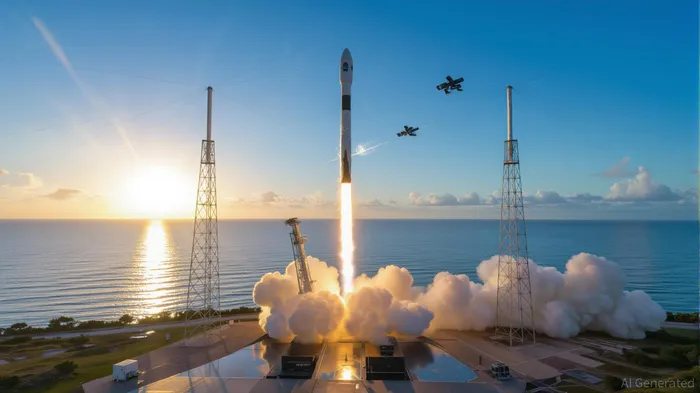 The financial implications extend beyond SpaceX. Traditional launch providers such as Arianespace and United Launch Alliance (ULA) face mounting pressure as SpaceX's pricing undercut their offerings. For instance, Amazon's Kuiper project, which depends on these providers, risks higher capital expenditures compared to SpaceX's Starlink, potentially affecting its long-term competitiveness. With Starship development projected to reduce launch costs to $2–10 million per mission, the sector's economic dynamics could shift further, enabling large-scale satellite deployments and interplanetary missions that were previously unfeasible.
Reliability and Launch Cadence: Trust in the Market
SpaceX's reliability and high launch cadence have solidified its reputation as a preferred partner for high-stakes missions. A recent example is the launch of a satellite for Taiwan, a milestone that underscores the country's growing space ambitions and its reliance on SpaceX's proven track record. While specific mission success rates for 2023–2025 remain undisclosed, the consistent selection of Falcon 9 for critical payloads-ranging from national security satellites to commercial ventures-speaks to its operational dependability. This trust is a key driver for investors, as it reduces the perceived risk associated with spaceflight projects.
Moreover, SpaceX's ability to maintain a high launch frequency ensures that customers can deploy assets rapidly, a critical advantage in sectors like telecommunications and Earth observation. The company's iterative improvements to the Falcon 9, including enhanced reusability and streamlined operations, have enabled it to outpace competitors in both speed and reliability.
Competitive Landscape and Investment Implications
The financial impact of SpaceX's dominance is evident in the broader commercial spaceflight market. By lowering barriers to entry through cost efficiency, SpaceX has spurred innovation and attracted investment across the sector. Startups and established players alike are now designing systems optimized for Falcon 9's capabilities, creating a virtuous cycle of growth.
However, challenges persist. The recent anomaly involving Starship's Version 3 Super Heavy booster-a test conducted without propellant or engines-highlights the risks inherent in developing next-generation systems. While this setback does not directly affect Falcon 9 operations, it underscores the technical complexities of advancing spaceflight technology. Investors must weigh such risks against the long-term potential of SpaceX's vision, which includes fully reusable systems and interplanetary missions.
Conclusion: A Sector Shaped by Innovation
SpaceX's Falcon 9 has redefined the economics of spaceflight, offering a blueprint for sustainable growth in the commercial sector. Its cost efficiency, reliability, and high launch cadence have not only enhanced SpaceX's profitability but also created a more accessible and competitive market for space-based services. For investors, the sector's potential remains compelling, provided they align with companies and projects that leverage these advantages while mitigating technological and operational risks.
As the industry evolves, the interplay between SpaceX's innovations and the broader market will continue to shape investment strategies. The Falcon 9's legacy-built on reducing costs and increasing access to space-ensures that it will remain a linchpin of the commercial spaceflight sector for years to come.

Delivering real-time insights and analysis on emerging financial trends and market movements.
Latest Articles
Stay ahead of the market.
Get curated U.S. market news, insights and key dates delivered to your inbox.






Comments
No comments yet