
The Growing Financial Impact of Private Space Launches


 Aime Summary
The private space sector is no longer a speculative frontier-it's a full-blown economic engine. With
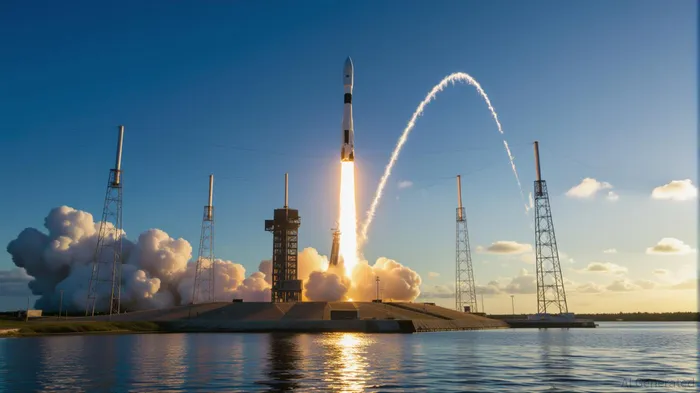
SpaceX completing its 500th mission using reusable rocket boosters, the company has cemented its role as the linchpin of modern spaceflight. This milestone, achieved during the Sentinel-6B satellite launch, isn't just a technical triumph; it's a financial game-changer. By slashing launch costs through reusability, SpaceX has enabled a new era of commercialization, where space access is no longer reserved for governments but is now a scalable, profit-driven industry. For investors, this means the aerospace and satellite infrastructure sectors are ripe for aggressive strategic bets.
The SpaceX Effect: Lower Costs, Higher Volume
SpaceX's reusable rocket technology has reduced the cost of launching payloads by over 70% compared to traditional systems. This cost efficiency has
allowed the company to dominate the global market, carrying 90% of the world's payload mass to space in 2025. The implications are staggering. For every dollar saved on launch costs, companies can reinvest in satellite constellations, research, or even new markets. Consider Starlink:
with 65% of all active satellites under its umbrella, SpaceX has created a near-monopoly on global broadband connectivity. This isn't just about internet access-it's about embedding itself into critical infrastructure, from aviation to international telecom systems. The result? A self-reinforcing cycle of demand and revenue that locks in long-term market share.
But the financial impact extends beyond SpaceX itself. The company's success has spurred a ripple effect across the supply chain. In South Texas, for instance,
SpaceX's operations have injected $13 billion into the local economy over two years, supported 24,000 jobs, and generated $305 million in tax revenue. This isn't just corporate philanthropy-it's a blueprint for how private space ventures can transform regional economies while building global infrastructure. For investors, this underscores the importance of looking beyond the rocket builders to the ancillary industries: suppliers, logistics providers, and even local governments that benefit from space-driven economic activity.
Satellite Services: The New Gold Rush
The satellite services sector is now a critical battleground for investors. SpaceX's dominance in launch services has created a downstream boom in satellite deployment, but competition is emerging in niche areas. Take SES SA, a European satellite firm that's pivoting toward defense contracts.
Hedge fund manager Davide Leone has doubled down on SES, calling it the "cheapest defense stock you can find in Europe." His logic? As governments seek to reduce reliance on U.S.-based providers like SpaceX, companies that offer sovereign satellite capabilities-especially for secure communications and surveillance-will see explosive growth.
Meanwhile,
Planet and Quantum Systems are teaming up to create AI-powered "Tip & Cue" intelligence solutions for European defense forces. By combining high-resolution satellite imaging with real-time drone reconnaissance, they're addressing a key pain point in modern warfare: actionable intelligence. This partnership highlights a broader trend: satellite services are no longer just about connectivity; they're about strategic advantage. For investors, this means opportunities in AI-driven analytics, cybersecurity for satellite networks, and even quantum encryption technologies.
Logistics in Orbit: A $1.8 Billion Opportunity
The global space logistics market,
valued at $780 million in 2024, is projected to hit $1.8 billion by 2032, growing at a 12.6% CAGR. This surge is driven by lunar and Mars exploration programs, which require complex supply chains for cargo delivery and surface operations.
For example, NASA's Artemis program alone will need 15 cargo missions to establish a lunar base by 2030.
What makes this sector compelling? The cost of space logistics has plummeted thanks to reusable rockets. In 2023, transporting cargo to orbit cost $10,000 per kilogram; today, it's under $2,000.
This price drop has made space logistics economically viable for commercial players, not just governments. Companies specializing in orbital refueling, in-space manufacturing, or asteroid mining could soon become the next Amazon or FedEx of the cosmos.
Real-time satellite tracking and Earth observation systems are already cutting fuel costs and emissions by 5-10% in the shipping and logistics sectors.
Defense Tech: The Invisible Hand of Capital
The U.S. Global Technology and Aerospace & Defense ETF has captured the zeitgeist, focusing on sectors like AI, cybersecurity, and electronic warfare. With
global military spending hitting $2.4 trillion in 2023, the demand for cutting-edge defense tech is only going to grow.
SpaceX's own pivot into defense contracts-projected to reach $3 billion by 2025-shows how private space firms are becoming essential infrastructure for national security.
Collins Aerospace's new military avionics service center in the Netherlands is a case in point. By partnering with the Royal Netherlands Air and Space Force, the company is future-proofing its logistics and sustainment capabilities for F-35 and CH-47F fleets. This kind of infrastructure investment isn't just about maintaining equipment-it's about ensuring operational readiness in an era of increasingly contested supply chains. For investors, defense tech isn't a niche anymore; it's a core component of the space economy.
The Bottom Line: Where to Bet
The private space sector is no longer a "moonshot."
It's a $1.8 trillion market with clear pathways to profitability. For investors, the key is to think beyond rockets and satellites. Strategic bets should focus on:
1. Satellite services with defense applications (e.g., SES SA, AI-driven analytics firms).
2. Space logistics players benefiting from reusable rocket tech and lunar/Mars programs.
3. Defense tech ETFs like WAR, which bundle exposure to semiconductors, AI, and aerospace.
4. Regional supply chains in areas like South Texas, where
space ventures are driving economic growth.
As SpaceX's 500th mission shows, the future of space is here-and it's being built on the back of private enterprise. The question isn't whether to invest in space; it's how to position yourself to profit from the next 500 missions.

Stay ahead of the market.
Get curated U.S. market news, insights and key dates delivered to your inbox.






Comments
No comments yet