
Grocery Store Exodus: Navigating Retail Real Estate and Consumer Staples in a Shifting Landscape
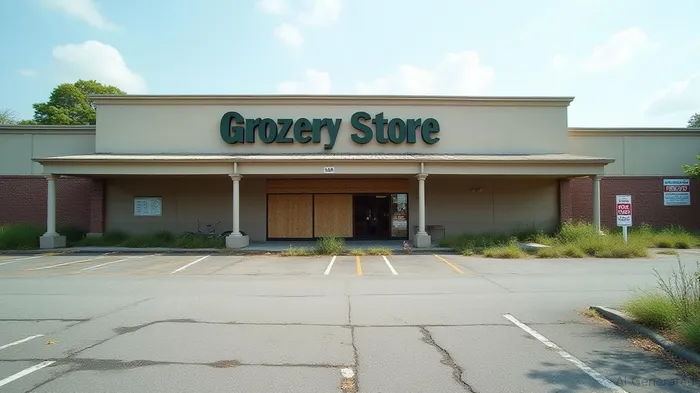
The closure of over 100 grocery stores across the U.S. since late 2024 signals a seismic shift in retail dynamics, driven by post-pandemic consumer habits, corporate restructuring, and technological disruption. For investors, this upheaval presents both risks and opportunities: undervalued commercial real estate in regions experiencing store shutdowns and shorting retailers with unsustainable business models.
The Anatomy of Collapse: Drivers and Patterns
The grocery sector's turmoil stems from four interlinked forces. First, the post-pandemic pivot to e-commerce has accelerated, with AmazonAMZN-- Fresh's shift from “Just Walk Out” tech to smart carts signaling a focus on efficiency over physical store experimentation. Second, mergers and acquisitions—like Aldi's $10 billion acquisition of Winn-Dixie—have forced rebranding and closures, particularly in Florida. Third, legal disputes between AlbertsonsACI-- and KrogerKR-- over a failed $24 billion merger have destabilized both chains, with Albertsons' first closure in Roseburg, Oregon, foreshadowing further portfolio “hygiene” cuts. Fourth, over-saturation in urban centers, as seen with Giant Food's Ashburn, Virginia, closure, has made redundant large-format stores in areas with strong delivery options.
Retail Real Estate: A Mixed Bag of Opportunities
The real estate sector is bifurcated. In regions with structural decline—such as Austin, Texas (Royal Blue Grocery closures) or parts of New York (Tops and WalmartWMT-- exits)—prime retail spaces may become undervalued. However, investors must exercise caution: urbanization and crime, as in St. Paul, Minnesota (Lunds & Byerlys closure), could deter new tenants.
Conversely, discount grocery hubs like Grocery Outlet's planned 35+ new stores in 2025 highlight demand for value-oriented real estate. Investors might favor REITs with exposure to discount retailers, such as CBL & Associates Properties (CBL) or Kimbark Retail Trust, which focus on secondary markets.
Consumer Staples: Shorting the Vulnerable, Backing the Adaptive
The consumer staples sector is ripe for shorting. Kroger (KR) faces existential threats: three Texas closures, a $600 million merger dispute, and declining sales (down 3% YoY in Q1 2025). Its valuation—P/E of 22x vs. sector average of 18x—seems optimistic given these risks.
Similarly, Albertsons (ACI), with over $20 billion in debt and a recent closure wave, is a prime short candidate. Its EBITDA margin of just 1.5% (vs. 4% for Walmart) underscores operational fragility.
Investors should instead favor discount grocers (e.g., Aldi's rapid Winn-Dixie rebranding) and e-commerce enablers like Instacart (though private). For public plays, consider Ahold Delhaize (ADR), which closed 32 underperforming Stop & Shop stores but retains strong e-commerce integration.
Strategic Recommendations
- Short Kroger (KR) and Albertsons (ACI): Their legal, operational, and financial challenges suggest downside risks.
- Long on discount retail REITs: Target those with exposure to Grocery OutletGO-- or Aldi's expansion plans.
- Avoid urban “food desert” real estate: Regions like St. Paul or Austin's Sixth Street face demographic and safety headwinds.
- Monitor mergers: Aldi's Winn-Dixie conversion (170 stores to be sold separately) offers a potential arbitrage opportunity.
Conclusion: A Landscape of Winners and Losers
The grocery store exodus is not a uniform crisis but a Darwinian process. Investors must distinguish between retailers clinging to outdated models and those adapting to e-commerce, discounting, or strategic consolidation. The real estate sector offers asymmetric opportunities in discount hubs, while vulnerable chains present shorting avenues. As the sector reshapes, data—on closure patterns, occupancy rates, and corporate balance sheets—will be the truest compass.
The next 12–18 months will test which players can pivot. For investors, the mantra remains: buy the adaptation, short the inertia.

Delivering real-time insights and analysis on emerging financial trends and market movements.
Latest Articles
Stay ahead of the market.
Get curated U.S. market news, insights and key dates delivered to your inbox.
AInvest
PRO
AInvest
PRO



Comments
No comments yet