
Grocery Retail Resilience: Finding Safe Havens in a Post-Cyberattack World
The grocery retail sector is at a crossroads. While chains like Price Chopper in Jefferson County, Missouri, face shuttered doors due to financial strain and cyber disruptions, decentralized players like the Eastside Food Co-op in Minneapolis are proving their mettle. This divide—between vulnerable legacy retailers and adaptive, supply-chain-resilient operators—offers investors a clear path to navigate the sector's upheaval.
The Vulnerability of Centralized Models
The closure of the Price Chopper in House Springs, operational for 17 years, underscores the risks of reliance on traditional supply chains and centralized operations. Owner Trip Straub cited “the current economic climate” as a key driver, but deeper issues loom: rising operational costs, declining foot traffic, and an inability to pivot during crises like the UNFI cyberattack earlier this year. That incident, which disrupted 52 distribution centers, exposed the fragility of single-supplier models.
The contrast with the Eastside Food Co-op could not be starker. While UNFI's ransomware attack caused shortages at CubCUB-- Foods and Whole Foods, the co-op maintained 80% of its shelves stocked by leaning on local suppliers. Its decentralized sourcing strategy—prioritizing regional producers for staples like dairy and produce—acted as a lifeline.
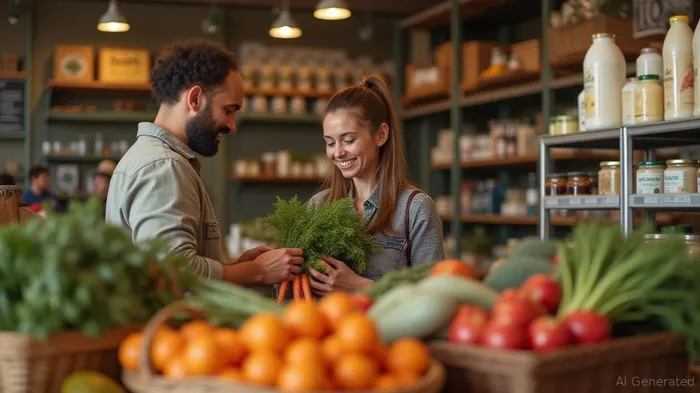
The Decentralized Playbook: Cybersecurity and Local Sourcing
The co-op's stability stems from three pillars:
1. Decentralized Supply Chains: 40% of inventory comes from regional partners within 250 miles, reducing reliance on distant suppliers.
2. Cyber Resilience: Proactive measures like restricted remote access and employee phishing training helped it avoid the UNFI breach's fallout.
3. Community Ties: Loyalty to local customers, exemplified by its 20% closing sale for Price Chopper's employees, builds goodwill and demand.
This model is mirrored in publicly traded peers like Sprouts Farmers Market (SFM), which reported a 11.8% EBITDA margin in Q1 2025, up 210 basis points year-over-year. Their success hinges on similar strategies: small-footprint stores, private-label dominance (24% of sales), and self-distribution of fresh goods.
The Numbers Back the Narrative
The data is unequivocal: retailers prioritizing decentralization outperform their peers.
- Sprouts (SFM):
- Q1 2025 EBITDA Margin: 11.8% (vs. 9.6% for Target, 4.6% for Grocery Outlet).
Stock Performance: +30.5% year-to-date, outpacing the sector's 17.2% gain.
Grocery Outlet (GO):
- While its margin rose to 4.6% in Q1, operational hurdles (e.g., SAP system migration delays) cap its potential.
The gap reflects structural advantages: Sprouts' lean inventory, local vendor partnerships, and minimal third-party logistics exposure insulate it from cyber disruptions.
Expert Insights: The Future of Grocery Retail
“The pandemic was a stress test for supply chains, but cyberattacks are the next frontier,” warns Eric Ebner of 360 Security Services. His firm's work with retailers shows that decentralized models reduce “single points of failure.”
Industry data corroborates this. The West Monroe Q1 2025 Supply Chain Poll found 98% of companies now integrate AI for inventory management, yet only firms with localized sourcing—like SFM—can translate this into profit.
Investment Thesis: Reallocate to the Resilient
Investors should favor retailers with:
1. Decentralized Sourcing: Look for companies with >30% local vendor reliance (e.g., SFM's regional partnerships).
2. Cyber Vigilance: Prioritize firms with third-party access audits and employee cybersecurity training programs.
3. Strong EBITDA Margins: Aim for companies with >10% EBITDA margins, signaling operational efficiency.
Sprouts Farmers Market (SFM) is the clearest play here. Its Q1 2025 results—including 35 new store openings planned this year—position it to capitalize on sector consolidation. Meanwhile, the Eastside Co-op's model, while not publicly traded, serves as a blueprint for how smaller operators can thrive.
Conclusion: Bet on the Adaptive
The grocery sector's shakeout will favor firms that blend local sourcing with cyber resilience. Investors ignoring these trends risk exposure to closures like Price Chopper's. By reallocating capital to companies like Sprouts—where margins, stock performance, and strategic foresight align—investors can profit from the industry's reset.
As one co-op manager put it, “The future isn't about who has the biggest warehouses, but who can keep the shelves stocked when the grid goes down.” In a post-cyberattack world, that's a future worth betting on.

Delivering real-time insights and analysis on emerging financial trends and market movements.
Latest Articles
Stay ahead of the market.
Get curated U.S. market news, insights and key dates delivered to your inbox.






Comments
No comments yet