
Grocery Retail's Crossroads: Closures and Expansion Signal Industry Transformation
The grocery sector is in flux. Over the past week, major chains like KrogerKR--, Safeway, and Winn-Dixie announced store closures, while discounters Aldi and Lidl aggressively expanded. This duality—retrenchment and growth—reflects a sector at a pivotal inflection point, driven by merger fallout, shifting consumer preferences, and the relentless march of discount retailing.
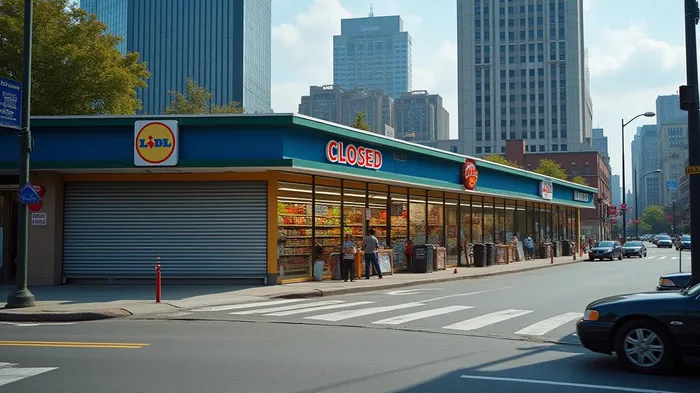
The Closure Wave: Litigation, Underperformance, and Strategic Retreat
The most immediate trigger for heightened attention was the announcement of 14 grocery chain closures across the U.S., including:
- Two Kroger stores in Texas tied to a failed merger with Albertsons;
- Anchorage’s historic Carrs-Safeway, closing after 80 years due to poor sales;
- Four Winn-Dixie locations in Alabama, abandoned as part of a regional reset.
These closures stem not just from operational failures but from structural industry pressures. The Kroger-Albertsons merger collapse, which ended in a $1.8 billion breakup fee, left Kroger with legal liabilities and diminished capital for reinvestment. As one analyst noted, “This isn’t just about bad stores—it’s about chains overextended by consolidation attempts.”
The Expansion Surge: Discounters and Omnichannel Innovation
While traditional players retreat, discounters are advancing. Aldi’s first Nevada stores and Lidl’s Brooklyn entry underscore their goal to reach 800 U.S. locations by 2028—a pace that could displace legacy retailers. Simultaneously, Whole Foods is testing “Daily Shop” micro-stores, blending premium products with convenience, as seen in its May 14 Manhattan opening.
This bifurcation reflects a generational shift in consumer behavior. Gen Z, now 30% of grocery shoppers, demands seamless omnichannel experiences. Wegmans’ new app features—like in-store navigation and AI-driven product recommendations—highlight how winners will blend digital and physical retail. As one industry report notes, 90% of Gen Z shoppers use both online and offline channels, forcing grocers to innovate or perish.
The Sam’s Club Playbook: Walmart’s Bold Remodeling Strategy
Walmart’s plan to remodel all 600 Sam’s Club locations and open 15 new clubs annually adds another layer to this transformation. The focus is on “club-in-a-box” formats, reducing costs while expanding access to bulk discounts—a direct challenge to Costco. This mirrors Aldi’s low-overhead model, suggesting a broader shift toward cost-efficient, customer-centric formats.
Conclusion: Navigating the Grocery Divide
Investors face a clear choice: back discounters and omnichannel innovators, or bet on legacy players undergoing painful restructuring. The data is stark:
- Aldi added 220 U.S. stores in 2024 and aims for 220 more in 2025, while Kroger’s Texas closures alone represent 0.4% of its store base.
- Whole Foods’ small-format stores target urban markets with 30% higher foot traffic density than suburban supercenters.
- Walmart’s Sam’s Club remodeling could boost margins by 200 basis points, as bulk retail’s cost advantages compound.
The grocery sector’s crossroads is not a temporary blip but a structural realignment. Investors ignoring the rise of discount-driven, tech-enabled models risk obsolescence. The winners will be those who master the blend of affordability, convenience, and digital integration—while the laggards will find themselves shuttered, not just in Texas or Alaska, but across the U.S.
In this new era, the aisles are narrowing—for some.

Stay ahead of the market.
Get curated U.S. market news, insights and key dates delivered to your inbox.
AInvest
PRO
AInvest
PRO



Comments
No comments yet