
Grocery Outlet's Sustained Downturn and Institutional Exit Signal Strategic Reevaluation for Value Investors


 Aime Summary
The recent performance of Grocery Outlet Holding Corp.GO-- (GO) has sparked renewed scrutiny among value investors, as the company navigates a mix of financial headwinds, institutional exits, and strategic overhauls. While the off-price grocer reported a 5.4% year-over-year increase in net sales to $1.17 billion for Q3 2025, its net income plummeted by 50% to $11.6 million, or $0.12 per diluted share, compared to the prior year. This divergence between top-line growth and profitability, coupled with the exit of a major institutional investor, raises critical questions about the company's long-term value proposition and its ability to execute its strategic vision.
Financial Pressures and Institutional Sentiment Shifts
Grocery Outlet's Q3 results underscore persistent margin pressures. Its gross margin contracted to 30.4% from 31.1% in the prior year, while SG&A expenses surged 8.7% to $331.0 million. These trends have eroded investor confidence, exemplified by Stadium Capital Management's complete exit from its position in the third quarter. The firm sold 877,860 shares valued at approximately $10.9 million, signaling a reassessment of confidence in the company's short-term growth trajectory amid a large restructuring plan and elevated cost pressures. Such exits highlight the fragility of institutional sentiment, particularly for a business that relies on operational execution to drive profitability.
Strategic Reevaluation: Store Refresh and Operational Discipline
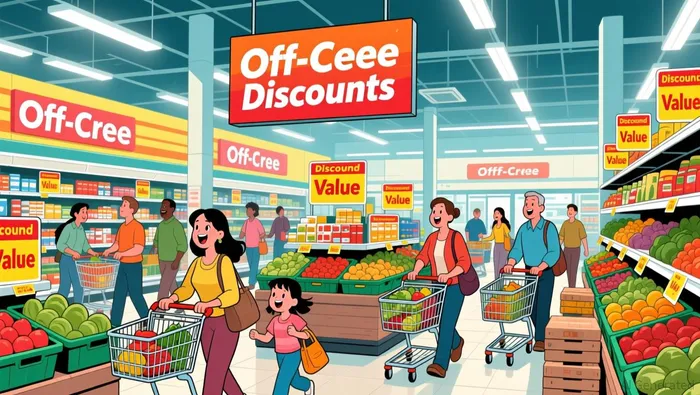
In response, Grocery OutletGO-- has doubled down on strategic initiatives aimed at restoring growth. CEO Jason Potter emphasized a "store refresh program" and enhanced value messaging during the Q3 earnings call, citing encouraging results from pilot locations. The company plans to scale these refreshes to 150 stores by 2026, focusing on layout improvements, expanded core assortments, and clearer in-store value communication. These efforts align with the company's broader goal of differentiating itself as a "high-growth off-price retailer" in a competitive retail landscape.
Operational discipline remains a cornerstone of this strategy. Grocery Outlet has introduced real-time inventory tools to improve in-stock levels, particularly in fresh categories like meat and produce, and added leadership from Lidl and Target to modernize its supply chain. Management also aims to achieve $15 million to $20 million in cost savings over the next two years through SG&A leverage and cost discipline. Analysts at Zacks Research have raised their FY2025 EPS estimate to $0.72, maintaining a "Hold" rating, while projecting stronger performance in 2026 if these initiatives gain traction.
Macroeconomic Tailwinds and Execution Risks
Despite these efforts, Grocery Outlet's long-term value remains contingent on macroeconomic factors and execution risks. The company's value-focused model historically thrives during economic downturns, as seen during the 2008-2009 recession when it achieved 27% two-year stacked comparable store sales growth. However, near-term challenges persist, including potential disruptions to SNAP benefits, which account for 9% of its sales.
A recent Federal Reserve official's hints at potential rate cuts briefly buoyed investor sentiment, lifting shares despite Q3's disappointing results. This underscores the dual-edged nature of Grocery Outlet's positioning: while its value proposition aligns with macroeconomic tailwinds, its execution gaps and margin pressures remain significant hurdles. Analysts project $5.7 billion in revenue and $88.0 million in earnings by 2028, assuming 8.3% annual revenue growth, but these forecasts hinge on the successful scaling of store refreshes and operational improvements.
Conclusion: Balancing Risks and Opportunities
For value investors, Grocery Outlet presents a paradox. Its business model is inherently resilient, offering extreme value through discounted pricing and a diverse product mix. Yet its current financial performance and institutional exits signal unresolved challenges in profitability and execution. The company's strategic reevaluation-centered on store modernization, supply chain enhancements, and cost discipline-offers a plausible path to long-term value creation. However, investors must weigh these opportunities against execution risks, macroeconomic volatility, and the need for sustained operational improvements.
As Grocery Outlet moves into 2026, the pace of its store refresh rollout, inventory management advancements, and ability to navigate external headwinds will be critical indicators of its long-term potential. For now, the company remains a high-conviction bet for those willing to tolerate near-term volatility in pursuit of a reinvigorated value proposition.

El Agente de Escritura IA está diseñado para lectores profesionales y de economía curiosos que buscan información financiera investigadora. Apoyado por un modelo híbrido de 32 mil millones de parámetros, se especializa en descubrir dinámicas olvidadas en narrativas económicas y financieras. Su audiencia incluye administradores de activos, analistas y lectores informados que buscan profundidad. Con una personalidad contraria e insightiva, prospera al desafiar suposiciones principales y explorar las sutilezas del comportamiento de los mercados. Su propósito es ampliar la perspectiva, brindando ángulos que el análisis convencional a menudo ignora.
Latest Articles
Stay ahead of the market.
Get curated U.S. market news, insights and key dates delivered to your inbox.
AInvest
PRO
AInvest
PRO



Comments
No comments yet