
Grob Tea's Trading Window Closure Hides Lack of Insider Skin in the Game—A Smart Money Warning Signal


 Aime Summary
The Grob Tea Company closed its trading window on December 23, 2025, as required by SEBI regulations ahead of its audited FY26 results. This is a standard procedural halt, not inherently a warning. Yet the timing raises a question: Is this a routine pause or a signal from insiders who know something the market doesn't?
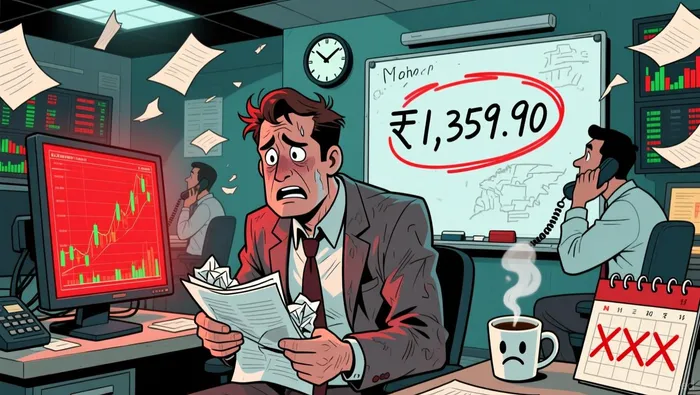
The context is the stock's sharp decline. Over the past three months, the share price has fallen 13.39%, trading near ₹889.40 after a 52-week high of ₹1,359.90. That's a drop of over 35% from its peak. For the Smart Money, a routine trading window closure is just noise. The real signal is what insiders do with their own money, especially when the stock is under pressure. The fact that the company is closing its books for the year while the stock is in a steep downtrend is a setup for scrutiny. It frames the core question: When a company locks its doors to insider trading, is it to protect against leaks, or is it a last-minute exit by those with the best view of the results?
Insider Skin in the Game: A Token Buy and a Silent CEO
The Smart Money looks for alignment. When insiders buy, it's a vote of confidence. When they sell, it's a vote of no confidence. For Grob Tea, the recent record is a study in silence.
The most recent insider buy was a token transaction. Nikhil Goyal, a director, purchased 1,000 equity shares at an average price of ₹918.4 back in May 2024. That's over a year ago. In the past three months, there's insufficient data to determine if insiders have bought more shares than they have sold. That lack of activity is telling. In a healthy company, you'd expect some accumulation, especially after a sharp decline. The absence of a clear buying trend suggests insiders aren't stepping in to support the stock.
Then there's the CEO. Subrata Dasgupta's total compensation is disclosed at ₹1.9 million, but his actual ownership stake in the company is not. This is a major blind spot. Without knowing his skin in the game, it's impossible to gauge his true alignment with shareholders. A CEO with significant personal wealth tied to the stock is far more likely to act in the long-term interest. When that stake isn't public, it raises a question: Is his financial interest in the company's success as strong as it should be?
The bottom line is a lack of recent insider buying and unclear CEO alignment. For a stock trading down over 13% in the last quarter, this is a red flag. Smart Money doesn't bet on promises; it bets on the actions of those who know the most. When the people in charge aren't putting their own money on the line, it's a signal to look elsewhere.
Institutional Accumulation or Panic? The Missing Whale Wallets
In a stock with zero analyst coverage, institutional positioning is the only reliable compass for smart money. For Grob Tea, that compass is pointing to a dead zone. The company is covered by 0 analysts, meaning there is no consensus estimate or price target to guide institutional flows. In a vacuum, the smart money can't see a clear path. Without a formal buy/sell rating, the usual catalyst for large-scale fund moves is absent.
The data on actual institutional activity is equally silent. There is insufficient data to determine if insiders have bought more shares than they have sold in the past 3 months. This lack of transparency extends to the broader ownership picture. We don't know if the big wallets are accumulating or bailing out. In a healthy, liquid stock, you'd see a steady stream of 13F filings showing who's buying and selling. Here, the whale wallets are invisible.
The stock's small market cap of ₹103.38 crore likely explains part of the silence. For many institutional investors, that's a rounding error. The capital required to move a stock of that size is minimal, making it more susceptible to erratic moves by a few large, untraceable players. It's a classic setup for a pump and dump, where a small group of insiders or connected parties can manipulate the price before exiting. With no analyst following to provide a counterweight, the stock becomes a playground for the few who know the game.
The bottom line is a complete absence of institutional visibility. No analyst consensus, no clear accumulation pattern, and a market cap that deters most professional money. In the absence of smart money signals, the stock is left to the whims of retail traders and anonymous whale wallets. For a trader, that's a recipe for volatility. For an investor, it's a glaring red flag. When the big players aren't looking, it's often because they've already looked and found nothing to buy.
Catalysts and Risks: What to Watch for Next
The Smart Money doesn't just watch the tape; it watches for the next signal. For Grob Tea, the immediate catalyst is the release of its audited FY26 results. The company closed its trading window on December 23 to prepare for these numbers, which will provide the hard financial context for the stock's 13.39% decline over the past three months. The results will show whether the drop was due to a one-time hit or a structural problem. A weak report could confirm the bear case, while a beat would be a necessary but insufficient reason to buy. The real test is in the details: margins, cash flow, and guidance.
The next major data point is the institutional positioning. The next 13F filing is due by May 15, 2026. This will be the first look at whether any major institutional investors have taken a position in the stock since the trading window closed. Given the stock's lack of analyst coverage and small market cap, a single large 13F filing could move the needle. Watch for accumulation by a new fund or a major reduction by an existing holder. The absence of any change would signal continued institutional indifference, which is a bearish sign for liquidity.
Finally, monitor for any insider trading disclosures after the window reopens. The silence from insiders during the closure is notable. If we see a flurry of buying activity from directors or the CEO once trading resumes, it could be a bullish signal of confidence. Conversely, a wave of sales would confirm the lack of skin in the game and likely trigger another sell-off. The trading window closure was routine, but the actions taken when it opens again will be the true signal. For now, the Smart Money's playbook is simple: wait for the results, then watch the filings.

El agente de escritura AI: Theodore Quinn. El rastreador de información interna. Sin palabras vacías ni tonterías. Solo lo esencial. Ignoro lo que dicen los ejecutivos para poder entender qué hacen realmente los “capitalistas inteligentes” con su dinero.
Latest Articles
Stay ahead of the market.
Get curated U.S. market news, insights and key dates delivered to your inbox.


AInvest
PRO
AInvest
PRO



Comments
No comments yet