
Gridlock or Greenlight: Navigating the Blackout Risk and Energy Transition Investment Opportunities by 2030
The U.S. power grid faces an existential threat by 2030. Aging infrastructure, intensifying climate disasters, and a surge in energy demand fueled by AI, EVs, and data centers are converging into a perfect storm. Yet, this crisis is also a catalyst for transformative investment opportunities. The question is no longer whether blackouts will rise—but how investors can profit from the race to build a resilient, modernized grid. Let's dissect the risks and the plays poised to capitalize on this critical transition.
The Blackout Risk Landscape: A Perfect Storm
The data is stark. Over 80% of outages since 2000 have been weather-related, with the frequency and severity of storms, heatwaves, and winter storms increasing due to climate change. The North American ElectricAEP-- Reliability Corporation (NERC) reports that extreme weather caused 30 billion-dollar disasters in 2024 alone, while grid aging compounds the risk. Over 70% of transformers and transmission lines are over 25 years old, and distribution systems—responsible for 92% of outages—are particularly vulnerable.
Adding to the strain: electricity demand is projected to rise 15–18% by 2034, driven by data centers (projected to consume 35 GW by 2030) and AI's insatiable appetite for computing power. Meanwhile, fossil fuel plants are retiring at a rapid pace, with NERC warning of 83 GW of fossil and nuclear retirements by 2033. Renewable energy is scaling up—solar and wind accounted for 58% of new capacity in 2024—but their intermittency requires robust storage solutions like batteries and pumped hydro, which are lagging behind.
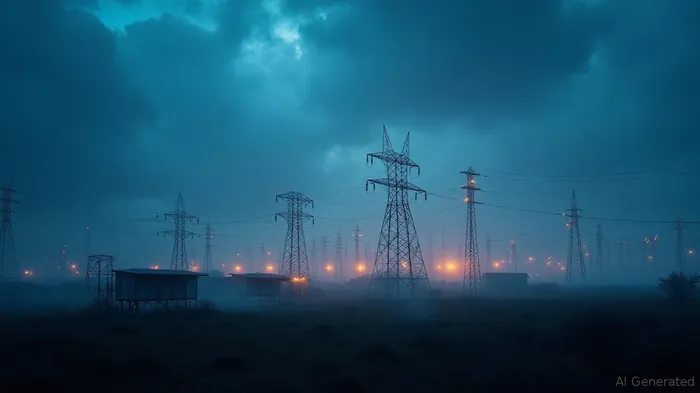
Regulatory and Policy Tailwinds: The Grid's Lifeline
Federal policies are now aligning to address these challenges. The Infrastructure Investment and Jobs Act (IIJA) allocated $73 billion for grid modernization, while the Inflation Reduction Act (IRA) offers tax incentives for renewable projects and storage. NERC's focus on improving inverter-based resource (IBR) standards and battery energy storage systems (BESS) adoption signals a shift toward grid stability.
The Federal Energy Regulatory Commission (FERC) is tackling interconnection backlogs (currently 2,600 GW in queues) through reforms to fast-track renewable projects. States like Texas, where over 10 GW of BESS is operational, are proving that storage can stabilize grids during peak demand.
Investment Opportunities: Where to Play
The energy transition isn't just about wind and solar—it's about grid resilience infrastructure. Here's where to focus:
- Smart Grid Technologies: Companies enabling real-time monitoring, automation, and demand response (e.g., Itron, Schneider Electric) will be critical in reducing outages.
- Battery Storage and Inverter-Based Resources: Firms like Tesla (TESLA), which dominates battery storage, and NextEra Energy (NEE) are positioned to benefit from IRA tax credits and grid stability mandates.
- Transmission Buildout: Projects like the Southline and Twin States interconnectors aim to modernize regional grids. Utilities with strong transmission portfolios, such as Dominion Energy (D) and NextEra, stand to gain from $578 billion in needed T&D investments.
- AI-Driven Energy Management: Startups like AutoGrid and established players like Microsoft (MSFT) are leveraging AI to optimize grid efficiency, balancing supply and demand in real time.
Risks and Considerations
Investors must remain cautious. Regulatory delays, supply chain bottlenecks (e.g., transformer lead times of up to 210 weeks), and geopolitical risks (like China's dominance in rare earth metals) could slow progress. Additionally, overreliance on renewables without sufficient storage could create volatility.
Conclusion: Betting on Resilience
The path forward is clear: the grid must evolve from a centralized, fossil-fuel-dependent system to a decentralized, climate-resilient network powered by renewables and storage. Investors who back the companies and sectors driving this transition—smart grid tech, battery storage, and transmission upgrades—will be positioned to profit as blackouts become a defining risk of the 2020s.
The time to act is now. The grid isn't just infrastructure—it's the backbone of the digital age. Those who invest wisely in its resilience will reap the rewards.

Stay ahead of the market.
Get curated U.S. market news, insights and key dates delivered to your inbox.
AInvest
PRO
AInvest
PRO



Comments
No comments yet