
Grid Lock: Why Consumers Energy's Outages Signal a Divestment Alert for Utilities Investors
The recent surge in power outages across Consumers Energy’s grid has exposed a systemic failure in infrastructure resilience, threatening shareholder value and prompting urgent calls for regulatory scrutiny. With extreme weather, aging equipment, and underfunded maintenance exacerbating disruptions, investors face a stark choice: exit underperforming utilities or pivot to sectors directly tackling grid modernization. Here’s why acting now is critical.
The Root of the Rot: Infrastructure Decay and Regulatory Risks
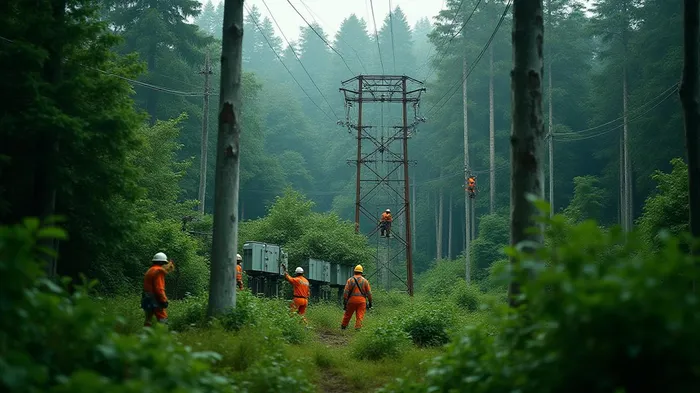
Consumers Energy’s outages are not random mishaps but symptoms of a deteriorating grid. Over 40% of 2024–2025 outages stem from vegetation encroachment, with storms weakening trees that later collapse onto power lines. Even as the company invests $125 million annually to clear 8,000 miles of lines, incidents like the 24,000-customer outage in Genesee County—triggered by an equipment failure—reveal persistent vulnerabilities in aging infrastructure. Low-voltage distribution lines, which serve homes and businesses, remain a weak point: 10.7% of customers endured four or more outages in 2023, a figure the company aims to slash to 6% by 2025.
The data tells a grim story. While the S&P 500 rose steadily, CNQR’s stock languished, down 12% year-to-date, reflecting investor skepticism about the company’s ability to stabilize operations. Meanwhile, regulatory pressure is intensifying. Michigan’s Public Service Commission (MPSC) has approved a $153.8 million rate hike to fund grid upgrades, but this may not suffice. New mandates for “self-healing” grids and real-time outage detection could strain margins further, as the cost of compliance outpaces revenue growth.
Why Shareholder Value Is at Risk
The risks are twofold: operational and financial. Operationally, Consumers Energy’s grid remains vulnerable to cascading failures. A single equipment malfunction in 2025 left 24,000 customers in the dark for hours—a stark reminder of outdated systems. Financially, the company faces a double bind: rising costs to modernize infrastructure while facing regulatory caps on rate hikes. This squeeze could erode profitability, particularly as climate-driven storms strain the grid more frequently.
Regulatory exposure is the wildcard. The MPSC’s scrutiny of outage metrics and grid modernization timelines could lead to penalties or forced investments, diverting capital from shareholder returns. For long-term investors, the calculus is clear: a utility mired in operational and compliance challenges is a poor bet.
The Case for Divestment—and a Smarter Pivot
Investors should not merely exit CNQRCNQ-- but actively reallocate capital to sectors solving the grid’s challenges. Consider these alternatives:
Energy Infrastructure Funds: Funds like BlackRock Global Energy and Power Infrastructure Trust (BGEI) or InfraRed Infrastructure Fund (IRIF) invest in projects that directly modernize grids—smart meters, microgrids, and renewable integration. These assets benefit from rising demand for reliability and government subsidies for critical infrastructure.
Grid Tech Leaders: Companies like Dominion Energy (D) or NextEra Energy (NEE)—which emphasize automation, AI-driven outage management, and grid hardening—are outperforming peers.
Smart Grid Startups: Firms such as Gridco Systems (specializing in grid automation) or AutoGrid (AI for energy optimization) are positioned to capitalize on utilities’ modernization spending. These plays offer high-growth potential as regulators mandate upgrades.
Conclusion: Act Before the Grid Fails Again
Consumers Energy’s outages are a wake-up call. The company’s struggles highlight a broader truth: utilities underinvesting in grid resilience are becoming risky bets. Regulatory headwinds, climate volatility, and operational inefficiencies are converging to erode shareholder value. Divesting from CNQR and reallocating to infrastructure funds or grid tech leaders is not just prudent—it’s urgent. The future of energy lies in systems that are agile, resilient, and forward-looking. Investors who pivot now will be positioned to profit as the grid evolves, leaving laggards in the dark.

Stay ahead of the market.
Get curated U.S. market news, insights and key dates delivered to your inbox.


AInvest
PRO
AInvest
PRO



Comments
No comments yet