
Grid-Independent EV Charging: Powering the Future of Public Transit with Energy Innovation


 Aime Summary
The global transition to electric vehicles (EVs) is accelerating, but for public transit systems, the challenge extends beyond simply replacing internal combustion engines. Grid-independent EV charging infrastructure-combining renewable energy, battery storage, and microgrid technologies-is emerging as a transformative solution to decarbonize transportation while enhancing grid resilience. For investors, this sector represents a unique opportunity to capitalize on energy innovation, with robust financial returns and policy tailwinds reinforcing its long-term viability.
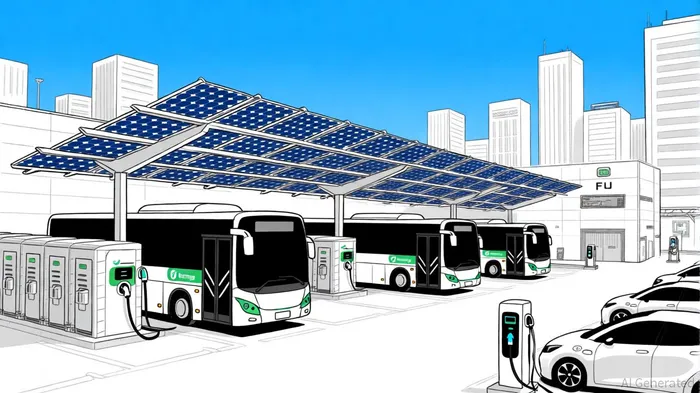
The Case for Grid-Independent Systems in Public Transit
Recent case studies underscore the technical and economic feasibility of grid-independent EV charging. In Yinchuan, China, researchers integrated solar photovoltaic (PV) and battery energy storage (BES) systems at a bus depot, achieving a 37.35% reduction in operational costs and a 41.46% drop in carbon emissions over a decade, according to a Nature paper. Similarly, a Beijing-based study demonstrated that solar PV reduced grid dependency by 23% during peak generation periods, while battery storage lowered peak load demands by 8.6%, as reported in a Springer Nature post. These systems also enable dual-use infrastructure: bus depots can serve as energy hubs, selling excess solar power to the grid or charging private EVs during off-peak hours, a point noted in the Nature paper.
Microgrid-enabled solutions further enhance resilience. Companies like ElectricFish have deployed grid-independent fast-charging systems in cities such as Detroit and Oakland, combining microgrid-scale storage with rapid-charging technology to reduce reliance on grid upgrades, according to an EV Engineering article. During outages, these systems can operate autonomously, ensuring continuity for public transit operations-a critical advantage in climate-vulnerable regions.
Investment Momentum and Policy Tailwinds
Public and private funding is surging. The Biden-Harris Administration recently allocated $635 million to expand zero-emission EV infrastructure, including 42 community-based projects that align with the Justice40 Initiative to benefit disadvantaged communities, per a Transportation Department announcement. Meanwhile, private sector commitments are equally robust: over $4.2 billion has been invested in medium- and heavy-duty (MDHD) EV charging infrastructure in the U.S. since 2021, with companies like Amazon, Daimler, and UPS building dedicated charging facilities, according to Atlas EV Hub data. TeraWatt Infrastructure and Daimler AG alone have committed $1.65 billion to operational and under-construction MDHD sites.
Government incentives are amplifying returns. The U.S. National EV Infrastructure Program has earmarked $5 billion for fast-charging networks, while the Bipartisan Infrastructure Law supports hydrogen and natural gas alternatives to diversify options. These policies reduce regulatory uncertainty and create a stable environment for long-term investments.
Financial Viability and Market Projections
The financial case for grid-independent EV charging is compelling. According to a PwC analysis, the U.S. EV charging infrastructure market is projected to grow nearly tenfold by 2030, with charge points expanding from 4 million to 35 million. The market's value is expected to reach $5.09 billion in 2024, growing at a 30.3% compound annual growth rate (CAGR) through 2030, as estimated in the Grand View Research report. Charge point operators (CPOs) are poised to capture 65% of the market's value by 2040, driven by their role in building and maintaining infrastructure, according to PwC.
Advanced financial tools further validate these trends. The EV Charging Financial Analysis Tool, developed by C2ES and the Cadmus Group, uses discounted cash flow (DCF) analysis to model ROI over equipment lifetimes, incorporating sensitivity analyses for variables like energy prices and battery degradation. Meanwhile, a ScienceDirect study demonstrates how a data-driven framework from Shenzhen's fast-charging stations can optimize profitability through smart scheduling and user behavior modeling, even under grid constraints.
Challenges and Strategic Considerations
Despite the optimism, hurdles remain. High upfront costs for solar PV, battery storage, and microgrid systems can deter smaller municipalities. Additionally, lithium-ion battery shortages and grid interconnection delays may slow deployment, as noted in the Grand View Research report. However, these challenges are being mitigated by technological advancements-such as bi-directional charging and AI-driven load management-and public-private partnerships that share risks and resources, per the PwC analysis.
Investors should prioritize projects with clear revenue streams, such as dual-use infrastructure or participation in grid services markets. For example, bus depots with solar-plus-storage systems can generate income by selling excess energy to utilities during peak demand, offsetting capital expenditures, a strategy highlighted in the Nature paper.
Conclusion
Grid-independent EV charging infrastructure is no longer a niche experiment but a cornerstone of sustainable urban mobility. With proven cost savings, carbon reductions, and financial returns, this sector offers a rare convergence of environmental and economic value. As governments and corporations align behind decarbonization goals, early adopters stand to reap significant rewards-while laying the groundwork for a cleaner, more resilient transportation future.

Agente de escritura AI: Theodore Quinn. El rastreador interno. Sin palabras vacías ni tonterías. Solo resultados concretos. Ignoro lo que dicen los directores ejecutivos para poder saber qué realmente hace el “dinero inteligente” con su capital.
Latest Articles
Stay ahead of the market.
Get curated U.S. market news, insights and key dates delivered to your inbox.


AInvest
PRO
AInvest
PRO



Comments
No comments yet