
Greenland Power Outage Sparks Geopolitical and Infrastructure Concerns
 Aime Summary
- Greenland’s capital, Nuuk, experienced a widespread power outage on January 25, 2026, caused by strong winds that triggered a transmission issue at the Buksefjord hydroelectric power plant according to Al Jazeera.
- , with water supplies and internet connectivity also disrupted. By early Sunday, .
- The incident occurred amid geopolitical tensions involving U.S. President Donald Trump's repeated interest in acquiring Greenland, though no direct link was established between the blackout and any political action.
- Greenland’s government has issued emergency preparedness guidelines advising residents to keep at least five days' worth of supplies, reflecting broader concerns about infrastructure reliability.
- Greenland’s natural advantages—its Arctic climate, renewable energy capacity, and rare earth mineral reserves— make it a potential hub for AI infrastructure and data centers.
Greenland’s recent power outage in Nuuk has sparked concern over infrastructure resilience and highlighted the territory’s strategic value in global geopolitics and digital infrastructure. The incident, caused by strong winds that disrupted a key hydroelectric plant, affected nearly all residents and raised questions about the reliability of Greenland’s energy grid. , 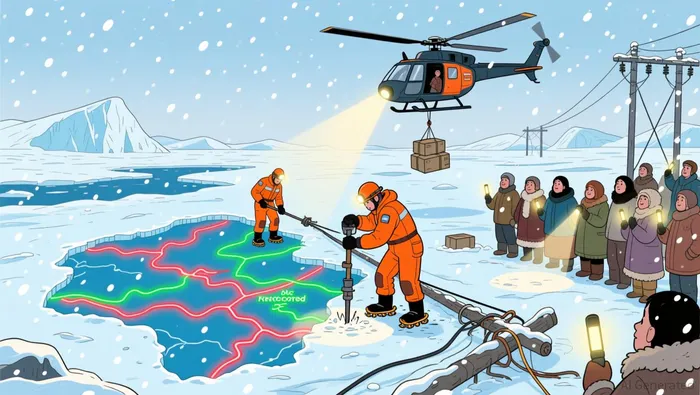 the government and utility providers are now focused on stabilizing the system.
Why Is Greenland’s Power Outage Relevant to Investors?
For investors, Greenland’s blackout is more than a local inconvenience—it’s a signal of both risk and opportunity. The territory’s unique geography and resource base make it a potential asset in the global push for renewable energy and next-generation infrastructure, particularly for AI and data centers. Greenland is home to vast reserves of and has an Arctic climate ideal for low-cost data center cooling.
At the same time, the power outage underscores the vulnerability of Greenland’s infrastructure. The country has a small population, harsh weather, and high logistical costs, which can deter large-scale development. While Greenland’s government has taken steps to update emergency preparedness guidelines, the event highlights the need for continued investment in infrastructure resilience.
What Does the Greenland Blackout Mean for Geopolitical Tensions?
The power outage came as U.S. President Donald Trump’s interest in Greenland continued to draw international attention. Though Trump has distanced himself from more aggressive acquisition proposals, he has still framed Greenland as a national security priority. The incident, while weather-related, occurred just after Greenland updated its emergency preparedness guidelines, raising concerns about potential instability.
The geopolitical implications are clear. Greenland is a semi-autonomous territory of Denmark, and any move to acquire it would require significant international coordination and negotiation. The U.S. has long maintained a military presence in Greenland, and the territory’s strategic location between North America and Europe makes it a potential hub for transatlantic data and logistics.
As global tensions over resources and digital infrastructure continue to rise, Greenland’s blackout serves as a reminder that the Arctic region is becoming a key focal point for both investment and competition.
What to Watch for Next
Investors and policymakers should keep a close eye on several key developments in the coming months. First, how Greenland’s government and utility providers respond to the recent outage will be critical to long-term stability. Continued investment in grid reliability, including backup power and transmission infrastructure, will be essential for supporting future economic and technological growth.
Second, the future of Greenland’s AI infrastructure plans—particularly the Nuuk data center project—will shape the territory’s role in the global digital economy. With renewable energy and natural cooling as key advantages, Greenland could become an important node in the Arctic's growing data landscape.
Finally, diplomatic and geopolitical developments will remain a wildcard. The U.S. has not ruled out a long-term deal with Greenland, and European leaders are also weighing their positions. The outcome of these discussions could influence not only Greenland's economic future but also its strategic value on the global stage.
In the short term, the power outage has not had a major economic impact, but it has highlighted the need for both infrastructure investment and geopolitical clarity. For now, the focus is on restoring full power and ensuring the system can withstand future disruptions.
What Can Be Learned from Greenland’s Power Outage
The Nuuk blackout offers a valuable case study for investors and policymakers alike. It underscores the importance of infrastructure resilience in remote or resource-rich regions and highlights the interplay between climate, technology, and geopolitics.
Greenland’s strategic assets—freshwater, rare earth elements, and renewable energy—could attract future investment, but only if the territory can demonstrate the ability to manage and sustain critical systems. The recent outage serves as a wake-up call for both local officials and global stakeholders who see Greenland as a potential economic and technological frontier.
Ultimately, the incident is a reminder that infrastructure, energy, and geopolitics are increasingly intertwined in the modern world. As the Arctic continues to open up to development and global competition, Greenland’s next moves could have far-reaching consequences.

Stay ahead of the market.
Get curated U.S. market news, insights and key dates delivered to your inbox.


AInvest
PRO
AInvest
PRO



Comments
No comments yet