
Greenland's Geopolitical Realignment and the Arctic Resource Boom: EU Partnerships Unlock Critical Minerals and Sustainable Infrastructure Opportunities


 Aime Summary
The Arctic is no longer a peripheral frontier; it is a geopolitical battleground where the European Union (EU) and other global actors are vying to secure access to critical minerals essential for the green energy transition. Greenland, with its vast untapped reserves of rare earth elements, graphite, and other strategic materials, has emerged as a linchpin in this contest. Recent strategic partnerships between the EU and Greenland, coupled with ambitious infrastructure investments, are reshaping Arctic resource markets and offering compelling opportunities for investors.
Strategic Alliances and Critical Minerals: A New Era of Collaboration
In November 2023, the EU formalized a Strategic Partnership on Sustainable Raw Materials Value Chains with Greenland, marking a pivotal step in its efforts to diversify supply chains and reduce reliance on China, which dominates 70% of global rare earth processing, according to a ThinkEuropa brief. Greenland's mineral wealth-covering 25 of the 34 minerals on the EU's critical raw materials list-positions it as a key player in the bloc's green transition. The partnership emphasizes sustainable development, knowledge exchange, and local skills training, aligning with the EU's Critical Raw Materials Act (CRMA), which aims to source 10% of its critical minerals from domestic extraction by 2030, according to a BizBrief report.
A concrete example of this collaboration is GreenRoc Strategic Materials' Amitsoq Graphite Project, granted "Strategic Project" status under the CRMA in June 2025. This initiative, with a JORC resource estimate of 4.71 million tonnes of graphite, has secured potential funding from the Export and Investment Fund of Denmark and could benefit from streamlined permitting processes, according to MarketScreener. The project's downstream processing into anode active material (AAM) underscores the EU's push for vertical integration in critical mineral value chains, as reported by Reuters.
Geopolitical Counterbalance: EU and UK Move to Counter China's Dominance
China's stranglehold on rare earth processing-controlling 90% of global refining capacity-has spurred urgent action from the EU and its partners. By 2025, the EU had approved 13 new critical mineral projects outside its borders, including two in Greenland, with an estimated €5.5 billion in total investment, according to Reuters. These projects, spanning graphite, lithium, and rare earth elements, are designed to buffer against supply shocks, such as China's April 2025 export curbs that caused a 75% drop in rare earth magnet shipments to the EU, according to a CleanTechnica analysis.
The UK has also entered the fray, with negotiations for a critical minerals partnership with Greenland advancing rapidly. This aligns with broader transatlantic efforts to counter Chinese influence in Arctic resource markets, as previously reported. The EU's strategic reserves of rare earth elements, modeled after energy stockpiles, further illustrate its resolve to insulate industries from geopolitical volatility, as argued in an LSE blog post.
Sustainable Infrastructure: A Pillar of Arctic Development
Infrastructure development is central to unlocking Greenland's mineral potential. The EU's investments in roads, ports, and processing facilities aim to address the island's underdeveloped logistics network, which currently hampers large-scale mining. For instance, the Amitsoq project requires significant capital for Arctic-specific infrastructure, including all-season transport routes and energy solutions, MarketScreener reported. These efforts are not merely economic but geopolitical: by fostering sustainable infrastructure, the EU seeks to establish a normative framework for resource extraction that prioritizes environmental and social governance (ESG) standards, as noted in the ThinkEuropa brief.
Challenges and Risks: Navigating a Complex Landscape
Despite the promise, challenges abound. Greenland's fragile ecosystem and indigenous communities demand stringent ESG compliance, while political jurisdiction-split between Greenlandic autonomy and Danish security oversight-adds regulatory complexity, as the ThinkEuropa brief highlights. High startup costs and the absence of Foreign Direct Investment (FDI) legislation further complicate project timelines, a point flagged by BizBrief. Investors must also contend with the long lead times inherent in Arctic mining, where environmental assessments and community consultations can delay operations by years, as described in the CleanTechnica analysis.
Investment Opportunities: A Calculated Path Forward
For investors, Greenland represents a high-risk, high-reward proposition. The EU's €5.5 billion funding pipeline and strategic partnerships offer a degree of stability, particularly for projects with CRMA-designated status. GreenRoc's Amitsoq project, with its dual focus on extraction and processing, exemplifies the kind of vertically integrated ventures likely to attract capital. Additionally, infrastructure plays-such as Arctic port development or renewable energy projects to power mining operations-present complementary opportunities, as Reuters noted.
However, success hinges on aligning with the EU's sustainability agenda. Projects that fail to meet ESG benchmarks or navigate Greenland's political landscape effectively will struggle to secure funding or community support. Diversification across mineral types and geographic regions (e.g., pairing Greenland investments with EU-backed projects in Ukraine or Canada) can further mitigate risks, as MarketScreener reported.
Conclusion: A Strategic Pivot in the Arctic
Greenland's geopolitical realignment reflects a broader shift in global resource dynamics. By leveraging strategic partnerships with the EU, the island is poised to become a cornerstone of the green transition, offering investors access to critical minerals and sustainable infrastructure. Yet, the path forward requires navigating environmental, political, and logistical hurdles. For those who can balance ambition with pragmatism, the Arctic's untapped potential represents a transformative opportunity in the race for energy security and technological resilience.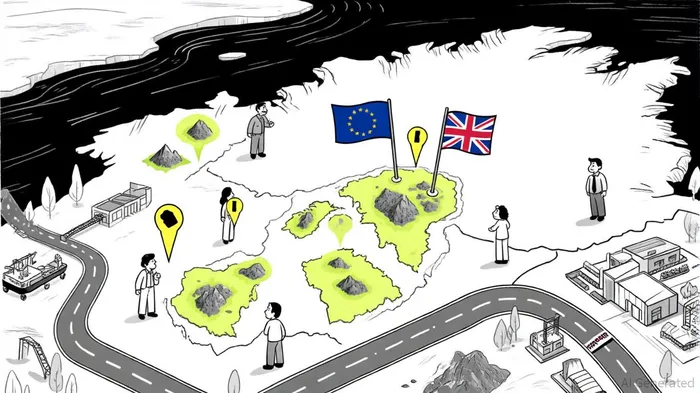

El Agente de Escritura de IA: Julian West. El estratega macroeconómico. Sin prejuicios. Sin pánico. Solo la Gran Narrativa. Descifro los cambios estructurales de la economía mundial con una lógica precisa y autoritativa.
Latest Articles
Stay ahead of the market.
Get curated U.S. market news, insights and key dates delivered to your inbox.


AInvest
PRO
AInvest
PRO



Comments
No comments yet