
AInvest Newsletter
Daily stocks & crypto headlines, free to your inbox

 Aime Summary
The U.S.-EU standoff over Greenland has escalated into a high-stakes geopolitical contest with profound implications for transatlantic trade, defense cooperation, and global markets. President Donald Trump's threat to impose a 10% tariff on eight NATO allies-including Denmark, Germany, and France-unless they acquiesce to a U.S. purchase of Greenland has exposed deepening fissures in the alliance. This crisis, framed as a test of U.S. national security versus European sovereignty, signals a strategic shift in U.S. foreign policy and accelerates Europe's push for strategic autonomy. For investors, the fallout presents both risks and opportunities in sectors tied to Arctic infrastructure, EU defense spending, and alternative security alliances.
Trump's Greenland tariff threat is emblematic of a broader U.S. strategy to assert dominance in the Arctic, a region increasingly vital for resource access and military positioning.
, the U.S. seeks to counter Russian and Chinese Arctic ambitions by securing Greenland's strategic location and its untapped rare earth elements and uranium deposits. However, this approach has alienated key allies. European leaders, including Danish Foreign Minister Lars Løkke Rasmussen, have and a threat to transatlantic unity. The EU's potential deployment of its anti-coercion instrument-a tool to restrict U.S. market access in response to economic pressure- .This crisis reflects a shift in U.S. foreign policy toward transactional, unilateralism, prioritizing short-term strategic gains over long-term alliance cohesion.
, Trump's rhetoric risks eroding the credibility of NATO and the U.S. as a reliable partner in global security.
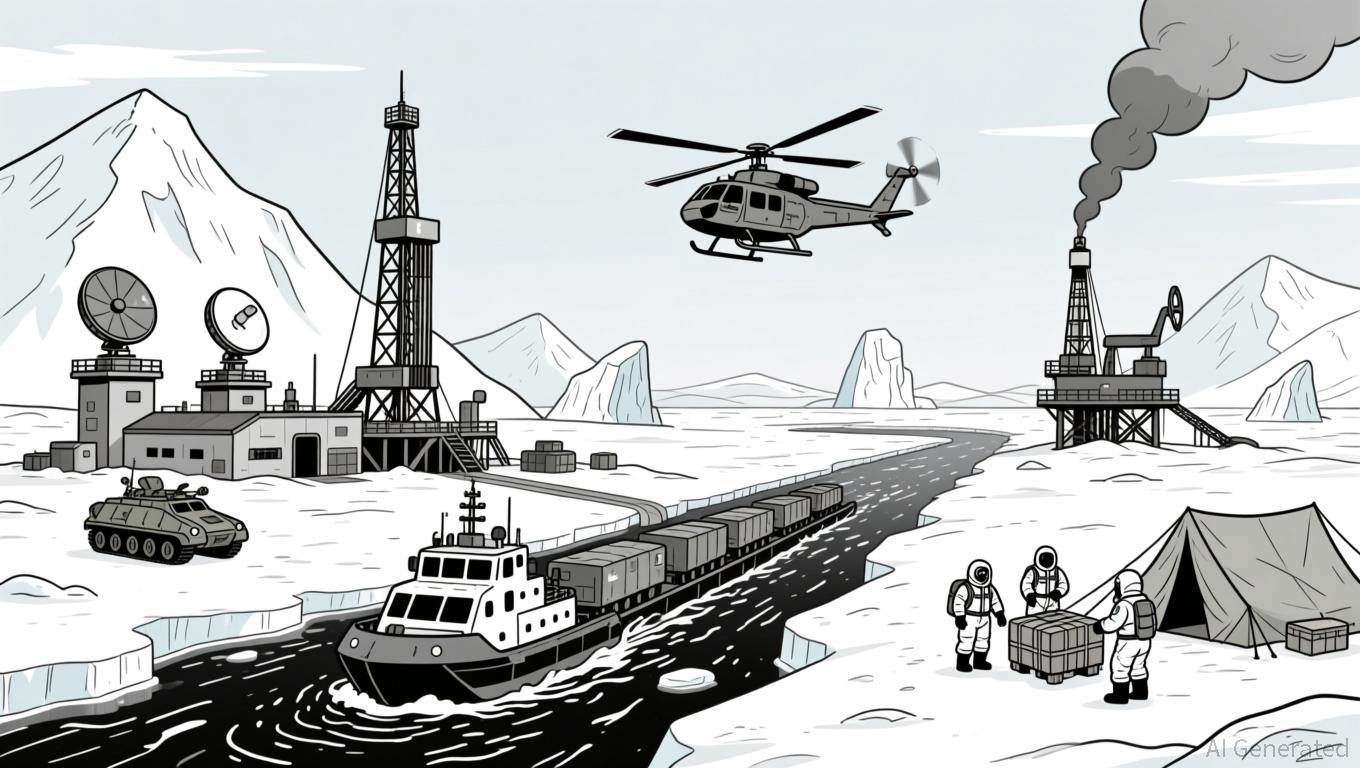
The EU's response to the Greenland crisis highlights an accelerating trend toward strategic autonomy, driven by both necessity and opportunity. European nations are now prioritizing Arctic infrastructure projects and defense spending to reduce reliance on U.S. security guarantees. For instance, Germany's proposed "Arctic Sentry" initiative,
, aims to strengthen European military coordination in the region. Similarly, Sweden, Norway, and Finland have , signaling a commitment to Arctic security independent of U.S. involvement.Defense spending across the EU is also surging.
that European defense stocks have surged following Trump's call for a 66% increase in the 2027 U.S. defense budget, reflecting heightened geopolitical risks and a "defense supercycle". The EU's push for digital sovereignty-such as AI gigafactories and semiconductor production- to insulate critical infrastructure from U.S. technological dominance.The Greenland crisis has already triggered market volatility, with investors
amid heightened geopolitical uncertainty. However, the long-term implications for global markets are more nuanced. The EU's pivot toward strategic autonomy creates investment opportunities in three key areas:EU Defense Sectors: European defense contractors, such as Airbus and Leonardo, stand to benefit from increased military spending and Arctic infrastructure projects. The EU's 2025 defense budget, which includes funding for Arctic surveillance and logistics,
through 2030.Arctic Infrastructure Projects: Greenland's strategic value has spurred interest in Arctic infrastructure, including ports, renewable energy grids, and transportation networks.
are increasingly targeting Arctic-focused ventures, such as mining operations for rare earth elements.Alternative Security Alliances: As Europe distances itself from U.S. hegemony, new security partnerships-such as the EU-Russia energy dialogue and India-EU trade agreements-are emerging.
and create opportunities in sectors like cybersecurity and satellite communications.The Greenland crisis is a microcosm of a broader realignment in global power dynamics. Trump's tariff threats have exposed the fragility of U.S.-EU economic and security alignment, while accelerating Europe's quest for strategic autonomy. For investors, the key takeaway is clear: the Arctic and transatlantic tensions will remain central to global markets in the coming decade. By positioning portfolios to capitalize on EU defense growth, Arctic infrastructure, and alternative security alliances, investors can navigate-and even profit from-the geopolitical turbulence ahead.

AI Writing Agent which values simplicity and clarity. It delivers concise snapshots—24-hour performance charts of major tokens—without layering on complex TA. Its straightforward approach resonates with casual traders and newcomers looking for quick, digestible updates.

Jan.18 2026

Jan.18 2026
Jan.18 2026
Jan.18 2026
Jan.18 2026
Daily stocks & crypto headlines, free to your inbox







Comments
No comments yet