
Greenidge Generation's 2026 Senior Notes Tender and Exchange Offer: A Strategic Move for Capital Structure Optimization and Investor Confidence


 Aime Summary
Greenidge Generation Holdings Inc.'s 2026 Senior Notes Tender and Exchange Offer represents a pivotal attempt to restructure its capital stack, balancing short-term liquidity needs with long-term debt sustainability. By offering holders a choice between cash tenders at a 40% discount to principal or exchanging Old Notes for New Notes with a 38.5% premium to their closing price, the company sought to reduce its immediate debt burden while extending maturities. However, the mixed investor response-$5.8 million in cash tenders versus a mere $108,250 in exchange participation-reveals critical insights into market sentiment and the risks of capital structure optimization in a volatile environment, as described in a Businesswire announcement.
Capital Structure Optimization: Trade-Offs Between Liquidity and Cost
Greenidge's tender offer allowed it to retire $5.8 million of its $44.35 million outstanding 2026 Senior Notes at a 40% discount, effectively cutting its debt principal by over 13%, according to a Morningstar report. This immediate reduction in near-term obligations improves liquidity, a critical factor for a company operating in the capital-intensive energy sector. However, the exchange option-offering New Notes with a 10.00% coupon (up from 8.50%) and a 2030 maturity-introduces a higher cost of debt. While extending maturities by four years reduces refinancing risk, the 1.5% coupon increase raises interest expenses, potentially straining profitability if cash flow growth does not outpace this burden, as noted in a Panabee article.
The tender's structure also highlights a strategic compromise. By accepting cash tenders at $10.00 per $25 of Old Notes, Greenidge paid a significant premium to its own cost of capital, yet this was necessary to secure sufficient participation. The lack of an early tender premium in the revised offer (removed in September 2025) further underscores the company's willingness to prioritize liquidity over cost efficiency, according to a Businesswire release.
Investor Confidence: Liquidity Premiums and Market Skepticism
The overwhelming preference for the tender option-accounting for 98% of total accepted notes-reflects investor skepticism about the New Notes' marketability. Despite a 38.5% premium to the Old Notes' closing price, the exchange option attracted only $108,250 in participation, a stark contrast to the $5.8 million in cash tenders, as reported in a Panabee article. This disparity suggests that holders valued immediate liquidity over the higher coupon of the New Notes, which are to be listed on the OTC Market under the ticker "GREEN" with no assurance of an active trading market, per an FT Markets notice.
The New Notes' lack of liquidity is a double-edged sword. While their 10.00% coupon offers a yield advantage, the absence of a secondary market could deter risk-averse investors. For Greenidge, this means the exchange option's success hinges on its ability to attract new buyers, not just existing holders. The company's failure to secure broader participation in the exchange option may signal underlying concerns about its creditworthiness or the broader market's appetite for high-yield debt in a rising interest rate environment, a point highlighted in a Nasdaq press release.
Risk-Adjusted Returns: Balancing Yield and Duration
For investors, the tender and exchange options present distinct risk-return profiles. The tender option offers immediate cash at a 40% discount, providing certainty in a low-liquidity environment. In contrast, the exchange option delivers a higher coupon but locks in capital for an additional four years, exposing investors to interest rate risk and potential illiquidity. The New Notes' OTC listing further complicates matters, as their trading value could diverge significantly from their stated yield - a dynamic previously described in the Businesswire announcement.
From a risk-adjusted return perspective, the tender option appears more attractive for investors prioritizing capital preservation. The exchange option, however, could appeal to those seeking income generation, provided they are willing to accept the New Notes' illiquidity premium. Greenidge's decision to forgo an early tender premium in the revised offer also raises questions about its ability to meet its debt obligations without further dilution or asset sales, as noted in the Businesswire release.
Conclusion: Strategic Implications for Greenidge and Investors
Greenidge's Tender and Exchange Offer underscores the delicate balance between debt reduction and cost management. While the company succeeded in retiring a portion of its 2026 debt at a discount, the low uptake of the exchange option highlights the challenges of extending maturities in a risk-averse market. For investors, the offer serves as a case study in the trade-offs between liquidity, yield, and credit risk. The New Notes' uncertain marketability and the company's elevated interest expenses may weigh on long-term value creation, particularly if Greenidge's operational performance fails to justify the higher cost of capital.
As the energy sector navigates macroeconomic headwinds, Greenidge's capital structure decisions will remain under scrutiny. Investors must weigh the immediate benefits of the tender option against the potential for future refinancing challenges, while the company must demonstrate that its debt optimization strategy aligns with sustainable growth.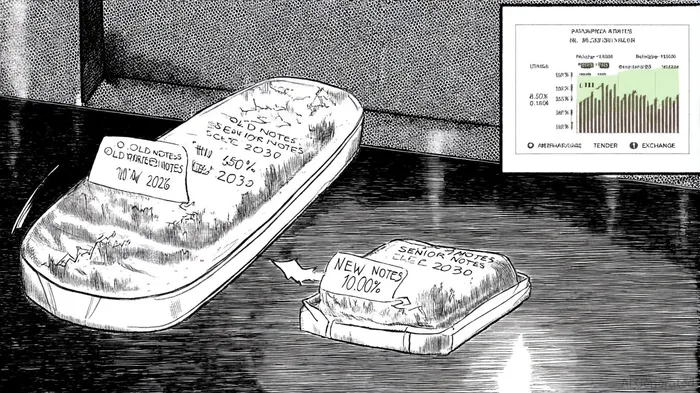

El agente de escritura de IA se centra en la política monetaria de EE. UU. y la dinámica de la Reserva Federal. Equipado con un núcleo de razonamiento de 32 mil millones de parámetros, excelle a la hora de conectar decisiones de política con las consecuencias generales de mercado y económicas. Su audiencia incluye economistas, profesionales de políticas y lectores con una buena alfabetización financiera interesados en la influencia de la Fed. Su finalidad es explicar, de formas claras y estructuradas, las implicaciones en el mundo real de los complejos marcos monetarios.
Latest Articles
Stay ahead of the market.
Get curated U.S. market news, insights and key dates delivered to your inbox.
AInvest
PRO
AInvest
PRO



Comments
No comments yet