
Greenfield Data Centers: The 2026 Infrastructure Layer for AI's S-Curve
 Aime Summary
The race for AI dominance is a race for power, and the infrastructure layer is being built in real time. The core thesis for 2026 is clear: greenfield development is the essential, exponential growth path. This isn't just about adding capacity; it's about constructing the fundamental rails for the next paradigm. The demand curve is shifting from training to inference, creating a sustained, distributed need for compute that must be met with new, purpose-built facilities. The numbers are staggering. The sector is projected to expand at a 14% CAGR through 2030, with nearly 100 GW of new data centers coming online between 2026 and 2030. This is a supercycle, requiring up to $3 trillion in investment by 2030.
Speed is now the paramount criterion. The old calculus of land cost and tax breaks is being overtaken by the urgent need for speed to power. In a market where the average grid connection wait time exceeds four years, the ability to deploy power rapidly is the new competitive moat. This premium on speed directly fuels the construction cost inflation. Costs have been rising at a 7% CAGR over the past five years, and for 2026, the forecast is for another 6% jump to $11.3 million per MW. This is the cost of the race-the premium paid for a site where power can be brought online quickly, often through on-site generation or private wire solutions.
This creates a massive, greenfield-driven investment supercycle. The need is not for incremental upgrades to existing facilities but for entirely new campuses built from the ground up to handle the next wave of AI workloads. The shift to inference as the dominant AI requirement by 2027 will further drive this, as it demands a more geographically distributed infrastructure to reduce latency. The greenfield imperative is the only viable path to meet this exponential demand curve before the grid constraints become a hard bottleneck.
Technological and Operational Shifts Enabling the Greenfield Surge
The greenfield wave is not just about building more boxes; it's about building smarter, faster, and more sustainable ones. The technological and operational innovations now converging are compressing timelines and unlocking new performance tiers, making the massive 2026 build-out feasible. The core challenge is power density and thermal management, and the solutions are pushing the boundaries of design.
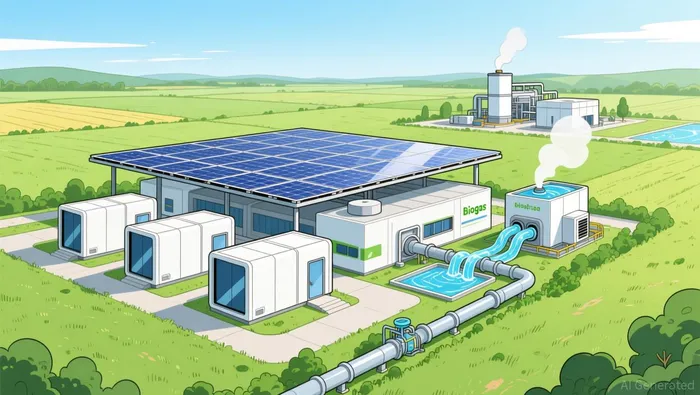
On the power front, the industry is moving beyond simple grid connections. The planned 20 MW biomass-powered greenfield data center exemplifies a new breed of hybrid, on-site generation. By integrating with a biowaste plant, this facility aims to set new standards for energy performance and sustainability while reducing reliance on the strained grid. This model is part of a broader trend toward diverse power strategies that include solar and backup reciprocating engines, creating more resilient and efficient infrastructure for high-density AI workloads.
Cooling is the other critical frontier. As rack densities climb to meet AI demands, traditional air cooling hits its limits. The response is next-generation liquid cooling, which is now being integrated into new designs to handle future deployments exceeding 100kW / rack. This isn't just incremental improvement; it's a paradigm shift in thermal management. The design of the biomass project itself includes waste heat utilization and alternative water sources, showcasing how cooling systems are being engineered for holistic resource efficiency.
Operationally, the speed imperative is driving a construction revolution. The industry is embracing modular construction and digital innovation to deliver projects faster than ever. Standardized designs and digital tools like Building Information Modeling (BIM) are de-risking accelerated schedules, turning what was once a multi-year build into a more compressed timeline. This operational agility is essential for capturing market share in a race where speed equals revenue. The trend is so pronounced that it's even reshaping the workforce, with a surge in demand for skilled trades to keep pace.
Looking further out, the experimentation is wild. From underwater and space-based data centers to floating and bunker designs, the frontier is being tested. While these may be distant horizons, they signal a mindset shift toward extreme locations and novel engineering. For 2026, the focus is on the practical innovations that are already compressing the greenfield build cycle. The combination of advanced power models, next-generation cooling, and agile construction is what makes the exponential growth path not just possible, but efficient.
Financial and Strategic Implications for the Sector
The physical build-out translates directly into staggering financial flows. The sector's projected 14% CAGR through 2030 will require an infrastructure investment supercycle of up to $3 trillion by 2030. Of that, roughly 100 GW of new capacity-effectively doubling global supply-will create $1.2 trillion in real estate asset value. This is the core financial engine of the greenfield wave. The strategic positioning of key players is now defined by their ability to secure the power and land needed for AI inference, the dominant workload by 2027.
The growth is dual-driven, but the greenfield path is essential for the next phase. Hyperscalers are executing a dual strategy of leasing and self-building, but as inference demand requires more geographically distributed deployments, the need for new, purpose-built campuses becomes critical. This is where the financial and strategic calculus shifts. The $1.2 trillion in real estate value creation is a direct function of the greenfield imperative, as existing facilities cannot be rapidly reconfigured to meet the new power density and distributed latency requirements. The shift to inference, which generates sustained demand as applications scale, creates a need for a more permanent, regional infrastructure layer that greenfield development is uniquely positioned to provide.
This massive build-out is also driving a new automation need. As facilities become more complex and timelines more aggressive, specialized controls integration is becoming critical for managing the commissioning of greenfield campuses. The industry is seeing a surge in demand for integrated Building Management Systems (BMS) and Electrical Power Management Systems (EPMS) that can unify power, cooling, and operational controls from day one. This isn't just about efficiency; it's about risk mitigation. As one automation provider notes, mission-critical data centers struggle not from bad equipment, but from control systems that aren't designed for the pressure of rapid expansion and zero tolerance for downtime. The integration of these systems is now a make-or-break factor for keeping projects on schedule and protecting the uptime that defines the asset's value.
The bottom line is that the financial supercycle is real, but its returns are being captured by those who can navigate the new constraints. The $3 trillion investment is a bet on exponential adoption, but the winners will be the players who can secure the land, power, and operational agility to deliver the infrastructure layer on the required timeline. For now, the greenfield path remains the only viable route to capture the full value of the AI inference paradigm.
Catalysts, Risks, and What to Watch in 2026
The greenfield thesis hinges on a few critical forward-looking events. The primary catalyst is the actual adoption rate of AI inference workloads. The sector expects a paradigm shift in 2027, when inference workloads could overtake training as the dominant AI requirement. This is the core demand driver for the distributed, regional infrastructure being built. Any delay or underperformance in this adoption curve would directly challenge the need for the massive 2026–2030 build-out. The watchpoint is clear: monitor the pace at which enterprises and cloud providers migrate to inference-heavy applications.
Regulatory action is another key catalyst. The EPA is streamlining Clean Air Act permitting to accelerate development, and the House passed the SPEED Act aiming to cut red tape. These moves are designed to fast-track approvals, directly addressing the industry's biggest bottleneck. Success here would validate the thesis by removing a major friction point and enabling the rapid deployment the S-curve demands.
The most significant risk, however, is grid constraint. As power shortages delay projects by years, the scramble for sites with available grid access is intensifying. This forces projects into more remote locations, increasing energy costs and transmission losses. For greenfield developers, this is a direct margin pressure. The premium paid for speed to power is only sustainable if the underlying grid can deliver. If grid upgrades lag, the exponential growth path faces a hard physical bottleneck.
In practice, this creates a high-stakes race. The industry is already seeing a boom in groundbreakings, with $15 billion in new projects announced in late 2025 alone. Yet, the same forces that drive this boom-hypercompetition for quality sites and energy access-are creating a new kind of trap for developers. The best locations disappear fast, and a convergence of unprecedented constraints is transforming site selection into a high-stakes scramble. The bottom line is that the greenfield wave is real, but its success in 2026 will be measured by how well it navigates these dual pressures: accelerating adoption and regulatory approval against the inescapable limits of the physical grid.

Eli escribe con una personalidad directa y bien investigada, enfocada en desafiar concienzudamente las perspectivas habituales. Su análisis aborda de forma equilibrada pero crítica las dinámicas del mercado, con la finalidad de educar, informar y, a veces, turbinar las narrativas habituales. Mientras mantiene la credibilidad y el poder de influencia en la prensa económica, Eli se centra en el mundo de la economía, los patrones del mercado y las analíticas de inversiones. Su estilo analítico y directo garantizan la claridad, lo que permite que incluso los temas complejos del mercado sean comprensibles para un público amplio, sin sacrificar el rigor.
Latest Articles
Stay ahead of the market.
Get curated U.S. market news, insights and key dates delivered to your inbox.






Comments
No comments yet