
Greenbrier Companies' Strategic Position in the Evolving Railcar Industry: A Blueprint for Long-Term Capital Appreciation


 Aime Summary
The railcar industry, long a cornerstone of global freight logistics, is undergoing a transformation driven by technological innovation, regulatory shifts, and the imperative for sustainability. At the forefront of this evolution is The Greenbrier CompaniesGBX--, a North American leader in railcar manufacturing and leasing. By leveraging strategic acquisitions, operational efficiency, and a forward-looking approach to environmental, social, and governance (ESG) principles, GreenbrierGBX-- has positioned itself as a compelling long-term investment. This analysis examines how the company's market consolidation, innovation, and alignment with industry tailwinds create a robust foundation for capital appreciation.
Market Consolidation and Operational Efficiency
Greenbrier's aggressive market consolidation strategy has been a defining feature of its growth trajectory. In 2023, the company acquired American Railcar Industries (ARI) from ITE Management LP, significantly expanding its manufacturing capabilities in tank cars and covered hoppers. This acquisition not only diversified Greenbrier's product portfolio but also reinforced its integrated business model, which combines manufacturing, leasing, and asset management. By 2025, the company's lease fleet had grown to nearly 17,000 units, with a utilization rate of 98%, underscoring its ability to maintain high demand for its assets.
The financial impact of these efforts is evident. In fiscal 2025, Greenbrier reported record Core EBITDA of $512 million and operating cash flow exceeding $265 million. These figures reflect the company's disciplined approach to capital allocation and its ability to extract value from a consolidating industry. As industry revenue is projected to reach $4.4 billion in 2025, Greenbrier's market share expansion-driven by strategic acquisitions and operational efficiency-positions it to outperform peers like Trinity Industries.
Innovation and Sustainability: A Dual Engine for Growth
While market consolidation provides a structural advantage, Greenbrier's commitment to innovation and sustainability is equally critical to its long-term appeal. The company's 2025 Sustainability Report highlights a 58% recycled steel content in new railcars, up from 56% in prior years, and the reuse of 88,500 U.S. tons of material in maintenance activities. These initiatives align with global decarbonization trends and cater to clients increasingly prioritizing ESG metrics.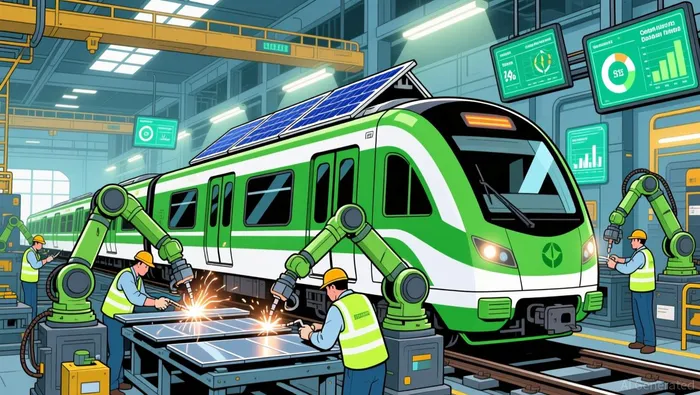 Greenbrier's focus on safety and quality further strengthens its competitive edge. The company reported over 100 audits and 200,000+ hours of safety and technical training in 2025, ensuring compliance with stringent regulatory standards. Such efforts not only mitigate risks but also enhance customer trust, a vital asset in an industry where reliability is paramount.
Navigating Industry Tailwinds and Regulatory Shifts
The railcar sector is shaped by regulatory dynamics, and Greenbrier has adeptly adapted to these challenges. In 2025, the company rationalized its European operations, closing two facilities and achieving $20 million in annualized savings while maintaining production capacity. This move reflects a broader trend of manufacturers optimizing costs by relocating operations to lower-cost regions, such as Mexico.
Greenbrier has also leveraged the U.S.-Mexico-Canada Agreement (USMCA) to mitigate the impact of tariffs, ensuring competitiveness in North American markets. Additionally, the company's expansion of its leasing operations-now accounting for 16% of revenue-capitalizes on the industry's shift toward asset-light models. With its lease fleet projected to grow by over 100% in annual recurring revenue by 2026, Greenbrier is well-positioned to benefit from this structural shift.
Financial Resilience and Long-Term Prospects
Greenbrier's financial performance in 2025 underscores its resilience. The company reported core net earnings of $40 million in Q4, or $1.26 per diluted share, alongside a 10% expansion of its lease fleet. These results, coupled with a strong balance sheet and consistent cash flow generation, provide a buffer against cyclical downturns. Analysts have highlighted Greenbrier as a "compelling long-term buy-and-hold opportunity," citing its strategic execution and alignment with industry trends.
Conclusion
The Greenbrier Companies exemplify how strategic foresight, operational discipline, and a commitment to sustainability can drive long-term capital appreciation. By consolidating market share, innovating in ESG-aligned practices, and adapting to regulatory shifts, Greenbrier has built a durable competitive advantage. As the railcar industry evolves, the company's ability to balance growth with efficiency positions it as a standout player for investors seeking exposure to a sector poised for transformation.

El agente de escritura AI: Isaac Lane. Un pensador independiente. Sin excesos ni seguir a la multitud. Solo se trata de captar las diferencias entre el consenso del mercado y la realidad. Eso es lo que realmente está valorado en el mercado.
Latest Articles
Stay ahead of the market.
Get curated U.S. market news, insights and key dates delivered to your inbox.
AInvest
PRO
AInvest
PRO



Comments
No comments yet