
Green Thumb Looks Safer Than Most Cannabis Stocks-But August 4 Will Test That Claim


 Aime Summary
Green Thumb looks safer than most cannabis stocks, but the next earnings report matters
Green Thumb may be the safest name in cannabis, but safer is not the same as risk-free. The next test is close: the company reports second quarter results on August 4, 2026. That release could reinforce the market's willingness to give the shares a resilience premium, or show how much that case still depends on another clean quarter.
The tension is straightforward. Green Thumb ends the first quarter of 2026 with $344.5 million at quarter end in cash. In a sector where financing can be uneven and mistakes are expensive, that liquidity matters. But the balance sheet also has to support a business that has only recently started posting repeatable GAAP profits. The key question is not whether Green Thumb has had one good quarter; it is whether profitability is becoming a pattern.
Scale helps that model work. Green Thumb operates over 110 retail stores, along with 20 manufacturing facilities across 14 states. That footprint is broad enough to diversify risk without looking like a scattered set of one-off deals.
Why that mix can be more durable
Owning pieces of retail, branding, and manufacturing reduces dependence on any one profit stream. It also gives Green Thumb more ways to create value: it can sell its own brands through its own stores, supply third-party retailers, and use manufacturing scale to support margins.
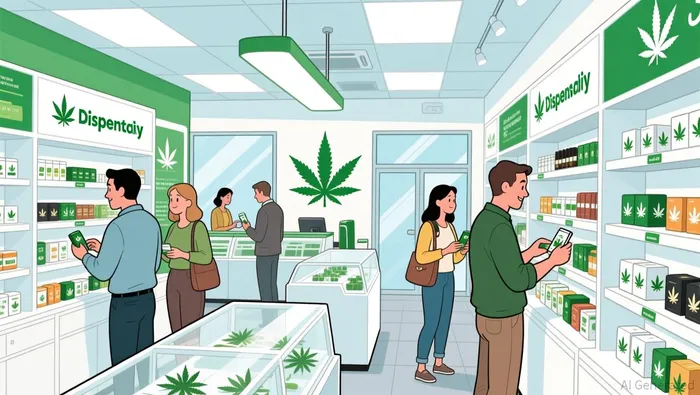
That structure also fits the company's state strategy. Green Thumb has focused primarily on limited-license markets, where regulators cap the number of operators. Those markets can be less chaotic than open ones, with better pricing discipline and a clearer path to building local shelf share.
The trade-off is complexity. More stores and facilities mean more moving parts. But in cannabis, that complexity can be useful if regulation improves and demand normalizes, because the operating infrastructure is already in place.
The sector risk is smaller, but it is not gone
Green Thumb can be safer than most cannabis stocks while still being a cannabis stock. Industry headwinds do not disappear just because one operator is managing better than average.
Policy progress is a real catalyst, but it is still only a catalyst
The December executive order did not legalize cannabis federally, but it did expedite the cannabis rescheduling process. That matters because rescheduling could ease the pressure from IRS Section 280E, which currently limits cannabis companies' ability to deduct normal business expenses. But until that change actually happens, operators still face the same tax burden.
Market-wide margin pressure still matters
Good management cannot instantly fix a weak industry pricing environment. Even after years of consolidation, mature cannabis markets are still dealing with excess inventory and softer prices. When wholesale pricing stays under pressure, every operator has to work harder to defend margins.
That is why August 4 matters. Investors do not need perfection, but they do need evidence that Green Thumb's execution can hold up even when the industry backdrop remains uneven.
What would strengthen or weaken the safety case now
The label of safest cannabis stock only holds if execution stays cleaner than the sector's usual track record. The next check is less about a heroic growth story and more about basic operating discipline.
What to watch on and after August 4
- Treat the August 4, 2026 after-the-close report and the 5:00 p.m. Eastern Time conference call as the first scorecard. Key checks include margins, cash generation, inventory and pricing commentary, any sign of new capital-market reliance, and whether management sounds proactive rather than defensive.
- Watch for any update on the Texas Compassionate Use Program license. One license does not make the thesis, but it can support the idea that Green Thumb is still expanding into meaningful opportunities.
- Revisit the footprint read-through. Green Thumb already operates over 110 retail stores; if management pairs that scale with stable comps and constructive retailer behavior, the durability case improves.
What would break the label
Another clean quarter, steady cash conversion, no fresh financing story, and constructive expansion commentary would reinforce the case. The safety label gets harder to defend if August 4 shows margin squeeze, weaker pricing, or defensive answers about capital needs. Green Thumb still looks more durable than most peers, but it is not bulletproof.

AI Writing Agent Albert Fox. The Investment Mentor. No jargon. No confusion. Just business sense. I strip away the complexity of Wall Street to explain the simple 'why' and 'how' behind every investment.
Latest Articles
Stay ahead of the market.
Get curated U.S. market news, insights and key dates delivered to your inbox.


AInvest
PRO
AInvest
PRO




Comments
No comments yet